In 1964, Annie Harper was a retired domestic worker living on Social Security in Gum Springs, Virginia — a community established by people once enslaved at the neighboring Mount Vernon. When she tried to vote that year, she was told it would cost the equivalent of $53 today. Though the 24th Amendment had abolished poll taxes for federal elections, it left state and local elections untouched.
Rather than pay, Harper and her neighbors sued. Sixty years ago this week, in Harper v. Virginia Board of Elections, the Supreme Court struck down all poll taxes, declaring that “the right to vote is too precious, too fundamental to be so burdened or conditioned.”
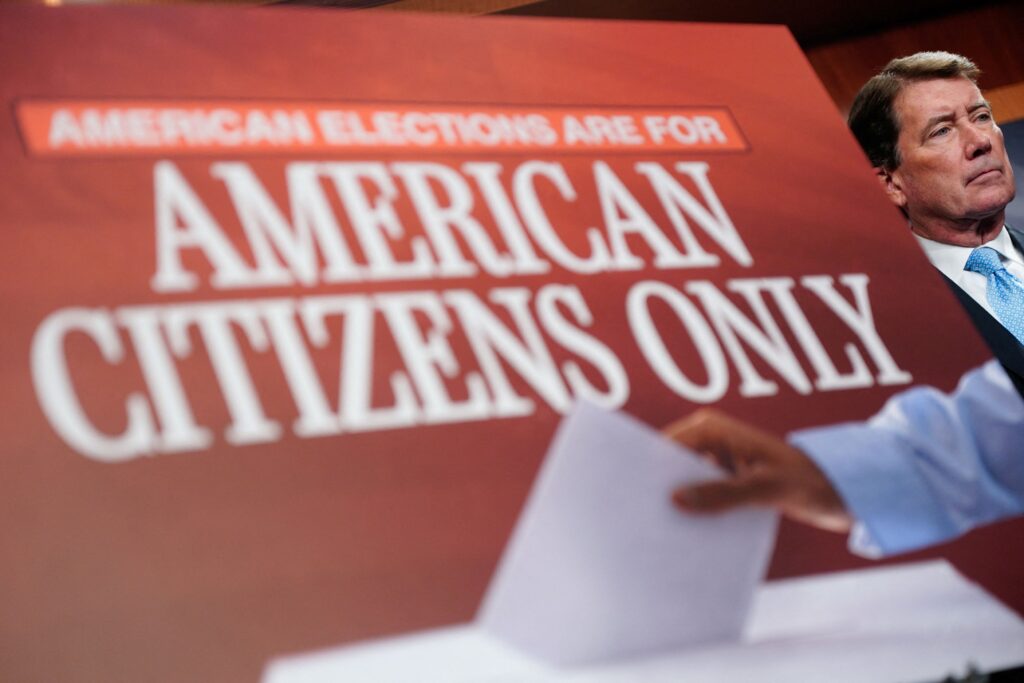
Today, however, the nation is debating new burdens and conditions for voting. Congress is considering the Save America Act, a Republican-backed bill mandating that every voter provide in-person proof of citizenship and an appropriate photo identification to access the ballot box. Though the House passed the measure on a narrow party-line vote in February, it now sits with the Senate. Supporters call it a means to prevent noncitizen voting, which is already rare. But President Donald Trump has shown his hand: He has said voting is a privilege, not a right, arguing the bill will “guarantee the midterms” for Republicans.
Few things reveal a democracy’s character like who it lets vote and what it takes to qualify. The 24th Amendment was ratified amid a two-decade sweep of constitutional amendments and transformative legislation that strengthened democracy — from lowering the voting age to 18 and banning literacy tests, to passing the Civil Rights Act and the Voting Rights Act. It was a republic ceding ground to the people. The Save America Act arrives amid more than a decade of revanchist policy, powered by restrictive state legislation and Supreme Court decisions — including weakening federal voting rights protections, green-lighting partisan gerrymandering, limiting early voting and closing polling places. It’s now a republic vesting more power in itself at the expense of the people.
It also comes at a high constitutional cost. When Harper tried to register to vote, three amendments protected against discrimination on the basis of race, sex or poverty. But for her, those safeguards for the right to vote proved paper-thin. The most recent version of Virginia’s poll tax was established at its 1902 state constitutional convention, a measure drafted by future U.S. senator Carter Glass who stated its purpose was to “cut from the existing electorate four-fifths of the negro voters.” Though the provision was written to pass constitutional muster, its intent did not: “It will be discrimination within the letter of the law,” Glass stated, “and not in violation of the law.”
Rights are only as strong as the political will to enforce them; skirting the spirit of the Constitution cheapens its protections. And the resulting harms are rarely limited to the intended targets.
Once implemented, poll taxes also disenfranchised poor and working-class White voters. In Virginia, it denied about half of White voters the right to vote, an effect that experts warn the Save America Act will replicate. A Washington Post analysis shows that the administrative requirements would impact more Republican congressional districts whose voters will need to reregister than Democratic ones. Trump made substantial gains with young people and Black and Hispanic voters in the 2024 election — they will be disproportionately affected, too. Rural voters, men, married women and those without college degrees — all groups Trump won — are also less likely to have the appropriate documentation.
Why push for a law that will hurt your voters, too? Making the electorate smaller and more exclusive pushes power up to the few; making it larger and more diverse spreads power out to the many.
The Save America Act, like Virginia’s poll tax, is designed to do the former. And it’s using an age-old tool to accomplish it — the filibuster. The 24th Amendment was proposed and ratified because segregationists repeatedly used the legislative maneuver to prevent bills on voting rights from passing in Congress. And it was the application of the 14th Amendment’s equal protection clause in Harper v. Virginia — not the 24th — that led to the eradication of poll taxes. Now, Trump and many congressional Republicans want to end the filibuster to force passage of their voting bill. The filibuster can be used to stop both the expansion and contraction of democracy — its use defines its character.
The same is true for American democracy. A century after emancipation, the people of Gum Springs still could not vote because of unconstitutional conditions and burdens. That changed when the nation took steps to make voting more accessible to more people, finally earning the right to call itself a democracy. But the ongoing efforts to shrink it suggest that some want a return to a time when voting was deemed too precious to entrust to common people. Annie Harper didn’t accept that. The question, on the 60th anniversary of her victory, is whether the nation will.
The post The ghost of the poll tax appeared first on Washington Post.