As the United States and Israel struck Iran, and as Iranian retaliatory attacks rocked the Middle East, the United Nations Security Council met Tuesday to discuss progress on plans for peace in the Gaza Strip, which were adopted in November amid a fragile truce between Israel and Hamas.
The high representative for Gaza on President Trump’s Board of Peace, Nickolay Mladenov, said that a transitional Palestinian group had been established to govern in the enclave, and he detailed elements of a framework for disarming Hamas and other armed factions in Gaza. He had hinted at the proposal before.
“Serious discussions are underway as we speak,” he said. The plan that the guarantor countries — the United States, Egypt, Turkey and Qatar — had agreed to has been presented to relevant armed groups, Mr. Mladenov said, and it established “the principle of one authority, one law and one weapon.”
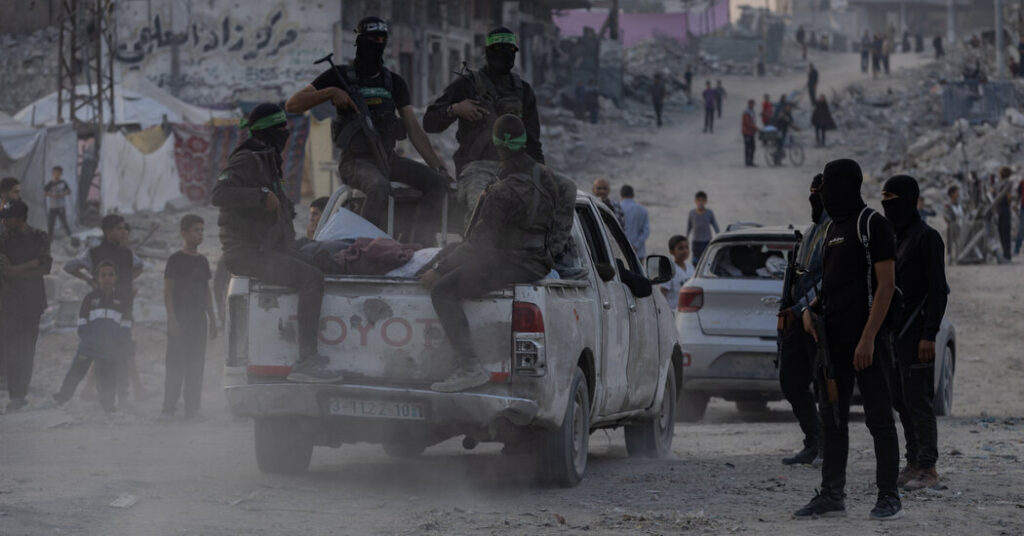
It applies to all armed groups, he said, singling out Hamas, Palestinian Islamic Jihad and their military wings in particular, and will require them to transfer their arms to a transitional governing authority run by Palestinians. The plan would involve collecting the most dangerous weapons first, he said, and monitoring compliance ahead of any reconstruction, and it would allow fighters to return to civilian life.
“The people of Gaza want reconstruction, and reconstruction requires the decommissioning of weapons,” said Mr. Mladenov, calling this link the “driving force” of the framework.
He did not, however, provide a timeline or the status of discussions with relevant groups or for any potential parallel Israeli military withdrawal. “The framework requires space,” he said, asking for time and flexibility.
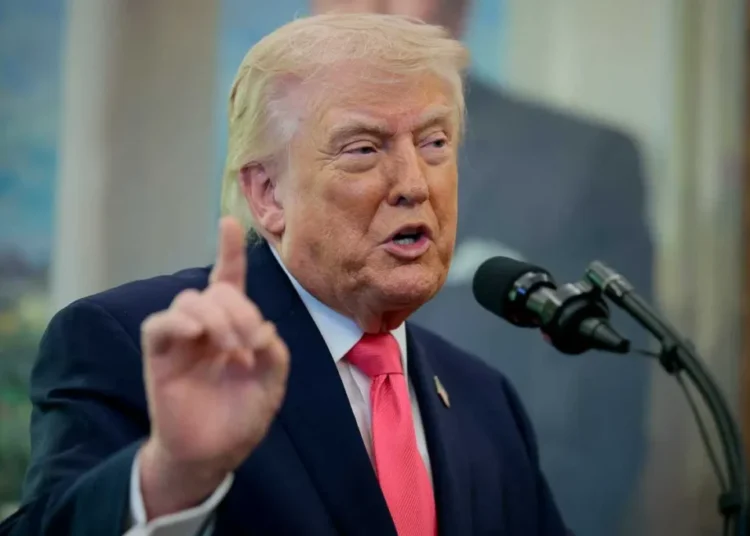
“The future of Gaza is entirely dependent on Hamas decommissioning its weapons,” said Michael Waltz, the U.S. representative to the U.N., calling on the international community to pressure the group to disarm.
Addressing speakers, like Denmark’s representative, who said progress was not happening fast enough and that Israel was still restricting aid to the enclave, Mr. Waltz said that supplies had increased amid the cease-fire. “Have we made the progress as quickly as some have demanded in their speeches today? No,” he said.
The Palestinian representative to the United Nations, Riyad Mansour, endorsed Mr. Trump’s plan, as he has before, and said that Palestinians would continue to work with the international community to ensure it is implemented. But he said that Israel was attempting to annex Palestinian land even as the world condemns such actions.
He lamented Israeli restrictions on humanitarian aid and groups in Gaza, the military’s violence, the rise in attacks on Palestinians by Israeli settlers in the West Bank, the Israeli government’s settlement expansion plans, plus inflammatory rhetoric and actions from the country’s far-right leaders. Palestinian land is not for sale or up for grabs, Mr. Mansour warned.
At the heart of the Trump peace plan, “were a number of cardinal principles,” Mr. Mansour said, which he called on Israel to respect. “No bloodshed, no starvation, no occupation, no annexation, no forcible displacement.”
Ephrat Livni is a Times reporter covering breaking news around the world. She is based in Washington.
The post Plan to Disarm Hamas in Gaza Is Detailed at U.N. appeared first on New York Times.