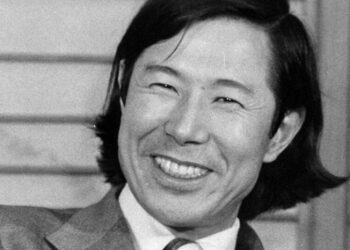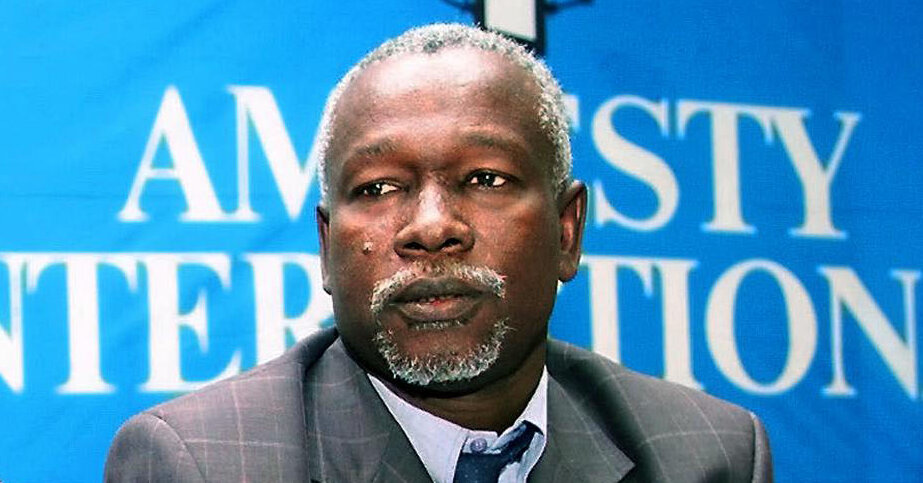
Boubacar Ould Messaoud, a son of enslaved people in Mauritania who endured arrest and months in prison to become a leader in the fight against the age-old practice of enslavement in that northwest African desert country, died on March 12 at his home in Nouakchott, the capital. He was 80.
His death was confirmed by SOS-Esclaves, the organization he presided over and helped found in 1995 to combat slavery in Mauritania by publicizing it, lobbying against it and giving shelter to those who had escaped it.
Mr. Messaoud was a Haratin, a member of the dark-skinned ethnic group that for centuries has been subjected to bondage primarily by the light-skinned elites, or Moors, who have long dominated public life in Mauritania, a vast, sparsely populated coastal nation.
Forced labor in fields, farms and households, passed down through generations of enslaved people who were bought, sold and sexually exploited: This was the way of life that Mr. Messaoud was born into and that persists in remoter areas. He was determined to wipe it out. Families of Moors inherited families of Haratin for decades.
In a 2006 interview with La Tribune, a Mauritanian newspaper, he described as “revolting, unacceptable, immoral” the plight of one 14-year-old enslaved girl named Khaddama, whom he was trying to help.
“They claim she is ‘related’ to her masters,” he said. “What kind of relationship could there possibly be unless she was their slave? She wasn’t in school. She worked without pay. Washing dishes, sweeping.”
Through harassment and imprisonment, military dictatorships and decades of government declarations that slavery had been abolished, Mr. Messaoud fought on. He faced the sustained opposition of Muslim clerics, who found in Islamic legal texts justifications for the practice of enslaving darker-skinned compatriots.
Mr. Messaoud, himself a Muslim, rejected these texts, which he, other activists and many scholars considered archaic and against the teachings of the Quran. He was also skeptical of laws — in 1981, 2003, 2007, 2013 and 2015 — that officially ended slavery in Mauritania and penalized its practice. The laws had been passed mostly under pressure from his impoverished country’s international donors, scholars have noted.
As recently as 2023, Global Slavery Index, an index published by the human rights group Walk Free, put the country third globally in its slavery rankings, estimating that some 149,000 people in a population of 4.6 million were living in bondage. The Abolition Institute, a Chicago-based advocacy group, puts the current figure at about 90,000.
If the number has dropped, perhaps even more significantly than that recent estimate, the country’s Haratin have Mr. Messaoud largely to thank for it.
“The practice has diminished because of the efforts of SOS-Esclaves,” said Khaled Esseissah, an assistant history professor of Mauritanian origin at the University of Wisconsin. “His contribution is immense. He was one of the pioneers. He suffered a lot. He paid a heavy price for his struggle.”
In the country’s first trial of an antislavery group, Mr. Messaoud was imprisoned by a special military tribunal, along with others, in 1980 for protesting the publicized sale of an enslaved person. SOS-Esclaves, founded 15 years later, was unrecognized by the government from its inception. In 1998, Mr. Messaoud was again sentenced to jail, for 13 months, after testifying in a case involving slavery and the sale of enslaved people. He was later pardoned.
In 2002, Mr. Messaoud was arrested and briefly jailed again after meeting with an official from the U.S. Embassy in Nouakchott; he had been briefing the official about torture under President Maaouya Sid’Ahmed Ould Taya, whose government was allied with the United States. Three years later, shortly before Mr. Taya was overthrown in a coup, SOS-Esclaves was recognized by the government. But that didn’t end slavery in Mauritania.
“The community I belong to, because of its origins and its lack of education, is singular in its suffering,” he told La Tribune. “So I’m fighting for it to gain its rights as full-fledged citizens. In my estimation, eradicating slavery is my duty, and I would sacrifice my life for it.”
Boubacar Ould Messaoud was born on May 15, 1945, in Rosso, a port town on the Senegal River in the southern part of what was then the French colony of Mauritania. His enslaved father, Salem Messaoud, worked on the docks and was killed in a ferry accident before Boubacar was born. His mother, Mariam Ba Daramane, was an enslaved domestic in the household of wealthy Haratins.
When Boubacar was about 6 and already helping out in the fields, he passed Rosso’s elementary school on the day that parents were enrolling their children. By his telling, he walked into the school’s courtyard and asked to be registered.
Met with refusal, he began to cry. The school’s director, a Frenchman, ultimately allowed him to attend. “My fight against slavery began on my first day of class,” Mr. Messaoud liked to say.
In 1958, as a promising student, he was admitted to one of colonial Mauritania’s most illustrious high schools, the Lycée Xavier Coppolani, where many of the country’s future leaders were educated.
He graduated from the National Engineering School in neighboring Mali in 1967. The Mauritanian government, then aligned with the Soviet Union, sent him to Moscow in 1968 on a scholarship to attend the state architectural institute, where he obtained a master’s degree in architecture.
After returning to Mauritania, Mr. Messaoud applied for a job at the housing ministry but was rebuffed when his slave ancestry was discovered. He was then hired by the country’s water and transport ministries. In the 1980s, he became a high official at a large construction company known by its French acronym, Socogim, and participated in major civil engineering projects.
By then, he was actively involved in the country’s early antislavery movement, the Organization for the Liberation and Emancipation of the Haratin.
“Slavery remains a taboo subject in Mauritania,” Mr. Messaoud wrote in 2000 in the Journal des Africanistes, a scholarly periodical. “Neither the traditional nor the public authorities want to be called into question on this issue.”
But six years later, speaking to La Tribune, he described the country as far more open to acknowledging slavery’s existence. “Today, people are at least discussing it,” he said.
Mr. Messaoud is survived by his wife, Malouma Mint Bilal; a daughter, Hanah Bigue Messaoud; three sons, Hamel Ba Messaoud, Mohamed Boubacar Messaoud and Brahim Boubacar Messaoud; and three sisters, Moueyna Mint Salem, Aisa Fall, and Touweytouwat Mint Werzeg.
Mr. Messaoud’s honors included a U.S. State Department recognition in 2008 as a “hero” in the fight against modern slavery and France’s Human Rights Prize in 2010. In a belated acknowledgment by his own country, the Mauritanian government gave him an award for national merit in 2023.
“My work has been about waking people up,” Mr. Messaoud told La Tribune. “To make them realize that any violation of an individual’s human dignity is an assault on all of us.”
Med Lemine Rajel contributed reporting from Nouakchott.
Adam Nossiter has been bureau chief in Kabul, Paris, West Africa and New Orleans and is now a writer on the Obituaries desk.
The post Boubacar Ould Messaoud, 80, Leader in Antislavery Fight in Mauritania appeared first on New York Times.