HOW FLOWERS MADE OUR WORLD: The Story of Nature’s Revolutionaries, by David George Haskell
There is a gap between us and every other living thing. As the philosopher Timothy Morton put it, we live in two “shrink-wrapped” categories: nature and us. We may think about nature from time to time, wander out into it, regularly abuse it and maybe even agonize over it, but we never quite allow it to lie in the same bed or eat from the same plate. And if nature does turn up where we don’t expect it, we tend to meet it with a kind of horror.
Morton’s solution? Stop thinking about this abstraction of “nature” and instead engage with it. Get down with the living world, roll around in it, sniff it and stroke it, stop thinking of it as an “it,” in fact — and you never know what might happen.
David George Haskell, a professor of biology, is already way down this track. “When we take pleasure in a flower,” he says, “we reclaim our inheritance as animals.” He has written widely loved books about the secrets of forests and the sounds of the living world and now, in “How Flowers Made Our World” — a rather inert title for a work of real passion — has become the advocate for the enormous silent presence of flowering plants in almost every nook and cranny of our lives.
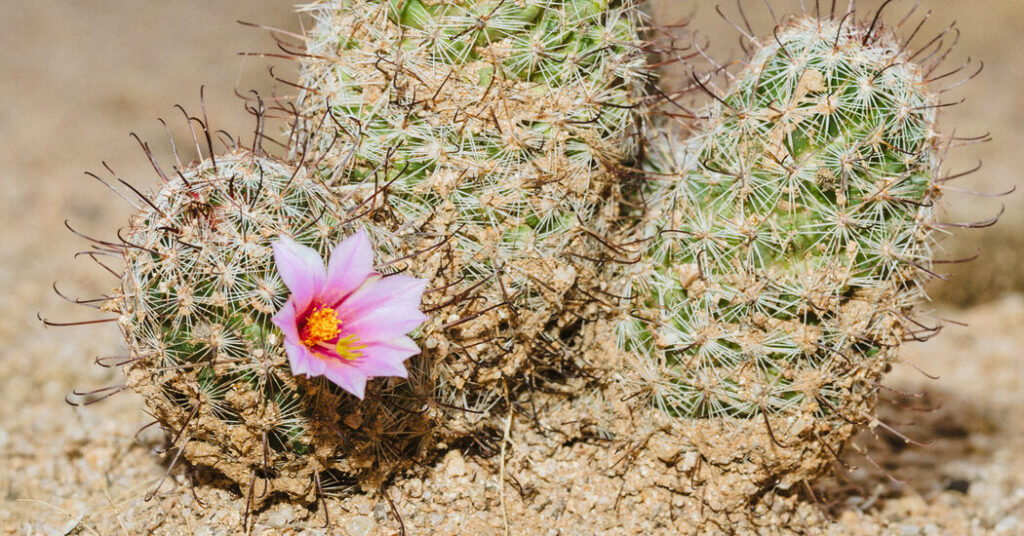
Haskell takes flowers seriously. He loves his subject. Flowers are “exclamations of beauty in a somber world,” but they are not to be viewed merely as pretty or decorative objects. They may be transient and vulnerable, but they are potent, adaptable, habituated to hostility, flirtatious, deceitful, cooperative, adventurous, exploitative and colonizing beings of tremendous and world-straddling success.
Where, as often, a plant community has been diminished, he does not like the concept of “restoring” it. “Perhaps instead we revive, reawakening the life force?” he suggests. “I prefer the verbs kindle and spark.”
Haskell considers plants living “creatures” and deprecates the way natural history museums sideline flowers in favor of carnivorous dinosaurs and other glamorous meat-eaters. “I center the flowers’ agency,” he says — a social justice advocate for the floral world. All our assumptions about a flower’s passivity — its graceful waiting for fertilization by passing insects or soothing zephyrs — are merely symptoms of an almost crazily anthropocentric frame of mind.
It is a prejudice that has produced a massive, worldwide destruction of flowers and their habitats when, Haskell insists, we should see them not as mere beneficiaries of human action but rather as the frame-makers, the wholeness-managers of the systems on which we all rely.
Imagine this: There are plants that exude scents that say, “Go away, I taste foul.” But there are others that, when attacked, release volatiles into the air and soil that summon the enemies of their enemies — the parasitic wasps and predatory mites that will kill the organisms that want to feast on the plants.
Flowers are not merely beautiful blossomings, nor mere self-defenders; but alliance-builders with the invertebrate world, “knitted,” as Haskell says, “into cooperative unions with animals.”
There is a lot of science in the book, and it is not something to be read at too much of a lick. You must follow carefully, a sip at a time, through many close-up descriptions of flower anatomy and genetic structure. But the point is clear: Flowering plants may have appeared only relatively late in the story of life, some 150 million years ago, but since then they have romped across the planet.
Nonflowering plants had been on land for more than 300 million years; only in the late Jurassic and the Cretaceous did flowers begin to take over, “flowing through genetic evolution into the twisting ecological crevices” of the earth, managing constantly to adapt, and thriving where conditions seemed worst. Difficulty was stimulus. Go to the deserts of southwest Australia and you will see how “plants bloom in profusion where conditions seem most dire.”
No one is quite sure what generated the great emergence. Darwin called the sudden appearance of flowering plants, followed by their near-instant diversification across all the world’s habitats, “an abominable mystery.” Haskell terms it “an explosion with an unknown cause.” It may be that the sudden doubling of chromosomes through mutation of plant genomes (called “duplication”) provided the raw material for the huge diversification, but the theory doesn’t quite gel: Duplication happened some 192 million years ago, the boom in flowering plants only 60 million years later. “If duplication ignited an explosion of diversification, the process had a long fuse.”
More intriguing, and more in tune with Haskell’s story, is the spectacular positive feedback loop between flowers and insects that began then and continues today. Seduction and deception, mutuality and fraud, feeding and poisoning, trapping and enabling, piracy and reciprocity, flicker through the joint insect-flower world of love and use. It may have been the almost infinite net of cross-species interaction that stimulated the boom-growth in diversity that now exists in both flower and insect.
For much of the book Haskell is a trustworthy companion, rational but not entirely rationalist, knowledgeable but understanding of what the ignorant need to know, expert but — and this may be a surprising word for a book of popular biology — kind. His emphasis is on symbiosis and communality, both between plants and with plants.
But he raises the pitch in his peroration. Our love of flowers, he says, is “a form of inherited wisdom scribed by evolution into our nerve endings and brain chemistry. In the presence of flowers, our senses glow. Beauty awakens inside us” and “we’re freed momentarily from the husk-like ego.”
You feel like cheering. More Haskells, please, and more flowers.
HOW FLOWERS MADE OUR WORLD: The Story of Nature’s Revolutionaries | By David George Haskell | Viking | 328 pp. | $32
The post A Passionate Floral Manifesto appeared first on New York Times.