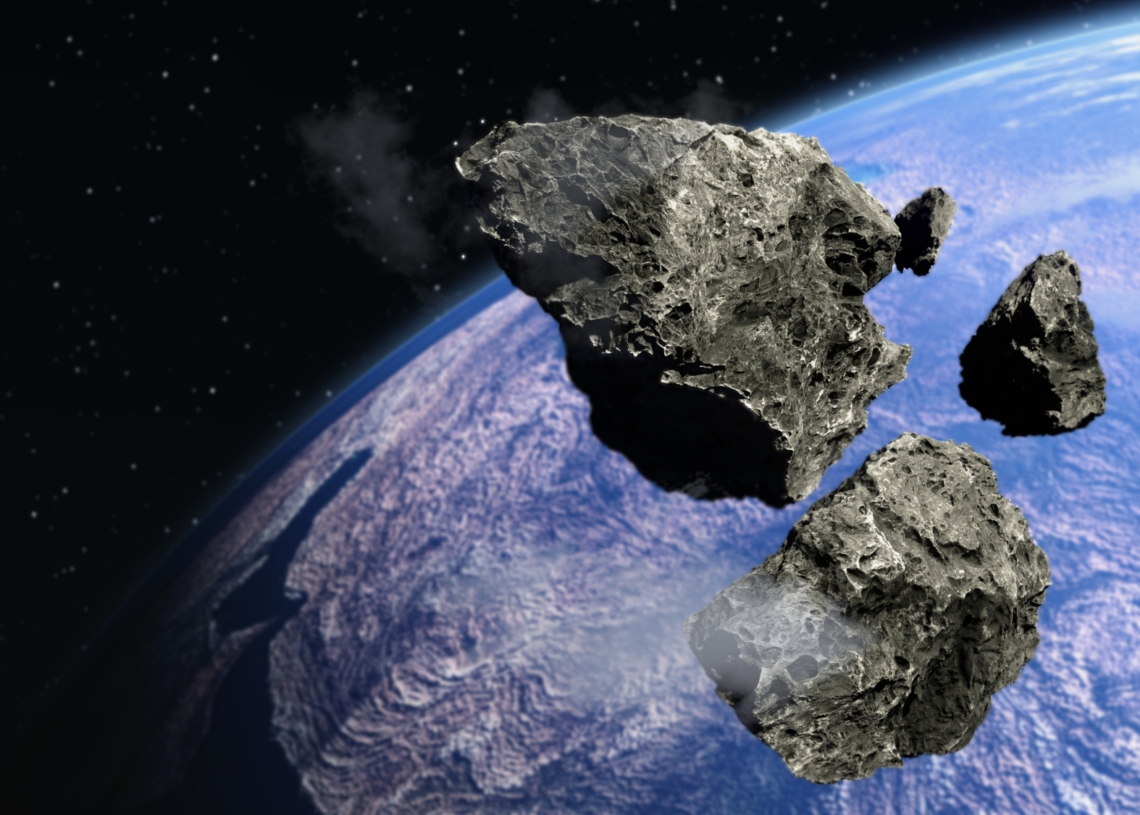
Space rocks are the new frontier in mineral mining. Whoever figures out how to do it first will make a fortune beyond all earthly compare. Entities in both the private and public sectors are racing to figure out how to ensnare or land on an asteroid. A Los Angeles-based startup thinks it’s figured out how to do it, and it’s taking a cue from old cartoons.
The company, TransAstra, which is absolutely the exact name a mining company in a sci-fi movie would have, wants to fly out to a small near-Earth asteroid, wrap it in what is essentially a giant high-tech bag, and tow it back to a stable orbit near Earth.
The plan, dubbed “New Moon,” targets asteroids roughly the size of a house, or about 100 metric tons of floating raw material. These are rocks packed with water, metals, and other resources. These resources could be used to, say, build spacecraft, fuel missions, and manufacture infrastructure in space without launching everything from Earth’s gravity well.
Scientists Want to Steal an Asteroid and Bring It Closer to Earth
TransAstra estimates there are around 250 viable asteroids within reach over the next decade, with more likely to be discovered soon. The long-term vision is to create an orbital stockpile, a cluster of captured asteroids parked near the Earth-Sun L2 point, about 1.5 million kilometers away, essentially functioning as a quarry in space.
The whole plan sounds absurdly, wildly unrealistically sci-fi, until you realize that they’ve already tested the weirdest part of it: the giant bag that they’re gonna catch space rocks with. Although it was a prototype, it was deployed in space.
TransAstra managed to get a prototype of one of their weird inflatable space bags onto the International Space Station. They even received a little financial help from NASA in the form of a $2.5 million grant to scale it up to a version large enough to envelop an entire asteroid. That money was secured after the prototype was successfully deployed and operated in the vacuum of space.
If this works, it would mark a dramatic leap for the viability of space mining. In 2023, NASA’s OSIRIS-Rex brought back a little over 120 grams of asteroid material at a cost of around $1 billion. TransAstra is aiming for tens of thousands of kilograms while spending something in the “few hundred million” range.
The post Why Scientists Want to Kidnap Asteroids and Drag Them Closer to Earth appeared first on VICE.