This is an edited transcript of “The Ezra Klein Show.” You can listen to the episode wherever you get your podcasts.
If you want to see just how bad this energy crisis can become, just read what President Trump and Iran are saying to each other.
On Saturday night, Trump posted a missive to Truth Social: “If Iran doesn’t FULLY OPEN, WITHOUT THREAT, the Strait of Hormuz, within 48 HOURS from this exact point in time, the United States of America will hit and obliterate their various POWER PLANTS, STARTING WITH THE BIGGEST ONE FIRST!”
Trump’s post was a brutal threat meant to make Iran back down. But it did the opposite.
In response, Mohammad Bagher Ghalibaf, the speaker of the Iranian Parliament posted: “Immediately after the power plants and infrastructure in our country are targeted, the critical infrastructure, energy infrastructure and oil facilities throughout the region will be considered legitimate targets and will be destroyed in an irreversible manner, and the price of oil will remain high for a long time.”
I’m recording this on the morning of Monday, March 23. As I woke up today, oil prices had fallen a bit because Trump had extended his 48-hour deadline by five days, citing positive talks with the Iranians. Iran is denying that any such talks have occurred. They say Trump is backing down out of fear.
Iran has already hit energy infrastructure in the region, so their threat is credible. But I don’t pretend to know the truth here. The news and the prices of oil and gas are changing by the hour.
But here’s a key fact that has not yet changed: The Strait of Hormuz remains mostly closed. If it stays closed and, even more, if the war expands — if Iran destroys more energy infrastructure throughout the region and the U.S. and Israel destroy it inside Iran — we are going to enter the kind of energy crisis we have not seen since the 1970s, or maybe even something much worse.
Jason Bordoff is the founding director of the Center on Global Energy Policy at Columbia University’s School of International and Public Affairs and a co-founding dean of the Columbia Climate School. He served as a special assistant to President Obama and senior director for energy and climate change on the National Security Council.
I asked him on the show to walk us through what all this might mean for Iran, for America, for global energy prices and security — and also for America’s geopolitical competition with Russia and China, since both countries seem like they might come out a lot stronger from this.
Ezra Klein: Jason Bordoff, welcome to the show.
Jason Bordoff: Thanks so much for having me. It’s really great to be here.
Last week you and Spencer Dale wrote: “The scale of the current shock is extraordinary. The supply outage is the largest ever recorded, far exceeding prior disruptions not only in absolute terms but even as a share of global demand.”
Tell me about that.
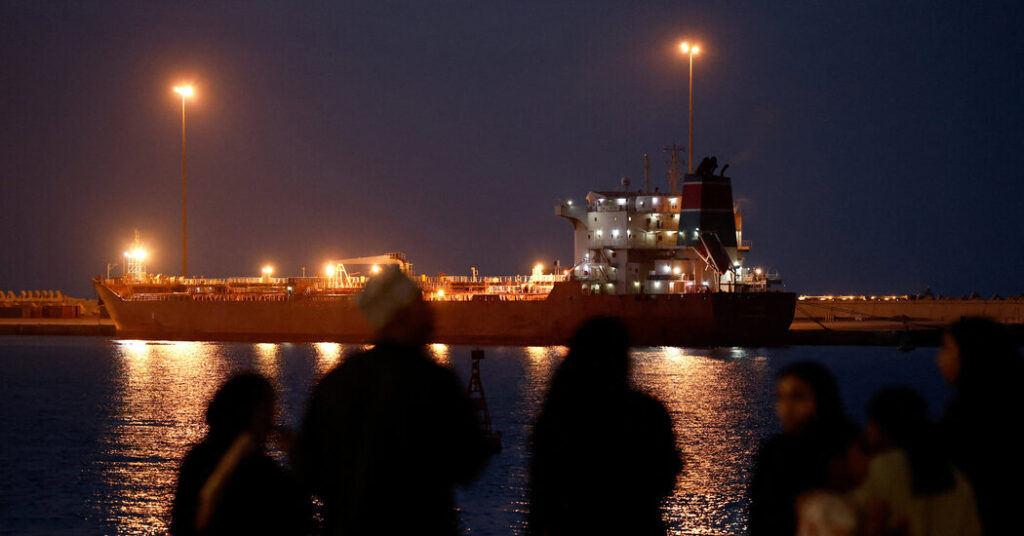
The Strait of Hormuz moves about 20 million barrels of oil a day in a hundred-million-barrel-a-day market — so about 20 percent. And about 20 percent of the world’s liquefied natural gas supply, as well. And it’s mostly closed.
It’s the most critical global maritime choke point for the energy sector, and for lots of other things, too — petrochemicals and aluminum and fertilizer, which has implications on food production and food prices. But for oil and gas, it’s the most important choke point.
The Gulf — the Middle East — we all know, since the 1970s, is a huge energy producer: Iraq, Saudi Arabia, the United Arab Emirates, Iran, of course.
All of that oil, most of it, flows by tanker through this very narrow strait that juts like a little triangle around a corner, and it’s right where Iran is. So it doesn’t take that much with some drones or explosives in a dinghy boat racing out to a tanker.
You had something like a hundred tankers a day moving through before this conflict. You just have to take a few out for insurance to be canceled and for ships to just say: We’re not going to take the risk.
There are some workarounds. Saudi Arabia has been able to move some oil by pipeline. Iranian oil, ironically, is still flowing through. We’ve tapped strategic reserves. We’ve eased sanctions on Russia and Iran — we can talk about whether that makes sense.
But you’re talking about a disruption of about 10 million barrels of oil, maybe a little bit more — so more than 10 percent of global supply. During the Arab oil embargo in 1973, in contrast, you saw about 6 or 7 percent of world supply disrupted. So this is by far the largest energy supply disruption we have ever seen.
What has Iran actually done to close the strait?
The story of this conflict so far has been that the tankers, mostly as a precaution, are just staying in place. We have seen facilities in the region shut down production as a precaution.
We’re still not yet at the point where most energy infrastructure in the region has been physically attacked or damaged. We’re starting to be at risk of seeing that. Israel attacked a natural gas field in Iran last week. Iran retaliated by hitting a very important energy installation in Qatar.
It was to send a signal. It’s tit-for-tat escalation. This is mutually assured destruction: If you come after me, I can hit you hard, and you’ll hurt me, but I’ll hurt you in the process. So people have mostly been holding back from that.
And that’s important because if this conflict is somehow resolved and comes to an end and the strait is reopened, it might take a few weeks, maybe even a month or two, for some of that to come back online and for the energy to start flowing again.
But if we start to see those attacks where we really have physical damage — the Qataris are already saying it will take three to five years to repair the damage that was done to their facility last week. If you do that to many other facilities in the region, the consequences of this crisis are going to last much, much longer.
I want to hold on that attack on the Qatari liquefied natural gas plant, because at the beginning of this fight, when people would think about Iran and Israel and the United States, they would think about Iran maybe firing missiles at Israel. That would be how they would fight back.
But Iran has turned this conflict very asymmetric, and they seem to understand the vulnerability of Israel, and particularly the United States, as coming through the vulnerability of energy infrastructure and other kinds of infrastructure in other Gulf states.
So what kinds of attacks have they been launching? And what is both the threat that has already emerged to energy supplies — but also the implied threat that could emerge to energy supplies?
The point about the asymmetric nature of this is really quite striking. Of course, you have very powerful militaries like the United States, and even Israel, dropping enormous amounts of munitions on Iran. Iran has its own military, but it’s a much weaker power.
But again, it doesn’t take that much to throw the entire global energy market into chaos, and that’s what they’re doing. They’re not just hitting neighbors, although the neighbors — Iraq and some other countries — are being harmed.
If you run out of places to store the daily production of oil that you have and you can’t get it into the market and put it on a ship to sell it somewhere, you have to shut down production. You just have to stop producing.
We’ve seen about seven, eight, nine million barrels of oil a day, globally, just shut in, where people say: We’re going to stop producing.
So that hurts those countries. But we are in a global oil market. If there’s a disruption halfway around the world, you take one, two, 10 million barrels off, the global price of oil goes up.
And as we are seeing in the United States, for everyone listening who goes to fill up at the pump, the price at the pump is set by the global price of oil — even though the United States is now a huge net exporter and the largest producer in the world.
So the pain Iran is inflicting is global in scope because they can affect the global energy market. That’s true for natural gas, as well, which particularly hurts Europe and Asia, because that’s where those supplies go.
It is not a new question for the United States military to think about what would happen if we ended up in a war with Iran. And in every war gaming of that question I am aware of — and there have been many more that I’m not aware of — the closing of the Strait of Hormuz is an immediate possibility.
We seem to have been caught flatfooted by it. Why?
Well, I can’t speak to what kind of planning went on, obviously, in the Trump administration before this started. But you do have a sense that they thought this would be over much more quickly.
Other recent conflicts have been. We woke up on a Saturday morning and found out we had removed the leader of Venezuela, and that seemed to be over a few days later. There was conflict in the Middle East last year, the war between Israel and Iran, and it was only 12 days.
So there may have been excessive optimism that things would change in Iran quite quickly, whatever the objective of this action is — regime change or something else.
The other thing that I think you want to do in a situation like you’re describing — because you’re right, closing the Strait of Hormuz is the mother of all nightmare scenarios for global energy markets, not to mention for other military and defense considerations. So you want to pursue an effort with allies and in cooperation with other countries. And obviously, other countries did not know this was coming.
To the extent that the president of the United States is now taking to social media to ask both adversaries and allies alike to send their warships to the region to help reopen the strait, because they need that oil just as much as we do.
And most countries are saying: No thanks. This is not a problem of our making.
What makes it hard for the U.S. to reopen the strait by itself?
Well, those are probably questions for military experts. But like I said a moment ago, it doesn’t take a lot to create a risk perception.
You just have to hit one every couple of days or every week or two to create a fear about going through the strait. There are so many tankers. It’s not that hard with drone technology, with small boats that can race out to a tanker.
You could probably protect a couple of warships or a couple of vessels that need to transit. But if you’re talking about dozens or even a hundred or so tankers a day, it’s just hard to protect all of them from any risk.
So insurance has been canceled for a lot of these tankers. They’re not going to go through unless they’re insured, and they’re not willing to put these huge cargoes at risk.
Tell me about how the deprivation of this oil and natural gas compounds as it goes on.
Something I am seeing a lot of discussion about from energy analysts is how, if it’s another week, well, maybe that’s higher prices but not a huge deal. But there seems to be a sense that, as it compounds, the effects on the global economy are nonlinear. The economy is working through the reserves it currently has, but things can spiral into a very different kind of situation.
You understand the way energy flows through the economy in a way I don’t, so talk me through that compounding and how this might change if it goes on for another two weeks, another month, another two months.
It’s a good question. I think the impact of higher prices on the economy is nonlinear, and the impact of conflict and supply disruption on oil prices is nonlinear.
As I said a moment ago, this is the mother of all nightmare scenarios — closing the strait. If someone had said: We’re going to close a strait with 20 million barrels a day to most of its supply — you’d be talking about $150, $200 a barrel.
It’s striking that oil prices are just a bit over $100, which historically is not an excessively high price. It’s high, but it’s not crazy high.
I think there are a couple of reasons for that. One is a general market perception that this was going to result in Trump pulling back, declaring mission accomplished, as we saw with Greenland or with “Liberation Day” tariffs: We did not have the staying power, so we’d figure out how to get out of this pretty soon.
I think if this goes on, we haven’t seen anything yet in terms of how high energy prices are going to go.
Right now, the price of oil that you’re reading about in the newspaper is one that’s set by traders every day based on market expectations. At a certain point, physical reality has to catch up, and prices need to rise high enough to destroy 10 million barrels a day of global demand. We don’t exactly know what that price is, but it’s really high, a lot higher than the price is today.
You’re starting to see little signs of that, where the price of jet fuel, the price of heating oil, are much higher than would be suggested by a benchmark price of $100 a barrel.
People might have heard that President Trump said the U.S. is a winner when oil prices go higher because we’re the world’s biggest oil producer now.
Is that true? Is this good for us?
It’s true, and it’s not. It is the case that the U.S. is the largest oil producer in the world. And it is noticeable that when oil prices spike, Putin celebrates, but the United States does not, even though we produce more oil than Russia does. The reason, of course, is because we’re a superlarge consumer, as well.
So I’ve often heard the secretary of energy say that high oil prices might be good for oil producers, but they’re not good for consumers. And this administration cares about the 99 percent who consume oil and gas, not the 1 percent who produce it.
An oil price spike of this magnitude means a lot more money for producers, but consumers pay more at the pump.
And what’s different about the impact on the U.S. today is that an oil price shock is more of a distributional issue — meaning it’s affecting people who consume. It probably has a smaller impact on the macroeconomy on gross domestic product than it did before. That increased consumer spending is flowing to domestic producers and their shareholders, and they’re spending some of that money in our economy, too. It’s not flowing overseas the way that it used to.
Which means that the issue is that if you’re working class in the U.S., and you’re filling up your car at the gas station, you’re paying a lot of money. Whereas there are people who either own or are invested in U.S. energy companies who are making a lot of money.
Well, U.S. producers are making a lot of money, and we should remember some of those are global, too, and they own assets. But yes, U.S. companies, their shareholders, their workers, oil-producing states — of course, they all benefit from high prices.
I want to hold for a minute on the price here, because there is a disconnect between the price and the conversation I’m seeing among energy and military analysts that I don’t entirely understand.
As you mentioned, the price of a barrel of oil, or at least in the measure we tend to use, is a bit over $100 at the moment we’re speaking.
But if you just looked at the chart, and you had no narrative, you would not predict the conversation we are currently having, which is a once-in-a-generation geopolitical crisis that has created the nightmare scenario for global energy supply — the closing of the most important choke point for global energy supply. There are people like you who are saying the scale of the current shock is extraordinary.
Something seems off here. It seems the market is not correctly pricing in the risk that is being described by plenty of people in the market. When I listen to people who lead energy companies or are traders in this area, their hair is on fire.
But this does not look much worse than 2022 in the oil pricing.
So is someone wrong? Am I misunderstanding what markets are supposed to do in terms of pricing and risk? How do you explain this?
Well, there are the so-called physical markets, and then there are paper markets, meaning the price we see as a result of trading activity. That is based a lot on expectations, not just the physical reality at any given moment.
So the price you’re seeing includes what’s happening — but also expectations about what is going to happen.
As I said a moment ago, if Trump declares his mission accomplished tomorrow — we’ve done what we need to do, it’s time to pull back, reopen the strait — it would take a couple of weeks, but eventually, supplies come back reasonably quickly.
I made a few notes last night before coming on your show about how high the oil price was and woke up to find oil prices had fallen dramatically because President Trump made some comments about how he had very productive discussions with the Iranians, and we were close to a resolution.
The fundamental reality hasn’t changed in the last 24 hours, but market prices fell enormously because people had an expectation that things would come to an end reasonably quickly.
So I think that helps to explain the disconnect.
It also takes time for the physical disruption to show up in the market. If you load a tanker with a bunch of crude from Iraq or Saudi Arabia, it can take two weeks to get to its destination. So we still have some cargoes that were loaded before this all happened that haven’t even reached their destination yet.
You work through some inventories, work through some oil that is in transit, and a couple of weeks into this crisis, then you start to see the physical reality bite a lot harder.
The measure a lot of people actually see in their daily lives are the numbers when they go to the gas station. But something I’m hearing a lot about from energy analysts is the middle distillate products — the fuels and the intermediate products that go into other things. Those actually seem to be going up in cost higher and faster than the price you pay at the pump.
Can you talk me through both what those are and why that is?
Yes. When you refine a barrel of oil, you get a bunch of different products from it. Gasoline is the one most people think of. But there’s diesel, which is sort of the workhorse, the lifeblood of the industrial economy — because everything we buy in the store gets there by truck, and those all run on diesel.
So you start to see it show up in prices elsewhere: heating oil, jet fuel, asphalt and lots of other kinds of things you use and things that we don’t think about normally.
The market for those, we’ve seen prices go up much, much faster, because I think those are less liquid, so the physical tightness in those markets starts to hit refiners much more quickly. People who need to buy those products from refiners are seeing people charge a lot more for it already.
If this keeps going for two weeks, three weeks, four weeks, five weeks, what do you think happens to the U.S. economy? What do you think happens to the global economy if this begins to cascade?
I think we haven’t seen anything yet in terms of where I expect oil prices would go if this goes on for weeks longer.
As I said, the physical reality catches up, and you need prices to rise high enough to actually destroy demand, and that’s hard to do.
What does “destroy demand” mean?
It means everyone figures out how to do something other than buy gasoline. You’re going to drive your car less.
We saw the C.E.O. of United Airlines the other day say they were going to start to idle some of their flights. The flights that maybe get a little less revenue — like Tuesday, Wednesday, Thursday flights, rather than on the weekend, the flights that aren’t as profitable — they’re going to stop flying as many airplanes and some industrial factory is going to shut down.
We’re already seeing countries that struggle to afford high prices in Southeast Asia — Thailand, Indonesia, Malaysia, countries like that — have announced work from home one day a week. They are having school closures. They’re putting in place emergency measures to cut fuel.
So the question is: How high a price do you need for the global economy to use something like 10 million barrels a day less of oil? And that’s a pretty high price.
In the 1970s, there was a little lower hanging fruit. There were some opportunities to reduce oil use that were a bit easier. We’ve kind of gotten the low-hanging fruit out of the system. So today, the things we use oil for, there’s not a huge number of substitutes in the near term.
In the long term, obviously, you could buy an electric car instead of an internal combustion engine, that sort of thing. But in the near term, there’s not that much you can do except shut down economic activity and maybe take the subway or bus instead of driving. And businesses will make different choices.
The economist James Hamilton famously documented that basically every major oil shock of the 20th century preceded a recession. Do you think that’s likely to happen in this situation?
Well, it depends how high oil prices go, of course. But if you’re talking about the kind of levels that would be needed to make 10 million barrels a day of oil demand go down, then yes, that is the sort of price level that could push the economy into recession.
We think about this from the American perspective, where it would cause economic hardship and pain. It is hard to pay more at the pump. It is hard to pay more for a flight.
But what will happen very quickly is that rich countries will begin bidding for scarcer energy supplies — and those supplies won’t make it to poor countries that cannot pay the cost.
I think there’s a lot of talk about recessionary risk in America. But we, and Israel, started this war. If it continues, what happens to people in Malaysia or people in Kenya? What is the cost that we risk imposing on the 2 billion poorest people in the world who had no say in this?
I think it has the potential to be really quite devastating.
We saw that in the 2022 energy crisis, which was largely limited to natural gas. It didn’t affect oil markets as much. So when Europe lost access to natural gas from Russia, what did Europe do? It went into the global market for liquefied natural gas — that’s gas that can be traded more easily — and prices went through the roof.
Like markets are supposed to do, the market allocated the supply to the people who could pay for it. So those flows went to Europe, and Europe paid a premium for it. That meant that coal prices went up because coal was the substitute for the gas that would have otherwise gone to Asia.
So a country like China used more coal instead. But if you were a lower to middle income country, like Pakistan, Bangladesh, you struggled to afford any energy at all. They really did start to see significant economic impacts to shut down economic activity, to not be able to get around.
We’re seeing in Pakistan now, there’s a huge cricket tournament, and they’re telling people to watch on television rather than go in person.
In India, oil spending is about 3 percent of G.D.P. In Thailand, it’s about 5 percent. Fossil fuels overall in Thailand are 7 percent. These are very large shares of the economy that are spent on fossil fuels, nearly all of which are imported, and these are countries that don’t have the fiscal space to pay more.
We haven’t even talked about the fact that the Strait of Hormuz is a critical choke point for fertilizer. And if fertilizer has trouble getting to the market, you’re going to see potential impacts on food and food prices. That puts enormous economic strain on countries that are already struggling to afford these essential products in the first place.
You’ve mentioned that a lot of the world’s oil, and it’s not just oil or even primarily oil coming from Iran, goes through the Strait of Hormuz. But much of it doesn’t.
If the world began turning to other geopolitical actors for supply, who has the capacity to increase supply in a situation where this war keeps going and there’s much more pressure to adapt? What might those adaptations look like?
Well, it would take time. There are not many countries — Saudi Arabia is really the only one, maybe a few others — that hold so-called spare capacity. They have invested and spent extra money so that in an emergency they can quickly bring oil to the market that they otherwise could produce, but they hold it back in case the market needs it. They consider themselves the sort of central bank or federal reserve of the global oil market.
But, by the way, that Saudi Arabian spare capacity gets to market on a tanker through the Strait of Hormuz. So it’s not so helpful right now.
Other people have the potential to increase production, and the United States is one of those now with the shale revolution. Shale supply can be produced a bit more quickly than more conventional oil. But you’re talking about six months, 12 months. It’s not something that happens in a crisis.
You mentioned the shale revolution a few times. Could you just give me the brief overview of U.S. energy production from, say, 1990 to 2025? What happened, and how different is our position now than it was then?
We’re still part of an interconnected market, so we still feel higher oil prices. But it is hard to overstate how dramatic the transformation in the U.S. energy position has been in just the last 10 to 15 years.
Twenty years ago, the U.S. was producing about five million barrels a day and importing 60 percent of its oil.
Since the Arab oil embargo, we have had presidents — George W. Bush, in his State of the Union address, warned that America was “addicted to oil” and high oil prices were bad for the United States, and we needed to get off Middle Eastern oil.
And within just a couple of years, oil producers figured out new technology to do what’s known as hydraulic fracturing. You could fracture rock, and you could extract oil and gas from the geology in ways we didn’t quite know were possible or economic before.
It started with natural gas, and then it extended to oil, and it just really has taken off — this extraordinary increase in U.S. production. But that’s starting to peter out now. The growth is not happening in the same way it used to.
So these big oil companies were already asking: Where’s the next increase in production going to come from?
And they were looking at places like Iraq and Libya and going back to some of these geopolitically risky places. I suspect people might be rethinking those plans a little bit now, or at least assigning a bigger geopolitical risk premium to those investments.
What about Russia? One of the things you mentioned early on in this — that I think will sound strange as a sentence — is that the Trump administration has made a decision to desanction Russian and Iranian oil and gas.
To the extent I know anything about our current foreign policy, it’s that we have been trying very hard to sanction Russian and Iranian energy exports.
So what is going on there?
[Chuckles.] I think we are showing in this conflict the limits of the willingness of the American people, the American government, to bear pain in energy markets, pain at the pump, to pursue foreign policy objectives.
That has always been the case. In 2022, after Russia invaded Ukraine, we did not use every tool we had in our tool kit to put pressure on Putin. We had some efforts to deprive it of some oil revenue, but we did not impose full sanctions to try to prevent Russia from selling all of its oil to the global market. Because Russia just exports too much, and you would have sent oil prices through the roof for all of us if we had tried to do that.
I worked in the Obama White House when the original sanctions were put on Iran, and the big question was: How do you take Iran’s oil off the market — that was one-and-a-half to two million barrels a day — and not send oil prices skyrocketing in the process? How do you impose the pain on them — but not impose it on us?
So we’ve always been reluctant. Iran is realizing that now. They know that. That’s why they’re doing what they’re doing in the Strait of Hormuz.
Because we’re part of an interconnected global oil market, our options are limited to pursue foreign-policy objectives targeted at big oil-producing states if the result of that is you send oil prices through the roof and impose pain on ourselves in the process.
Since oil prices are going up so much, the administration is looking to pull every lever it can to find some relief. One of those sources of relief is that Russia has produced a lot of oil that is floating on the water, so to speak — it’s in tankers looking for a buyer.
It was having to discount that oil a lot to find a buyer, because people don’t necessarily want to touch sanctioned oil. You have to use a sort of shadow economy to do it. And they’re saying now: Please take those barrels as fast as you can and get them into the market to bring prices down.
They’ve done the same thing, for at least the next 30 days, for Iran — which, as you said, it’s a bit odd to be pursuing a military campaign against Iran, and one of the tools we have to deal with high oil prices is to let Iran sell more oil. Not just to sell more, but even more important, to get a better price for the oil that may have otherwise been sold in that shadow economy.
OK, I’m sorry, but that’s insane.
[Bordoff chuckles.]
We are bombing the country into rubble, threatening to destroy their power plants — and also desanctioning their oil.
It really shows something here was unplanned for or is off.
And also that if we’re at a place now where we are waiving sanctions on Iranian oil for 30 days so that they can put that oil on the market as fast as possible. It probably would have been sold eventually anyway, but let’s do it faster — and, again, they’re going to get a better price for it.
We may be running out of good options. We could talk about what some of the other options are to bring oil prices down.
I just think, again, this is why oil has always been such a key geopolitical weapon and such a key geopolitical vulnerability.
Let’s talk about energy as a weapon for a moment. You and Meghan O’Sullivan published late last year in Foreign Affairs a big piece called “The Return of the Energy Weapon.”
What is “the energy weapon”?
There’s nothing new about energy being used as a weapon. Lord Curzon in World War I famously said: The allies “floated to victory upon a wave of oil.”
The ability to cut off the supply of oil for the military in World War I, World War II — these were key sources. One of the reasons Japan attacked Pearl Harbor was that it had lost access to the oil supply before that.
Didn’t Stalin attribute the victory in World War II to cutting off Hitler’s access to certain oil fields?
Yes. So trying to go after energy supply has always been central to that. It was why Winston Churchill famously moved the British Navy from coal to oil, which was a much more efficient fuel. The Navy could be faster. But it also exposed it to new vulnerability because you had a lot of coal in the U.K. up near Newcastle, but now you needed to depend on places like Iran for your oil. So the geopolitics of energy became an issue in a way it hadn’t been before.
We wrote that piece because I think that the idea of energy being weaponized — which, of course, was a national trauma in the 1970s, particularly after the Arab oil embargo — lines at the gas station — really did have a long-lasting effect on energy policy in the United States. The way we think about energy has been framed by that trauma — that energy, particularly in the Middle East, could be weaponized.
But the world has changed a lot in the half-century since then. The United States is now the largest producer of oil in the world by far.
Generally we’ve had this multidecade period of relatively cooperative and copacetic geopolitics, economic cooperation, globalization, bringing other countries into the fold through the World Trade Organization and in other ways.
So I think we generally became a bit complacent with risks to energy security and viewed them as largely a thing of the past. We had this unprecedented increase in U.S. supply that comforted markets a little bit and provided ample supply, kept prices low. Power demand was flat in the United States and Europe for the last 20 years. Of course, now it’s surging again with data centers and other things.
But the most significant shift is that the global order we knew seems to be collapsing beneath our feet. We’re in a new world of conflict and competition and rivalry between great powers.
In a world that is in disorder like that, a world where there is increased risk of conflict and competition, there’s no reason energy would not be a key weapon and a key source of vulnerability.
We’re starting to see that play out — obviously, in what Russia did to cut off the gas supply to Europe after it invaded Ukraine. China, last year, restricted rare earth exports, and that really shook up the foreign policy community in ways that sent shock waves through it.
And, in ways, it made us back down quite quickly from the trade war that Donald Trump had begun with China.
Exactly.
You used a lot of passive voice in that answer. You talked about global risks to energy security. You talked about the collapsing of the global and international order.
But we chose this. This didn’t happen to us out of nowhere. The global order isn’t collapsing out of nowhere.
We’re not the only ones. Russia certainly bears its share of responsibility. China has had its violations. But Donald Trump has been lighting the global international order on fire — deposing and capturing presidents of other countries, launching a war with Iran with no consultation with functionally anyone except maybe Israel.
And the risk to energy security here was us. We chose to put energy security at risk. We seem to have done so without any real planning for what it would mean.
But it reflects something sort of odd, which is when you think about the conversation that dominated this in the 2000s, we needed to get to a point where America had energy security, where we couldn’t be squeezed by OPEC.
And we actually did quite a lot in that direction and became a net energy exporter and had this amazing shale gas revolution and began to work on decarbonization.
Then, in just the last couple of years, Trump has destroyed the solar and wind subsidies, is trying as best as he can to set back our work on decarbonization and electrification. And, at the same time, he has executed a series of moves in foreign policy that have created a lot more instability in the global economic and political order.
We have chosen a volatility that we have not planned for in a way that is very strange.
Yes, it’s hard to disagree with what you just said. It has been coming for some time, and there are a number of actors. Some of your listeners will recall the speech that Jake Sullivan, the former national security adviser, gave at Brookings, when he tried to explain why this order was changing. Part of it was that China wasn’t playing by the rules that a lot of people thought they might two or three decades ago.
But, clearly, when you threaten trade wars against your allies, threaten to take other pieces of territory by force — like Greenland — that really did traumatize Europeans and lead to a level of concern about dependence on the United States.
After some of these big international meetings, like the Munich Security Conference or Davos, one of the questions I was getting the most was: Are we misguided, being Europeans, to swap dependence on Russian energy for American energy? Are you a reliable supplier — or is that going to be weaponized against us in a coercive way as leverage to get a concession for something else?
What did you tell them?
I think it’s probably not the case, but I understand why they might be concerned about it.
I think U.S. energy exports are probably pretty reliable. But we are seeing an administration that is looking for leverage, looking for ways that it can sometimes use coercive tools to extract concessions from others. And it seems like that’s part of what the strategy with the “Liberation Day” tariffs was.
But what that tells us now is that there’s energy risk all around, right? If you go back five years ago and talk to people about the need to have an energy transition, they would have said: OK, that’s good. But we don’t want to be dependent on China.
If you want solar panels and batteries and critical minerals and electric vehicles, now we’re dependent on China for all of our supply chains. And I think the one consequence of this conflict, and everything that came before it, is the weaponization of energy — I mean, literally not just sanctions but a physical military blockade to prevent Venezuela from selling its oil as part of what we did to oust Nicolás Maduro.
Also Russia’s cutting off its supply — if you’re in Europe, you’re not looking at Russia the same way again as a reliable supplier. Now you might not be looking at the Gulf the same way. And maybe you have your concerns about the predictability of U.S. energy policy, with policy swinging back and forth. By the way, it was the Joe Biden administration that put a restriction on new permits for exports of natural gas. So there have been lots of signals that might make people a little bit concerned.
So now you’re looking at the whole world, and you’re saying there’s energy risk all around. What do I want to do? I want to insulate myself, right?
After the 1970s, one of the main things we did to increase energy security was actually more cooperation and more interconnectedness. We created the International Energy Agency for diplomacy. We had 30 or so countries that agreed to hold strategic stocks together — in case there was an emergency — and to release them together.
We created this well-functioning market that we had talked about before, so we were all interconnected. If there’s a supply shock halfway around the world, market forces can reallocate supply.
I think in this world of collapsing geopolitical order and competition and risk, countries will increasingly say: We need to take care of ourselves. We need to think a little more in an autarkic sense, focus much more on the domestic production of energy, reduce imports and reduce interconnection to other parts of the world.
And that has significant implications geopolitically and for energy prices. It is very expensive if you want to make all your solar panels — or do all your mining and refining and processing of critical minerals within your own country.
Tell me about the role and positioning of China at this moment.
I think in the immediate moment, obviously, it’s painful for China to pay much higher energy prices. China gets about half of its oil through the Strait of Hormuz, about a third of its liquefied natural gas, and they’re paying more for it just like everyone else.
I do think they’re well, or better, prepared than many to deal with that. They’ve built up a huge strategic reserve of oil, about a billion and a half barrels, while the United States has been selling ours off because of a misperception, on both sides of the aisle, that the shale revolution makes us insulated from all of this stuff.
And China, for decades, has been pursuing a strategy to electrify more of its economy. That’s why half the cars sold in China are electric. A much higher share of their overall economy is electrified than in most of the rest of the world. That’s more about energy security than it is about a clean energy transition or climate change. And then they want to produce that electricity from domestic sources. For them, that’s coal and renewables mostly and some nuclear energy.
In the long run, the question is whether other countries — say, if you’re import dependent in Europe, and you say: Look, we can’t go through this again. We went through it in 2022 with Russia — now we’re facing an energy shock again. We really need to produce our energy at home, and we need to electrify more.
What does that mean? It means you have got to buy a lot of stuff from China. All of the batteries and electric vehicles, and all of those critical minerals and solar panels.
And I think that China, in the long run, could end up a bit of a winner here, in the sense that they’re the ones supplying all of that. They have long been trying to position themselves as a reliable commercial partner — while the United States is the source of geopolitical instability. And this conflict doesn’t make it harder for them to make their case.
I want to talk about the two countries’ strategies here for a moment. If you had just been watching China and the U.S. for the past couple of years — and particularly since Donald Trump came back in for a second term — I think what you’d see is that the U.S. seems to be making a bet on being something between a petrostate and a petro-empire.
A petrostate in that Trump has been gutting the wind and solar subsidies and making permitting harder, trying to retard the clean energy transition while going all out on fossil fuels. But in addition to that, he has been trying to expand U.S. influence and, to some degree, control over the fossil fuel reserves of other places.
Venezuela is the most obvious example here, where we functionally took over that country and government and said completely, explicitly, that we are taking over their oil.
And I think Trump’s view of how Iran was going to go was that either he was going to cut a deal with some deputy-level official in the regime who would be friendlier to the U.S. — in order to not have their head be the next one on a pike or not have their home be the next one hit by a missile — or there’s going to be a bottom-up Iranian revolution.
And they’d be so grateful to him that the resulting regime would be friendlier to U.S. interests and would deal with us on better terms. And in either case, you now have America, with its tremendous energy exporting potential and Trump’s incredibly close relationships with Gulf countries like Saudi Arabia. Then you’d add in Venezuela and Iranian oil, gas, etc. And that would give us a lot of power.
China has been, as you say, electrifying at a really torrid pace, but also developing, functionally, dominance over the clean energy supply chain. It is very, very hard to beat what they can do on cost. The Biden administration put huge tariffs on Chinese electric vehicles and Chinese solar power components and so on.
But, practically, as America becomes a less viable partner for many countries that want to have a clean energy transition, I think other countries are rethinking their approach. And, in some cases, they actually changed course. So China seems to be betting a lot on becoming the supplier of the global electrostate.
Fist, in that rendering of the two major energy strategies, how much do you disagree with? And then second, given where the world seems to be going to you — how you would think about those two strategies as an energy expert?
Well, I think it’s exactly right. And, as I said, this conflict might give a boost to China, in the sense that it was a big concern before for countries that were thinking about moving much faster toward an electrified economy, toward clean energy. The constraint was: Do I want to be heavily dependent on China?
I’ve been thinking, for the last couple of years, that as problematic as it was to roll back significant parts of the Inflation Reduction Act, the biggest risk to a faster clean energy transition was how policymakers, particularly in the U.S. and Europe, came to perceive the supply chain risk of dependence on China.
Because it’s different to buy a solar panel. We’re not buying electricity from China. We’re buying products and technologies that are necessary to do that, like a battery or a solar panel.
If it is perceived as an unacceptable risk, that’s a large amount of sand in the gears of the clean energy transition. Because it takes a really long time and a lot of money to build those supply chains elsewhere.
I think people are going to look, potentially, a bit differently at relative risk, when you look around the world right now and say: Well, there’s a concern about dependence on China’s dominant position in some of these clean energy supply chains. But there is risk all around.
And the view of the United States — well, at least the Trump administration, as you said — has been to double down on petrostate dominance. If you’re the largest oil and gas producer in the world, why are we buying all this cheap clean energy from China?
Energy security comes from being self-sufficient, producing more oil and gas than we need. And I think today’s conflict is a reminder that in an interconnected global market, there’s a limit to that.
So who would you want to be right now? I think being a BYD dealer, the Chinese electric vehicle maker, in Brazil is a pretty good place to be. Because people are going to be a bit concerned about what might come and view oil security in a way we haven’t seen before.
That is, in fact, as I said before, the national trauma of the 1970s, when we really moved, as a policy issue, to increase domestic production but also to find alternatives to oil and use less of it. We were getting 20 percent of our electricity from oil in the 1970s, and within a small number of years, we brought that close to zero.
So we looked for opportunities to use less of that. And depending on how long this goes on, and how large the economic shock is, as we talked about earlier, it has the potential to be something that causes that sort of long-lasting effect.
I’m interested in what you think that could mean for the long term. You go back to the oil shock of the 1970s, and you have a major effort to find efficiency, because there’s not a straightforward and viable alternative for what energy you would use to run the global economy. So you have Jimmy Carter telling the country to turn down the thermostat.
Right now, we have been in this period where we’ve seen a tremendous transition to solar, to wind, to geothermal, to batteries, to other kinds of things. And it’s 2026. In the last five years, you’ve seen two tremendous geopolitical shocks to global energy flows.
So as somebody who studies clean energy transition, which mostly we’ve talked about in terms of climate change, do you think this is, in the long run, an accelerant of global clean energy transition, simply because it creates less dependencies on some of these traditional players? Or does it just create new dependencies — like a dependency on China or from whomever you get your electricity piped in — such that it does not offer itself as an answer?
We don’t know yet how long this conflict is going to go on, or how severe it will be. As we said earlier, the potential that we haven’t seen anything yet with oil prices — and if this goes on for weeks longer, or if there’s real damage that causes the infrastructure in the region to take years to repair — this has the potential to be a kind of shock more like what we saw in the 1970s than anything I’ve seen in the 25 or so years that I’ve been working in energy policy, geopolitics and national security issues.
That would be a significant accelerant and, frankly, a more powerful one. I mean, although I would like climate change to be a stronger concern for policymakers than it is, if something is a national security issue and it’s top of the agenda in the situation room, it’s going to move policymakers in a way that the urgency of climate just doesn’t today.
So you have the potential now for an even more powerful motivator to move toward an electrified economy, and you get a lot of that electricity from domestic sources. For places like Europe, that will be renewables and nuclear, in particular, which can move you in a lower-carbon direction.
It is more complicated than that. Coal, for a lot of the world, is a domestic source of pretty cheap, reliable energy. If you’re going to try to say we want to be less dependent on imports, it can also be coal. And if you’re in Indonesia or parts of Southeast Asia or other places, you’re seeing a lot of that.
So it doesn’t always cut, necessarily, in one direction. And the impact here is not just: We want less fossil fuels — hence the comment about coal — it’s: We want less interconnectedness. We don’t want to be exposed to these volatile global markets that are exposed to geopolitical risk. And we want to reduce imports.
That, I think, is what the energy security conversation in much of the world will be coming out of this. And the way you respond to that is going to look different in different places.
In Europe, it accelerates a move toward clean energy and an electrified economy. But it might look different in other places.
And how about Iran itself? Right now, as we’re speaking, it does not look likely that Trump and Benjamin Netanyahu are going to succeed in their initial goal of regime change.
And if you are the Iranian regime that survives this, under whatever conditions that might be true, it’s not going to be a disarmed regime. We’re not going to have the boots on the ground that would be necessary to make that possible.
Think about the weaponry that Hamas was able to smuggle into Gaza when it was encircled by Israel. There’s going to be no level of control over Iran that is anything like that.
If you’re that Iranian regime, it seems to me that what you have learned is that your best defense, aside from eventually getting a nuclear weapon, is your ability to close down the Strait of Hormuz — that you want to be putting a huge amount of your effort and national defense strategy into figuring out how to threaten the regional energy supply through attacking the energy systems of other Gulf states and through closing down the Strait.
And so in sort of forcing Iran into this position, you might have really forced it into a position where it is going to figure out how to make sure it can wield the energy weapon even more effectively in the future — thus creating better deterrence against its enemies.
I’m curious how you think about that from an energy weapon perspective.
I think that’s right. I think it’s true for Iran. It’s true for others, as well.
Iran has, at least for a 30-day period, temporarily secured greater sanctions relief from the United States by cratering the global oil market than it did through years of negotiation about how it might adjust its posture toward its nuclear program.
And we’ve learned how asymmetric that weapon can be. It just doesn’t take a lot, not to even physically close it, but to create the risk perception that you could close the Strait of Hormuz.
And so the thing about the energy weapon is it is quite asymmetric. You don’t need a massive military and battleships to wield it. You can do it in a much more targeted, lower-cost way. And I think that is a lesson that Iran is learning from this, and I fear other countries might learn, as well.
Are there lessons that the United States should be, or is, learning from this?
I think there are lessons we should be learning. The first is the myth of energy independence. There are no doubt economic and geopolitical benefits that have come from moving from importing 60 percent of our oil two decades ago to being the largest producer of oil in the world and a huge net exporter.
But that doesn’t mean we are independent. It doesn’t mean we are isolated and insulated from what happens halfway around the world. And the best way to protect ourselves would be to use less oil in the first place so that we are less exposed to these geopolitical shocks — not just to produce more of it.
I should note that it is different for natural gas. The price of natural gas in Europe and in Asia has soared to $15 or $20 per million B.T.U. In the U.S. it’s $3 per million B.T.U. And so the price of natural gas here is disconnected. We do not have a natural gas crisis right now in the same way that Asia and Europe do — or did in 2022.
Yes, it’s going to make our allies quite thrilled with us.
Well, they’re turning to us for our energy. That’s what Europe did after 2022. They did more renewables, they did more efficiency, but they moved incredibly quickly for all the difficulty building energy infrastructure and discussion of permitting reform that you’ve written about as eloquently as anyone.
Somehow Germany was able to build four import terminals to get more natural gas from the United States. Because when you really have an energy security crisis, policymakers jump through hoops to figure out how to do something about it.
Building is a policy choice. So it seems to me that there are now two pathways for Donald Trump in this war.
One is in the quite-near term — in the next days or week or two — to simply say: My goal here was to reduce much of the regime’s offensive capability to rubble, to destroy their navy. We’ve done it. We’re done.
But that will leave in place the Iranian regime. They will declare victory, as well. They will build back up their military, their capabilities — having done so with the knowledge of what the vulnerabilities of America and its allies actually are.
And so it would be a sort of declaration of victory that I think markets would be very happy with. And actually the American people would be relieved by — but that would also be seen as a kind of failure.
Remember, we had a bombing campaign against them not that long ago and said that their nuclear capabilities were obliterated. And then, a year later, we started this campaign. Now we say they were only weeks or days away from a nuclear weapon. So apparently, our ability to bomb them into sustained powerlessness is not what one might have hoped.
The other pathway forward is that this war goes on for quite a bit longer, possibly including ground troops to take the Strait — to have actual operational control of the Strait and more control over what happens in Iran. And if that happens, we’re going to have an extended crisis in energy supplies.
If we end up in that world, what are Trump’s options for trying to maintain some semblance of stability in American energy prices — such that he and his party don’t get annihilated in the midterms? What might he try in a world where this war has a month, two months, three months — maybe even more than that — left in it?
There is not a policy tool in the policy tool kit large enough to deal with the loss of something like 10 to 15 million barrels a day of global oil supply. So there is no way to prevent oil prices from going through the roof if the Strait of Hormuz remains closed.
We’ve already seen policymakers pull some of the strongest levers they have: The largest-ever release of strategic stockpiles through the International Energy Agency — 400 million barrels. And the day that was announced, oil prices went up — not down. Because it was perceived as — there wasn’t a lot of detail around it: It’s just not enough.
What matters is not the total number. What matters is, in a 10 to 15 million barrel per day disruption, how much you can get into the market every day. And that’s maybe two or three million.
Then you’re going to see some other ideas thrown around — like waiving this law that makes it hard to move fuel between two U.S. ports, waiving some environmental standards. All of these are a few cents at the pump, at most.
There is really not much that can be done. So I think you’re going to have a real energy crisis, and that’s going to be a major constraint on the administration — that might cause people to need to pull back much more quickly.
That’s what the market is betting on. That’s where we started in the beginning, and why oil prices are not much higher than they are today.
We should remember that most of the energy infrastructure in the region has not yet been damaged. So it can start to operate again relatively soon.
If you really start to see tit-for-tat escalation, where you go after Iran and they’ve signaled they can come right back at us and other Gulf states, then you’re talking about months or years, not weeks to months, to try to get things back to normal.
Walk me through one of the more concerning scenarios there. So let’s imagine a situation where Trump doesn’t decide to attack Iranian power plants. And the regime responds by unleashing drones and missiles on regional energy infrastructure.
You’ve mentioned that what’s going on with the strait is that you’ve closed a waterway. So if you reopen it, things can just start moving through it again. But if you damage a bunch of multibillion-dollar energy installations, you can’t rebuild those in a morning or in a week.
So what does that create as a possible long tail? I think that people in their heads have the idea that the energy price disruption ends roughly the moment the war ends.
What would a war look like where that would not be true?
I think the main thing would be either that the risk perception is still there, which makes it harder for people to move through. The U.S. could tomorrow say: We’ve done what we need to do, and we’re leaving now. Thank you very much. You’re not going to see tanker traffic restart.
Iran and Israel have a vote in this, also. Not just the United States. And so if Netanyahu says: We’re not done yet — or Iran says: We don’t feel the same way — then you’re not going to see tanker traffic go through.
So you need to get to a place where people have confidence that it is safe to move through the strait. And then you have major pieces. President Trump, a few days ago, threatened to attack Kharg Island, which is this major piece of energy infrastructure that is responsible for most of Iran’s oil exports.
If that were attacked, we know what Iran would do in response. They would attack an important piece of energy infrastructure somewhere else. In 2019, the Houthis attacked Abqaiq, this critical oil installation in Saudi Arabia, and it was remarkable how quickly the Saudis could get that back up and running.
But the damage could have been much worse. And so if you do something like that, you could see millions of barrels a day of disruption that we haven’t seen yet. By the way, Saudi Arabia was exporting about seven million barrels a day before this, and now they’re getting to four or five through a pipeline to bypass the Strait of Hormuz and send it to the Red Sea. There’s a port called Yanbu in the Red Sea — that’s vulnerable. And we saw what the Houthis could do to tankers in the Red Sea not too long ago. We haven’t seen attacks there yet.
So if that sort of energy infrastructure is damaged — again, coming back to the attack on Qatar a week ago, the Qataris have said that for the roughly 20 percent of their project that was damaged, it’s going to take three to five years to repair. Maybe they can do it in two to three, but that’s not weeks or months.
Then always our final question: What are three books you’d recommend to the audience?
Given how much this conversation has been about physical constraints and choke points, like the Strait of Hormuz, I would recommend that people read an excellent book called “Material World” by Ed Conway, which is a really great reminder of how important things we never think about — like copper and sand — are to the global economy. We don’t think about it until something breaks. And what that book makes clear, and what this moment is illustrating in real time, is just how dependent we are on all of those materials that we take for granted.
I’d put that alongside a book called “More and More and More” by Jean-Baptiste Fressoz, a French academic and scholar, which explains why it is so hard to have an energy transition. If you go back over time, we have added clean energy at an unprecedented rate, and it has met most of the growth in global energy demand. But oil use, gas use, coal use — they are all still going up, as well.
Fressoz nicely walks through history and shows things like this narrative we have: We think that the Industrial Revolution meant that coal replaced the use of wood because we stopped using wood as a fuel, but then we needed all the wood to reinforce and build the coal mines. And we needed the wood for the little ties that go on the railways, because the rails were what moved the coal. So wood demand went up because we ended up using it for other things. And it’s a reminder of why it is really hard to find ways to make things like oil demand go down.
And then I’m going to end on something that has nothing to do with energy. But given how bleak this outlook about energy and Iran has been, I think it’s worth making space for a little bit of joy in our world. And anyone who reads my weekly emails knows that I always find a way to work a reference to Bruce Springsteen into them. Because if you like joy, you should go see Bruce Springsteen live, which you can do again starting next week when he kicks off his new tour.
So I would read “Deliver Me From Nowhere” by Warren Zanes. As good as the movie was, the book was even better — and goes much deeper into the tension between who we want to be and what society expects us to be.
Jason Bordoff, thank you very much.
Thank you for having me.
You can listen to this conversation by following “The Ezra Klein Show” on the NYTimes app, Apple, Spotify, Amazon Music, YouTube, iHeartRadio or wherever you get your podcasts. View a list of book recommendations from our guests here.
This episode of “The Ezra Klein Show” was produced by Annie Galvin and Jack McCordick. Fact-checking by Michelle Harris, with Kate Sinclair and Mary Marge Locker. Our senior engineer is Jeff Geld, with additional mixing by Aman Sahota and Isaac Jones. Our executive producer is Claire Gordon. The show’s production team also includes Marie Cascione, Rollin Hu, Kristin Lin, Emma Kehlbeck, Marina King and Jan Kobal. Original music by Pat McCusker. Audience strategy by Kristina Samulewski and Shannon Busta. The director of New York Times Opinion Audio is Annie-Rose Strasser. Transcript editing by Sarah Murphy, Filipa Pajevic and Marlaine Glicksman.
The Times is committed to publishing a diversity of letters to the editor. We’d like to hear what you think about this or any of our articles. Here are some tips. And here’s our email: [email protected].
Follow the New York Times Opinion section on Facebook, Instagram, TikTok, Bluesky, WhatsApp and Threads.
The post What Happens if 20 Percent of the World’s Oil Disappears? appeared first on New York Times.