Shawn Regan is a senior fellow at the Manhattan Institute.
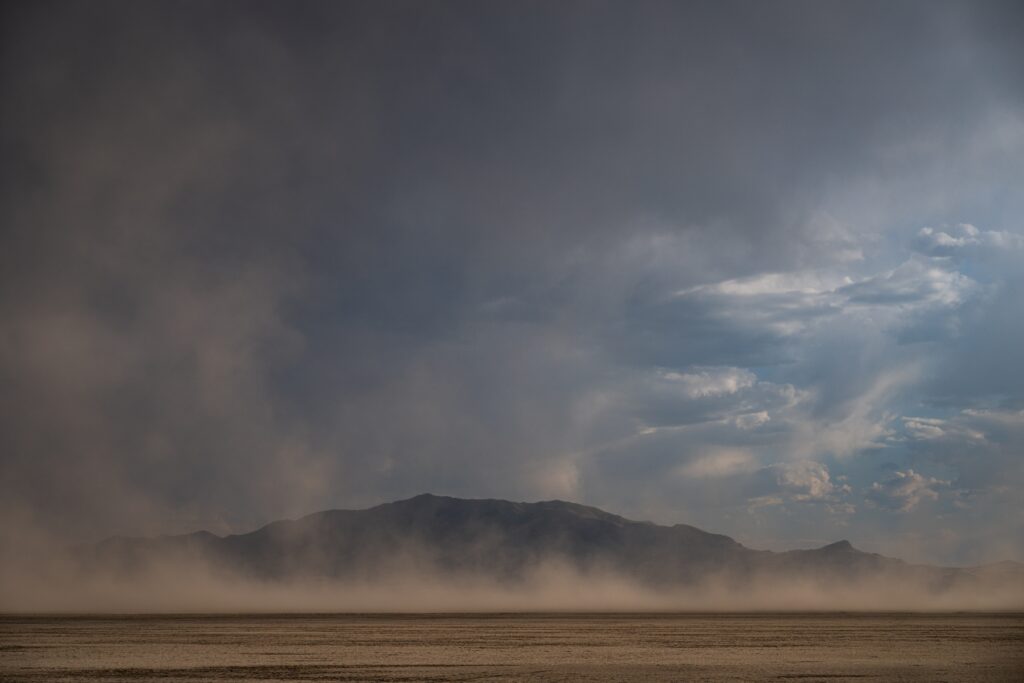
The Great Salt Lake is in trouble. After the lake’s water level reached a historic low in 2022, Utah is experiencing its worst snowpack on record. The lake is plunging toward a new low, risking the increased exposure of hundreds of square miles of lake bed contaminated with arsenic and heavy metals. When the wind blows, toxic dust blankets Salt Lake City and other towns along the Wasatch Front, one of the fastest-growing regions in one of the fastest-growing states in the country.
Across the West, water is running short. The Colorado River — a crucial lifeline for 40 million people across seven states — has been strained by drought and overallocation for decades, leaving states locked in bitter fights over what remains. Utah is caught in twin crises: securing its share of a shrinking river while racing to save the Great Salt Lake.
No country has successfully reversed the declineof a saline lake like the Great Salt Lake, which once spanned a larger area than Rhode Island. But in Utah, a deeply conservative, anti-regulation state, mandatory curtailments and regulatory seizures are political nonstarters. If the state is going to save the lake, it will have to do something unprecedented: rescue an entire ecosystem through voluntary market mechanisms instead of government mandates.
The stakes are high. More than 2.5 million people live downwind of the drying lake bed. Evaporation from the lake is responsible for nearly half of the region’s precipitation. The lake also plays an underappreciated role in the national food supply; it produces minerals that provide fertilizer for organic crops and nearly half of the world’s brine shrimp supply, supporting 10 million metric tons of seafood.
To restore the lake, Utah must get more water flowing into it, and fast. Agriculture takes up roughly two-thirds of diverted water consumption in the Great Salt Lake basin. Rather than forcing farmers to give up water, Utah is paying them to lease it voluntarily and sending the savings downstream to the lake. After the lake reached a record low in 2022, Utah passed several reformsthat make such transactions legally viable by allowing water rights holders to lease their water for lake restoration. The state created a $40 million trust to buy or lease water for the lake and committed more than $1 billion to water conservation measures. Utah is, in effect, attempting to create the freest market for water conservation in the American West.
Progress has been real but insufficient. Last year, the state and its partners dedicated or delivered 163,000 acre-feet of water to the lake. But officials estimate the lake needs at least 800,000 additional acre-feetper year to have any realistic chance of recovery by 2034. That’s equal to the amount of water it takes to annually irrigate 300 square miles of alfalfa fields.
For now, the bottleneck isn’t money. It’s persuasion. Farmers remain wary of leasing their water. Many worry they won’t get their water rights back when the leases expire, or that participation sets a legal precedent that could later be used against them. They are concerned that sending water away from agriculture will gradually hollow out the rural communities they’ve spent generations building. Those fears are legitimate and addressing them will take time.
But if voluntary markets don’t move fast enough, coercive regulation will fill the void. A lawsuit working through state courts argues that Utah has violated its public trust obligations by allowing the lake to decline. If plaintiffs prevail, a court could mandate water curtailments without compensation to affected farmers. Separately, environmentalists have filed a petition that could trigger Endangered Species Act protections for a migratory shorebird that depends on the lake. The listing could result in forced water cuts throughout the basin.
The costs of failure would be steep. California’s Owens Lake was drained more than a century ago and was once the largest single source of particulate dust pollution in the United States. Controlling dust from the lake bed has cost Los Angeles ratepayers more than $2.5 billion and counting. If the Great Salt Lake continues to decline, dust mitigation could cost Utah $3 billion to $30 billionover the next 50 years.
Avoiding that future means making the voluntary approach work quickly. Success means reducing the legal and logistical friction keeping willing farmers on the sidelines, improving the measurement tools needed to track water savings and designing lease agreements that reward farmers per acre-foot of verified conservation — giving them a direct financial stake in saving the lake the same way they have a stake in a good alfalfa harvest.
The state is also looking beyond its own borders for solutions. Utah has proposed paying California to build coastal desalination plants in exchange for a share of the Golden State’s Colorado River allocation. California Gov. Gavin Newsom (D) has expressed interest. Any deal is years away, but the proposal indicates how seriously Utah is searching for water and how entangled the West’s water crises have become.
Utah is testing a proposition with implications far beyond its borders: that a conservative, property-rights state can use market incentives to restore an entire ecosystem and do it fast enough to matter. In September, Utah Gov. Spencer Cox (R) said Utah’s plan will be “one of the great environmental successes in the history of humankind” and pledged to restore the lake by the 2034 Winter Olympics. If Cox and Utah’s legislature are successful, they will have created a blueprint for a West that is running out of water and time.
The post The Great Salt Lake is drying up. Utah has an ambitious plan to save it. appeared first on Washington Post.