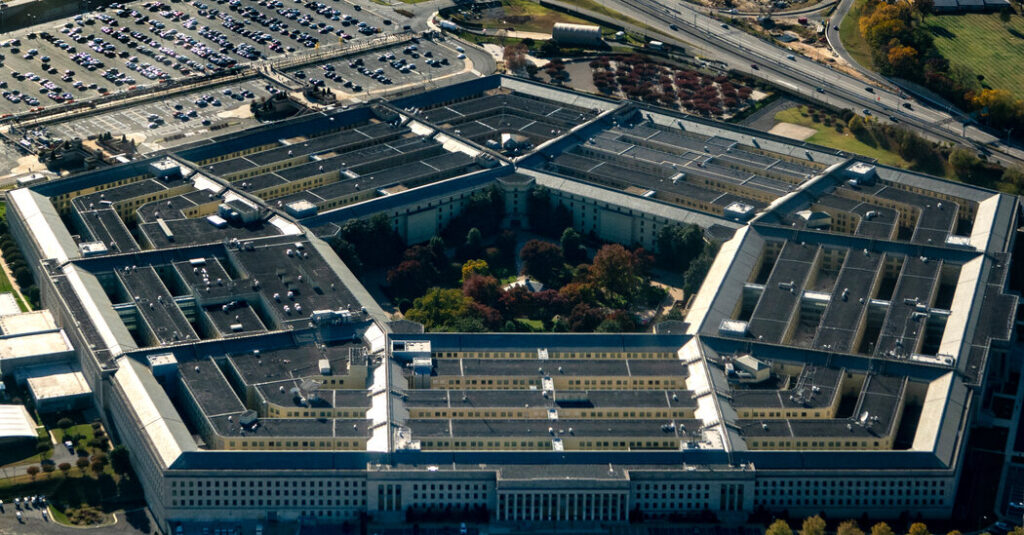
The Defense Department said on Monday that it was taking a new approach to limiting access to media organizations, after a federal judge ruled on Friday that major parts of its current policy were unconstitutional, in a case brought by The New York Times.
The Pentagon is closing the workspace used for years by journalists with credentials to cover the military, Sean Parnell, the Pentagon’s chief spokesman, wrote in a memo to senior Pentagon leadership. A new area for the press will be set up in an annex outside the main Pentagon building, he said, and all journalists now seeking physical access to the Pentagon will require an escort.
In addition, the department is changing the wording of some of the rules for journalists requesting a credential, Mr. Parnell wrote. He said the changes, like making more explicit definitions of prohibited activities, addressed concerns raised by the judge last week.
The Defense Department said it planned to appeal the judge’s ruling. But the Pentagon said its new policies would comply with the ruling while still preserving the department’s security and “without conceding the validity of the court’s analysis.” The Pentagon has argued in numerous legal filings that access to the Pentagon is a privilege and not a right.
A spokesman for The Times, Charlie Stadtlander, said on Monday: “The new policy does not comply with the judge’s order. It continues to impose unconstitutional restrictions on the press. We will be going back to court.”
The new rules are the latest effort by Pentagon officials to limit journalists’ access to the Defense Department. Pete Hegseth, the defense secretary, has had an adversarial stance toward the news media since he took over last year. He previously proposed denying access to the Pentagon to a reporter from NBC News, then removed several news organizations from their on-site workstations. Months later, he curtailed the unescorted roaming privileges of journalists within the complex.
In October, the Pentagon adopted a policy that empowered the department to declare journalists “security risks” and revoke their press passes if they engaged in any conduct that the Pentagon believed threatened national security. Instead of signing the new policy, dozens of journalists from traditional news outlets turned in their press passes, opting to cover the military from outside the complex. The Pentagon later welcomed a reconstituted press corps consisting of pro-Trump commentators and influencers.
The Times sued, arguing that the rules violated the First Amendment. Routine news-gathering activities, like asking questions and seeking information from sources, were punishable under the rules, the company contended. It also said the Pentagon had given itself unbridled discretion to enforce the rules.
Judge Paul Friedman of the U.S. District Court for the District of Columbia sided with the company. He wrote in his ruling on Friday that the Pentagon’s policy rewarded reporters who were “willing to publish only stories that are favorable to or spoon-fed by department leadership.”
Judge Friedman ordered the Pentagon to immediately restore the press passes of seven journalists for The Times. The Pentagon Press Association, a group representing journalists on the national security beat, also pressed the department for reinstatement for other journalists who had handed in their passes.
The Pentagon had not returned the passes to Times journalists as of Monday afternoon.
In its lawsuit, The Times took aim at restrictions in the October policy relating to “solicitation” of information by reporters. That policy said First Amendment protections did not apply when journalists “solicit government employees to violate the law by providing confidential government information.” In his ruling, Judge Friedman wrote that this provision was susceptible to “ambiguous interpretation.”
The new version replaces “solicitation” with “intentional inducement of unauthorized disclosure.”
“We used more words to say the same thing and to foreclose creative misinterpretations,” Cmdr. Tim Parlatore, a special adviser to Mr. Hegseth, said in an interview.
The department revamped the policy over the weekend, Commander Parlatore said, because the ruling “excised all of the security provisions and enforcement mechanisms and ordered that we immediately issue passes under the revised, toothless policy.”
He said housing journalists in the annex ensured that they could attend news conferences and interviews with Pentagon officials while the policy regulated their ability to “talk in the hallways and be able to induce unauthorized disclosures, which was really our whole concern from the beginning.”
Commander Parlatore said members of the Pentagon press corps were “more than welcome” to apply for credentials under this new policy. He said credentials would be issued promptly to Times journalists, as the judge ordered.
The post Pentagon Adopts New Limits for Journalists After Court Loss appeared first on New York Times.