Over the past two years, Australia, a country long known for its strict drug laws, has been allowing psychiatrists to treat post-traumatic stress disorder with MDMA, the chemical compound better known as Ecstasy or molly.
The early results have been striking, researchers say, with more than half of patients who received MDMA along with psychotherapy reporting significant relief from PTSD.
Just as notably, Australian drug regulators have not recorded any serious adverse events among the nearly 200 patients who have been through the program, which includes up to three dosing sessions with MDMA, a synthetic stimulant that promotes empathy, emotional connection and feelings of euphoria.
That data point is especially relevant given the contentious debate in the United States over the safety of MDMA — one that in 2024 helped sink the prospects for MDMA therapy at the Food and Drug Administration.
“Compared to conventional treatments, the outcomes we’re seeing to date with MDMA-assisted therapy have been extraordinary,” said Dr. Ranil Gunewardene, a psychiatrist in Sydney who has treated more than 40 patients since the Australian regulators created a legal pathway for the drug.
But Australia’s experiment with psychedelic medicine also highlights the limitations and constraints that the nascent field is likely to face as it gains wider attention from regulators and practitioners. Because Australia is the first country to legalize and regulate MDMA therapy, researchers have been especially eager for real-world data about a drug that has been pejoratively associated with rave culture.
With an average cost of $20,000 for up to three dosing sessions and 40 hours of counseling, MDMA therapy is largely out of reach for the estimated one million Australians who suffer from PTSD, a mental health condition that is often hard to treat and is associated with high rates of suicide.
Much of the cost is related to the extensive counseling component. Another issue is access. Fewer than 50 psychiatrists are authorized to prescribe the drugs in a country of 28 million people, and most practice in a handful of coastal cities.
Advocates say complex licensing requirements dissuade participation in the program, which is administered by the Therapeutic Goods Administration, Australia’s counterpart to the F.D.A. The licensing process, which includes approval by an ethics panel, can take six months.
And because the government prohibits drug advertising, many patients are unaware the therapies exist.
Mind Medicine Australia, an advocacy group that provides financial assistance to patients seeking psychedelic therapy, has been pressing regulators to reduce costs and widen access by loosening restrictions on who can dispense the drug and who qualifies for treatment.
Under the current rules, only patients who failed to experience significant improvement with conventional psychiatric interventions are eligible for psychedelic therapy.
Other rules also contribute to the program’s high costs, like requiring the prescribing psychiatrist to remain on site during the six-to-eight hour dosing sessions along with two psychologists who sit with the patient.
Tania de Jong, the executive director of Mind Medicine Australia, said a growing backlog had swelled the organization’s waiting list to more than 1,000 people.
“Given the immense suffering of patients who potentially could end up taking their own lives, the lack of access is unacceptable,” said Ms. de Jong, who played a key role in the yearslong effort to persuade drug regulators to loosen the restrictions on MDMA.
In a statement, the Therapeutic Goods Administration said stringent oversight was necessary given that MDMA is considered an experimental and unapproved medication.
Those who have experienced MDMA therapy say the benefits have been life-changing.
Maddison Bright had tried just about every therapeutic intervention for the anxiety and depression that was making her life unbearable, from beta-blockers, hypnotherapy and electromagnetic brain stimulation to conventional antidepressants.
“Sometimes I was so heavily sedated, I wasn’t able to actually see properly,” said Ms. Bright, a survivor of sexual abuse who was diagnosed with complex PTSD, a more serious form of the mental health condition.
When her therapist suggested MDMA therapy, she jumped at the opportunity, becoming the first patient in Australia to undergo a psychedelic treatment. “I was so desperate for peace in my life,” said Ms. Bright, the mother of two young children who lives in a rural community outside Canberra, the Australian capital.
In the two years since her final dosing session, Ms. Bright said she had found peace. She no longer takes psychiatric medication and describes herself as “grounded, connected and transformed.” Her anxiety has not been fully vanquished, but she said that MDMA therapy had given her the tools to deal with the occasional panic attack.
“MDMA isn’t a miracle cure,” she said. “It’s hard work.”
The treatments typically involve three dosing sessions, each separated by at least a month, with psychotherapy before and after each session.
Ms. Bright’s therapist, Monica Schweickle, said psychedelic therapies were not a good fit for everyone who is eligible. For starters, patients must halt their existing psychiatric medication before the first session, a potentially difficult tapering process that can take as long as a year. She said she ultimately declined to recommend MDMA to about half her patients. “Sometimes they lack a stable living situation, or they struggle to come off antidepressants,” Ms. Schweickle said.Some patients also grapple with concerns from family members. Zoe Marshall, 40, said her husband was uncomfortable with his wife taking an illegal drug.
“He was worried I’d become addicted or that it would have lasting negative impacts on my life,” said Ms. Marshall, a podcaster who struggles with PTSD and obsessive compulsive disorder.
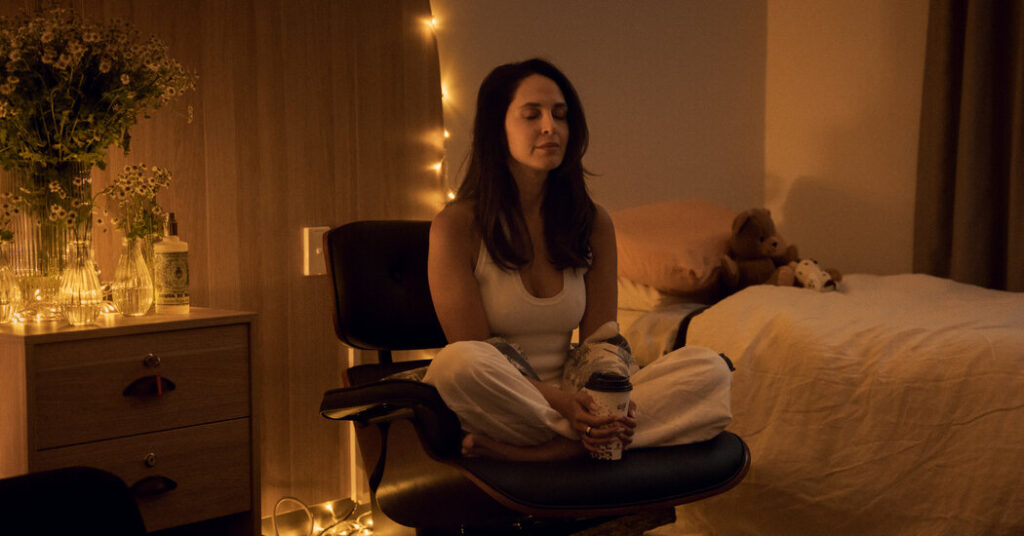
Ms. Marshall is roughly halfway through the MDMA therapy process, which she described as emotionally draining. She said she found it hard to socialize or work, but recognized that those challenges were part of the healing process. “It’s not for the fainthearted,” she said.
Australia’s experimental program also allows psychiatrists to treat severe depression with psilocybin, the key active ingredient in “magic mushrooms.” Although illegal at the federal level in the United States, psilocybin is available at state-regulated clinics in Oregon and Colorado, with New Mexico to follow later this year.
“It’s an exciting moment, but at the same time we know the world is watching so we have to get it right,” said Dr. Kevin Ong, a psychiatrist in Melbourne who has treated a half-dozen patients with MDMA.
The preliminary positive results have caught the attention of Australian insurers, including Medibank, the country’s largest private health insurance company, and the Department of Veterans Affairs, each of which recently agreed to cover the cost of MDMA and psilocybin therapy.
In a statement announcing expanded coverage for the treatments, Dr. Andrew Wilson, Medibank’s chief medical officer, said the company hoped the therapy would lead to a reduction in mental-health-related hospitalizations, which cost the company $1.4 billion each year.
“For many people, the current system is not working,” said Dr. Wilson, noting that half of all psychiatric patients covered by the company are readmitted to the hospital within 12 months. “In many cases, it’s multiple readmissions over the course of their life.”
Paul Fitzgerald, a psychiatrist who runs a patient registry at Australian National University that is assessing the efficacy and safety of the drugs, said it was too early to release data on outcomes.
But after more than two decades conducting clinical trials on intractable mental health conditions, he said he had been struck by the number of patients who had reported significant improvements.
Whether those benefits persist remains to be seen.
“The key question is durability,” he said.
One early data trend has become apparent: So far, the patients who take MDMA seem to experience more lasting improvement than those who undergo psilocybin therapy.
“If that proves to be true, it will be a very important finding,” Professor Fitzgerald said.
Australia’s MDMA-assisted therapy program is modeled on protocols developed by the Multidisciplinary Association for Psychedelic Studies, or MAPS, an American nonprofit that has spent four decades developing a therapeutic model for MDMA that could pass muster with the F.D.A.
In 2023, experts from MAPS traveled to Australia to provide the first training for mental health providers there.
A year or so later, around the time MDMA therapy was being introduced in Australia, the F.D.A. declined to approve the application, claiming insufficient data on efficacy and safety.
Since then, Lykos Therapeutics, the drug development company spun off by MAPS, has been conducting additional clinical trials requested by the F.D.A.
MDMA is not a classic psychedelic like psilocybin and LSD, which induce hallucinations and other changes in sensory perception. MDMA is an empathogen, a class of drugs that produce feelings of social connection and emotional openness. The drug floods the brain with serotonin, dopamine, oxytocin and other neurotransmitters that play key roles in regulating euphoria, movement and memory. It also reduces activity in the amygdala, often referred to as the brain’s “fear center.”
Common side effects include an elevated heart rate, nausea, jaw-clenching and blurred vision. But many experts say there is a need for more research into whether there are long-term effects.
Invented in the early 20th century, MDMA’s therapeutic promise was born in the 1970s, when therapists in the Bay Area found the drug enabled patients to confront the deeply buried trauma that was often the unacknowledged root of their depression or distress.
Dr. Gunewardene, the psychiatrist in Sydney, said MDMA had soothing, anti-anxiety effects on patients whose trauma, often related to childhood abuse, had left them disassociated from their emotions. “You end up disconnected from people, nature, music, emotions and your own body,” he said. “It’s like living in a dense glass prison.”
Shannon Roberts, one of the first patients he treated with MDMA, used similar language to describe the anguish of living with PTSD. She said that over the decade or so she took an alphabet soup of psychiatric medication while in conventional psychotherapy, she found little relief. At night, she would sit alone in her backyard, chain-smoking and drinking her way through a bottle of wine.
The first session with MDMA, she said, was revelatory. There was anger and tears, but also profound insights into the domestic abuse that underpinned her unrelenting distress. “I was able to face that rage, and embrace it in a safe space,” she said. “When you don’t go back to the trauma and face it, you also don’t get to take with you all of the lessons that can be learned from that trauma, and also the capacity for understanding and joy.”
Ms. Roberts sat for two additional MDMA sessions. She subsequently tried psilocybin therapy, which she described as intense and highly visual. MDMA, she said, provided greater healing.
Nearly two years later, she no longer drinks, smokes or takes psychiatric medication. “I think I’m a much better mom and wife,” she said. “I’m happier in my life and better to be around.”
Andrew Jacobs is a Times reporter focused on how healthcare policy, politics and corporate interests affect people’s lives.
The post MDMA Therapy in Australia Shows Results, but the Cost Is Limiting Access appeared first on New York Times.