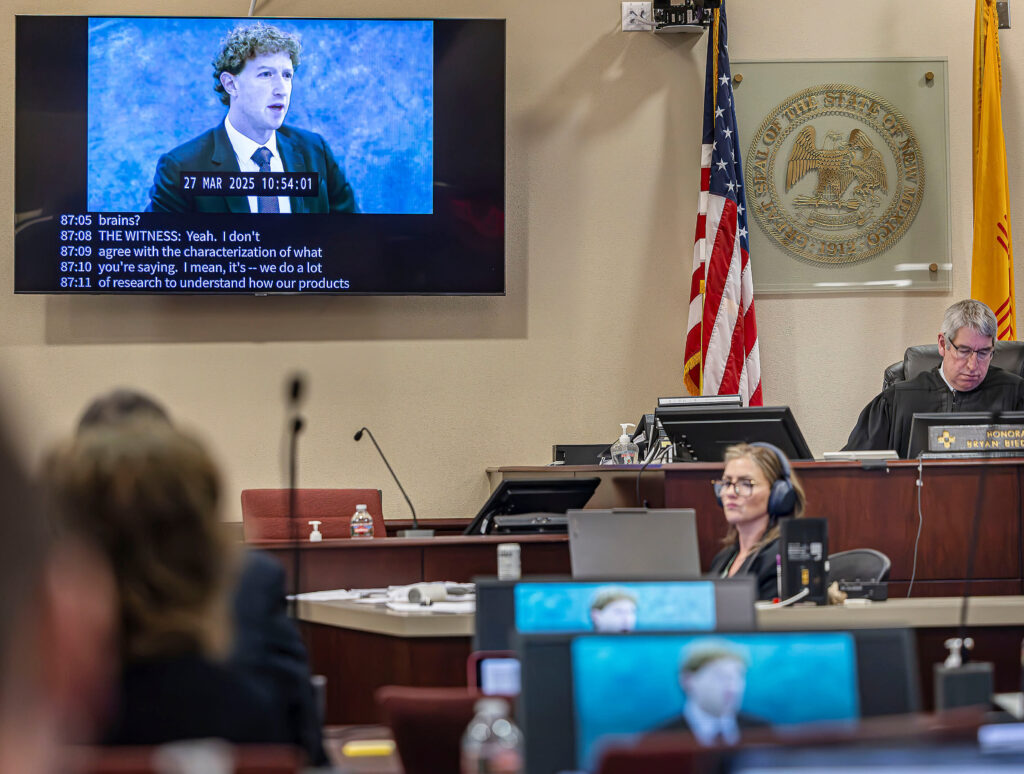
A jury in New Mexico sided with the state’s attorney general’s office in a landmark case accusing social media giant Meta of allowing its social media platforms to become venues for child predators to solicit young users.
The jury ordered Meta to pay $375 million for violations of the state’s consumer protection laws in its verdict delivered Tuesday afternoon.
“The jury’s verdict is a historic victory for every child and family who has paid the price for Meta’s choice to put profits over kids’ safety,” New Mexico Attorney General Raúl Torrez, a Democrat, said in a statement.
“Meta executives knew their products harmed children, disregarded warnings from their own employees, and lied to the public about what they knew,” he added. “Today the jury joined families, educators, and child safety experts in saying enough is enough.”
Investigators from the New Mexico Department of Justice took the unusual step of going undercover on Facebook in an effort to gather evidence on the effects of the site’s algorithms and alleged lack of protections for young users. They presented their allegations that Meta broke state laws over a multi-week trial in Santa Fe.
Meta said immediately after the verdict that it would appeal.
“We work hard to keep people safe on our platforms and are clear about the challenges of identifying and removing bad actors or harmful content,” Meta spokesman Chris Sgro said in an email. “We will continue to defend ourselves vigorously, and we remain confident in our record of protecting teens online.”
The verdict is a rare courtroom victory for plaintiffs trying to hold the tech industry accountable in the face of broad legal protections it has enjoyed since the 1990s. But Meta and other companies are now facing a series of cases alleging their platforms are harmful to children and teens.
The New Mexico verdict comes as a separate jury in Los Angeles is weighing a case in which a young social media user alleged that she had become addicted to Instagram and YouTube.
The post Jury says Meta must pay $375 million for endangering children online appeared first on Washington Post.