TEHRAN — In typical times, Nowruz is a much-anticipated moment of hope across Iran.
Preparations for the Persian New Year begin days in advance, with people spring-cleaning their home — “shaking the house,” as the expression goes — or buying new clothes and furniture.
Tehran’s streets burst with shoppers perusing markets for flowers, painted eggs and confections for their “haft-sin” table, the traditional spread of seven items symbolizing spring, renewal and prosperity.
But these are not typical times.
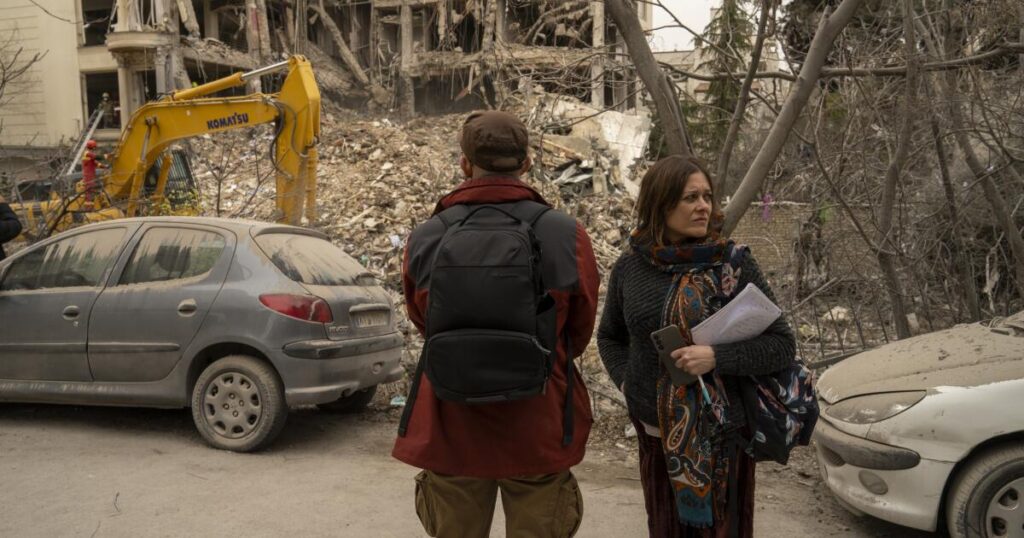
With the war on Iranin its fourth week, it’s a somber Nowruz, its soundtrack the rumbles, booms and explosions of U.S.-Israeli bombardment and Iran’s antiaircraft defenses.
“Thousands killed and fresh casualties every day…. What’s to celebrate?” said Ali Pourasi, a taxi service manager.
Rather than stay home, he spent the first day of Nowruz, Friday, in the office in west Tehran with his shih tzu, Michelle. Every time a strike came, he ran to the balcony to see where it hit. Michelle hid under a table.
“I’m too depressed to even set up the haft-sin spread in the office,” Pourasi said.
“My wife insisted we have one at home,” he added. “But here, I just couldn’t do it.”
Nowruz, which is celebrated by hundreds of millions worldwide and involves 13 days of festivities, follows a particularly bruising year for Iranians.
Even as fresh violence is wreaked on the country, there has yet to be a full accounting of the government’s brutal crackdown in January, during which thousands of people protesting the deteriorating economy were killed by security forces.
The protests were rare public displays of discontent by a populace that’s endured Western-imposed economic sanctions and a sclerotic, corruption-riddled economy that has hobbled much of this oil-rich country of 93 million into poverty.
Fatemah, who was standing in line for bread at a neighborhood bakery, seemed crestfallen as she explained how this Nowruz, which means “new day” in Persian, was even worse than others. She couldn’t afford to buy clothes for her three children.
“I’m altering the clothes of my eldest so at least the younger ones have something,” she said. Like many interviewed, she didn’t disclose her full name to avoid harassment by the government.
Even entertaining guests was out of reach. The nuts and traditional sweets she would offer guests now cost three times what she normally paid. Persian culture puts a premium on hospitality, but current conditions make that difficult.
“We’re trying not to pay any visits to family so we’re not forced to reciprocate and have them at home,” Fatemah said. “I’ve had to close our door to guests this Nowruz.”
Hossein, a nearby nut seller, wasn’t happy either. This Nowruz should have been the equivalent of Black Friday for him, but his business was halved compared with last year, he estimated.
Amplifying the gravity of the moment was the isolation, with an internet blackout rendering it almost impossible for Iranians to reach out to relatives and friends abroad. Even domestic messaging platforms, such as Rubika and Bale, work only intermittently.
For activist Golshan Fathi, there was little sign of Nowruz on Gandhi Street, a commercial thoroughfare in north Tehran.
In years past, she said in a post on X, women would throng textile stores, giving a discerning touch to the fabric they would purchase for newlyweds. She spoke of pastry shops selling sweets so enticing that barely any survived the trip home.
Though Gandhi Street was relatively unscathed by the U.S. and Israeli bombardment, it felt as if “no one had breathed life into it for years.” The fabric stores and cafes were shuttered, with a silence that settled “like a heavy blanket.” Even the vanilla scent near the sweet shop had faded.
“Gandhi feels like a place whose inhabitants have slowly drifted away from it. I walked, and with every step I sank deeper into memory — the vendors’ voices, the haggling, the laughter for no reason,” Fathi wrote.
“Now it’s just me left, and a street that resembles the past more than ever.”
This year Nowruz should have been even more special, since it coincides with Eid al-Fitr, the festival marking the end of the Muslim holy month of Ramadan. But most of the communal prayer events were canceled, with only one large gathering held in the Grand Mosalla mosque.
“I’m celebrating neither Nowruz nor Fitr this year,” said Hasan, a Tehran butcher who said he saw two-thirds of his revenue wiped out.
“It’s simple: My prices just aren’t affordable for the lower middle or even the middle class these days,” he said, adding that even moneyed clients opted for chicken and fish rather than the more expensive beef and mutton.
Despite the situation, some insist on going through the motions. Like every year, Tehran’s Tajrish Square was crammed with stalls piled high with hyacinth, garlic and sprouts, while some featured mini-pools holding tiny goldfish, all traditional elements of the haft-sin.
Most merchants interviewed agreed business wasn’t as brisk as before, but local media outlets nevertheless depicted crowds braving the potential for bombing.
Mirza Mohammad, 70, was equally determined to maintain his usual ritual of strolling to the park near his home in west Tehran and chatting with neighbors.
Of course, discussions these days were dominated by news of the war, but at least he was among friends. He would even come here for the Sizdah Bedar, the 13th and last day of Nowruz, when Iranians traditionally spend the day outdoors.
“We’ll have a picnic right here…” he said, then paused for a moment before completing his thought, “if there aren’t explosions.”
Times staff writer Bulos reported from Beirut and special correspondent Mostaghim from Tehran.
The post Destitute and at war, Iran surrenders to a joyless Persian New Year appeared first on Los Angeles Times.