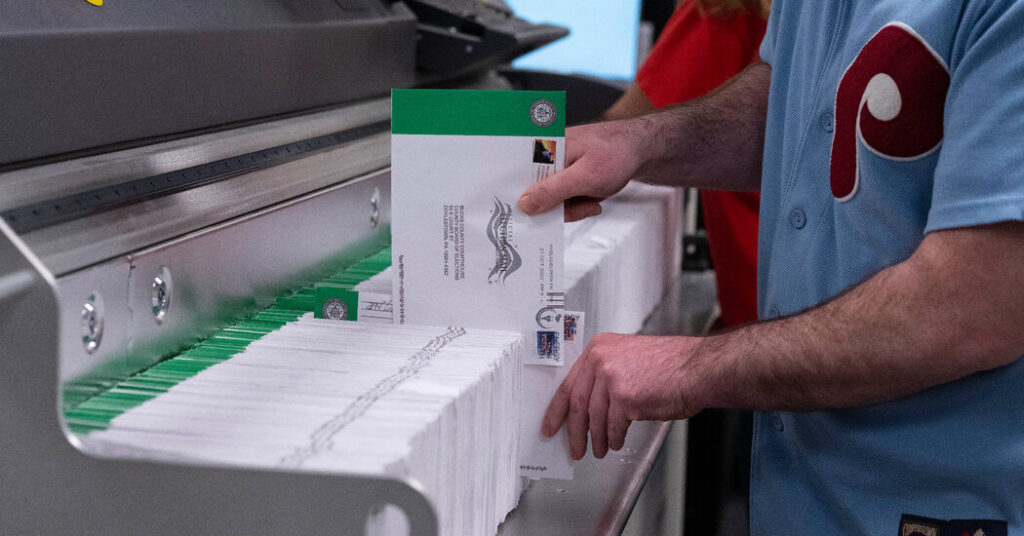
The Mississippi law at issue in today’s case does something commonplace in other areas of the law: It lets people satisfy legal deadlines by putting the required document in the mail. More specifically, it allows ballots postmarked by Election Day to be counted if they arrive within five days.
Judge Andrew S. Oldham, writing for the unanimous three-judge panel of the Fifth Circuit that rejected Mississippi’s law, acknowledged that the state’s approach is “embraced in other areas of the law.”
Take tax returns. They are counted as timely if they are postmarked by midnight on April 15, even if they do not arrive at the Internal Revenue Service until a few days later.
And, as every first-year law student learns, under the “mailbox rule” a contract is formed when an offer is accepted and sent to the other party, not when that other party receives it.
Judge Oldham distinguished those examples from what is required by the state law. “Voting is not a contract or tax return,” he wrote. “So the fact that mailbox rules are authorized in other areas of law is at best irrelevant.”
Some mailbox and postmarking rules are particularly familiar to the judicial system.
Prisoners’ appeals are timely if they submit their filings to the prison mail system by the stated deadline.
And the Supreme Court’s own rules allow litigants to meet deadlines by mailing the required papers on or before the due date. A postmark suffices to prove the deadline was met.
Adam Liptak is the chief legal affairs correspondent of The Times and the host of The Docket, a newsletter on legal developments. A graduate of Yale Law School, he practiced law for 14 years before joining The Times in 2002.
The post Postmarks Are Good Enough for Taxes, Contracts and Court Filings. What About Ballots? appeared first on New York Times.