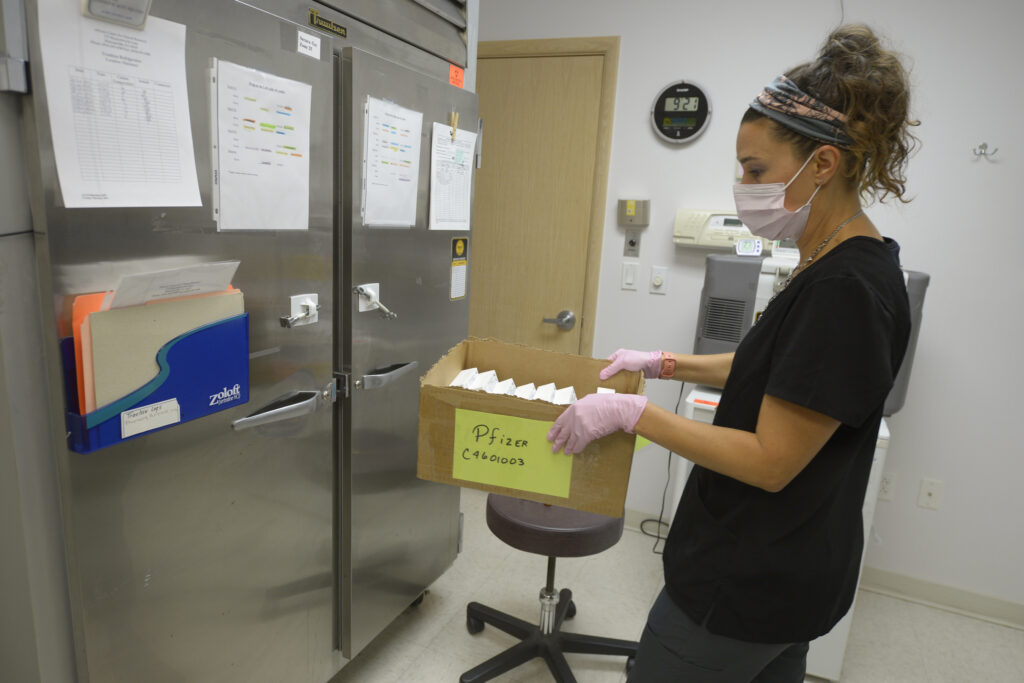
Four doses of an experimental vaccine to protect against Lyme disease reduced the number of tick-borne infections by more than 70 percent, according to Pfizer and Valneva, the pharmaceutical companies developing the shot.
Pfizer said in a statement the companies are “confident in the vaccine’s potential” and plan to submit the data to regulatory authorities seeking approval. If successful, it could become the only Lyme disease vaccine available for people — although it would not be the first.
A previous Lyme disease vaccine, called LYMErix, was approved in 1998. But it became controversial because of reports of adverse events following vaccination, and it was pulled from the market four years later due to poor sales.
“Lyme disease can cause potentially serious consequences — where individuals and families face symptoms that can disrupt daily life, work, and long-term health — and there is currently no vaccine available,” Annaliesa Anderson, chief vaccines officer at Pfizer, said in a statement.
Lyme disease is an infection that spreads to people through the bites of blacklegged ticks that carry the bacterium Borrelia burgdorferi. The disease is often identified by a characteristic “bulls-eye” rash that forms around the bite, and is common in the Northeast, Mid-Atlantic and Midwest in the United States and in Canada and Europe.
A 2021 study from scientists at the Centers for Disease Control and Prevention estimated that 476,000 people are diagnosed and treated each year in the U.S. Early symptoms can include fatigue, fever and joint pains, but untreated it can turn into a chronic condition, causing symptoms such as arthritis or heart inflammation.
There are currently no Lyme disease vaccines available for people, but the new result arrives at a precarious time for vaccines developed to protect against infectious diseases.
The use of vaccines, often celebrated as one of the most successful public health interventions in modern history, has come under scrutiny after Robert F. Kennedy Jr. became the head of Health and Human Services. The U.S. implemented sweeping changes to the nation’s childhood immunization schedule in the last year, but a federal judge recently paused the Trump administration’s vaccine changes as part of a lawsuit filed by multiple medical associations.
The results of the trial, which tested the vaccine against a placebo in 9,400 people ages 5 and up, have not yet been published or peer reviewed. Pfizer said in its statement that its late-stage clinical trial just missed a statistical cutoff for success, because there were fewer than expected cases of Lyme disease in the trial.
After someone receives an initial shot, they get a second two months later and a third between five to nine months later. The final dose is then given a year after the third shot.
Because of the “clinically meaningful” reduction in infections, Pfizer said in its statement it was confident in the vaccine’s potential.
A previous Lyme vaccine was called “a cautionary tale” in a 2006 editorial in the journal Epidemiology and Infection. In 1998, LYMErix was shown to reduce infections by 76 percent. After approval, there were reports of adverse events after the vaccine, and while regulators found that there was no causative association, it was later withdrawn from the market.
“The vaccine developers believed they developed a safe and effective vaccine to prevent the most common tick-borne infection in the United States. Even available post-market surveillance failed to demonstrate convincing harm from the LYMErix vaccine,” the editorial said. “However, the public’s perception of potential risks, heavily influenced by the negative press coverage and limited awareness of the benefits of the vaccine, decreased consumer demand.”
The post Lyme disease vaccine shows 70 percent efficacy, Pfizer says appeared first on Washington Post.