Western companies that pump and process oil and natural gas are among the biggest beneficiaries of the war with Iran, which has snarled production and shipping of fuels in the Persian Gulf.
But even as many of them reap the rewards of much more expensive energy, executives are worried that what comes next could be bad for business.
Should the war end — a possibility made real when President Trump said on Monday that the United States and Iran had “very strong” talks about ending hostilities — prices could tumble. If oil and gas prices quickly returned to levels that prevailed at the end of last year, many companies would have to go back to worrying about trimming budgets and laying off workers.
If, on the other hand, attacks on energy infrastructure intensify and it remains too dangerous for most ships to carry energy out of the Persian Gulf, prices most likely will keep climbing. That, over time, will lead governments, businesses and consumers to find ways to use less oil and gas — and some of those changes could permanently reduce demand for the fuels.
“It feels like you should be jumping up and down,” said Ron Gusek, chief executive of Liberty Energy, an oil field service company that works for many of the biggest American producers. But, he added in an interview, “there is a picture out there where the economic realities of our world get very, very challenged again.”
That uncertainty was on full display in Houston on Monday, where thousands of energy executives and government officials gathered for the industry’s most important annual conference, CERAWeek by S&P Global.
“The markets are trading on scant information,” Mike Wirth, chief executive of U.S. oil giant Chevron, said at the conference, adding that he thinks physical supply chains are tighter than commodity futures prices reflect.
Oil prices climbed as much as 65 percent in the weeks after the United States and Israel began attacking Iran on Feb. 28, but have since retreated somewhat. Natural gas is more expensive, too, particularly in Europe and Asia, which depend heavily on imports.
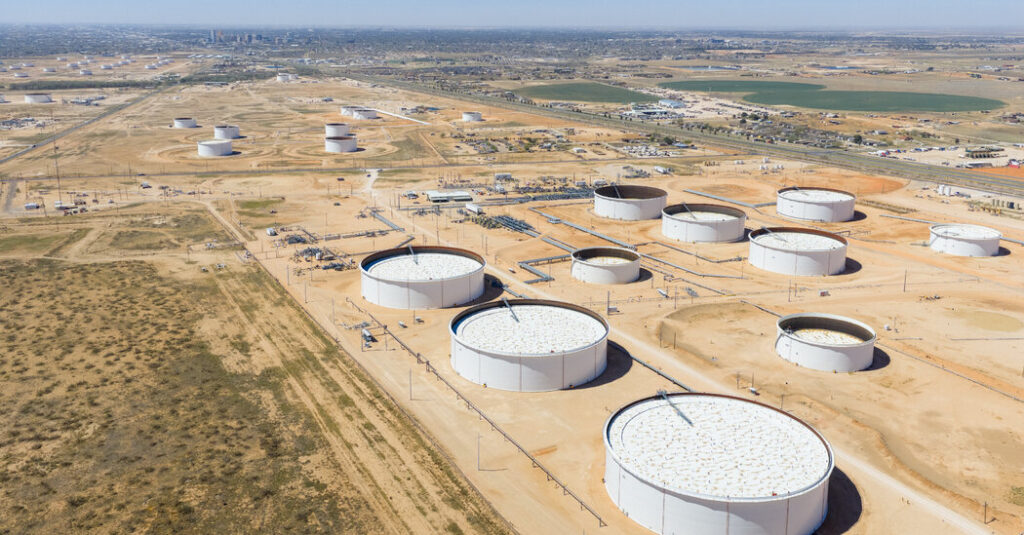
Companies in the Persian Gulf have been forced to turn off many of their wells. But those extracting oil from places like West Texas are earning a lot more from each barrel they sell.
“Month on month, we get a better check right now for our oil,” said Mike Party, president of a small West Texas oil company, Beryl Oil and Gas. But Mr. Party has not changed his drilling plans because he is not sure where prices will be in several months, which is how long it takes new wells to start producing. “What goes up has got to go down.”
The picture is even more murky for oil giants like Exxon Mobil and BP that have extensive operations in the Middle East, not to mention state oil companies such as Saudi Aramco and QatarEnergy, whose facilities have been attacked.
Missile strikes compromised 17 percent of the QatarEnergy’s natural-gas export capacity, the company said last week, forecasting that the damage would cost around $20 billion in lost revenue each year until it can complete repairs. Exxon jointly owns the damaged infrastructure.
TotalEnergies of France said more than a week ago that 15 percent of its output was in the process of being shut down in Qatar, Iraq and the United Arab Emirates. That said, “a higher oil price more than offsets the loss of Middle East production,” TotalEnergies said at the time.
The war is likely to be harder on companies that drill wells and provide other services to big oil companies in the Persian Gulf, like SLB. Such service providers typically work on fixed contracts. SLB, which is based in Houston, warned in the early days of the war that its first-quarter revenue would be lower than expected.
A big question is what it would take for companies in the United States, Europe and elsewhere to produce more oil and natural gas to make up for what has been lost in the Persian Gulf.
In short, high prices would have to stick around for a while, analysts say. Companies set their budgets based on lower oil prices and are unlikely to significantly change their drilling plans without more confidence that prices will remain high for months or years.
Even then, extra U.S. production would make up only a fraction of what has been lost in the Middle East.
There are some early signs that U.S. companies are responding to higher prices. Liberty Energy has started to hear from firms that are looking to prepare more of their wells to start producing oil, Mr. Gusek said.
“You’re feeling a little bit of acceleration,” he said.
Rebecca F. Elliott covers energy for The Times.
The post For Western Oil Companies, War in Iran Means Bigger Profits, and Risks appeared first on New York Times.