TAIPEI, Taiwan — U.S. gas exporters are emerging as among the biggest beneficiaries of President Donald Trump’s war with Iran, as governments in Asia scramble for alternatives to Middle Eastern fuel.
Asia, more reliant than other regions on fuel that passes through the Strait of Hormuz, is staggering from Iran’s effective closure of the key chokepoint and from Iranian strikes on gas facilities in the Persian Gulf, in retaliation for U.S.-Israeli attacks. Demand here is surging for U.S. liquefied natural gas (LNG) exports, much to the approval of the Trump administration, which is seizing on shortages to push U.S. gas sales even as it demands that other governments step in to open the strait.
“We need to sell energy to our friends and allies so they don’t have to buy from adversaries, so they don’t have to be dependent on sources of energy that can be controlled,” U.S. Interior Secretary Doug Burgum said last week in Tokyo, where he announced $57 billion in energy deals with providers in Asia. “This has been part of President Trump’s energy dominance policy since Day 1.”
Though the tech manufacturing hubs of Taiwan, Japan and South Korea have spent years trying to lower their reliance on Middle East gas, U.S. LNG had often been considered too pricey and shipped from too far-off to be a viable alternative. That began to change last year when Trump pressed these governments, threatening them with tariffs, to lower trade deficits with the U.S. With the damaging of Qatari gas infrastructure, the shift is set to accelerate.
Because near-term U.S. gas export capacity is limited, however, these cargoes have come at a premium, promising a windfall for gas companies like Cheniere and Venture Global, which have seen their stock prices soar.
Executives at both companies have made major donations in support of Trump. Cheniere rejected a request for comment. Venture Global did not respond.
“High prices for security purposes — we have to take this,” Kuan-ting Chen, chair of the Taiwan legislature’s Foreign Affairs and National Defense Committee, said in an interview Thursday.
Although China is also a major LNG importer, it has been able to soften the supply shockby boosting domestic production and imports from Russia. Not so for its neighbors.
Taiwan relies almost entirely on imported fuel — including for its energy-intensive tech manufacturing industry, which churns out more than 90 percent of the world’s advanced semiconductor chips. It sourced a third of its LNG from Qatar and has the lowest gas reserves in East Asia.
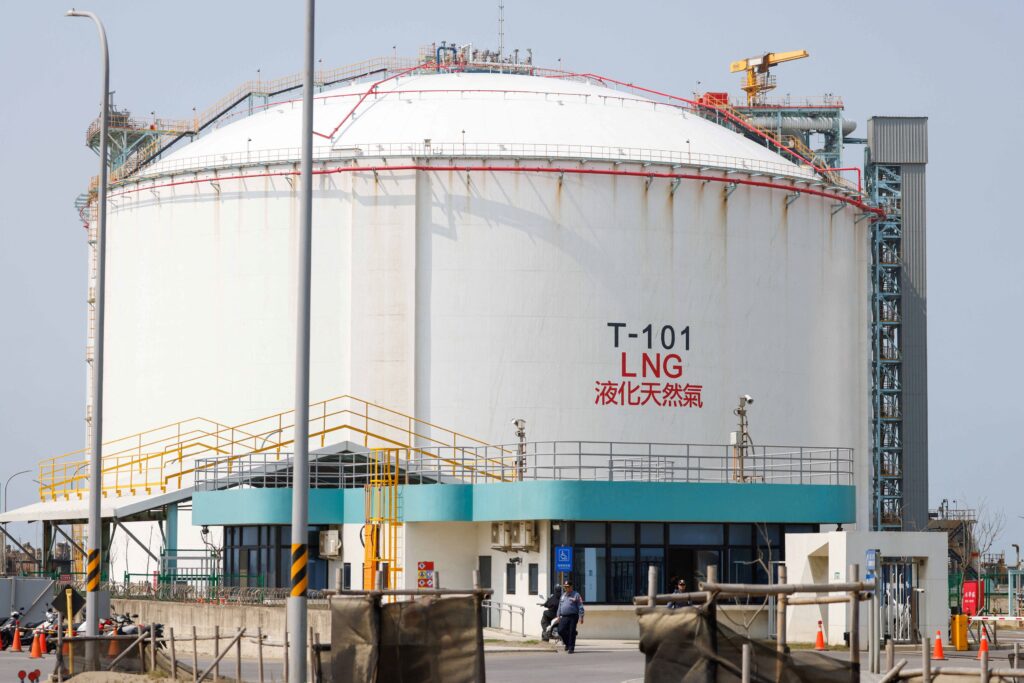
Taiwanese officials say they will increase LNG imports from the U.S. starting in June through a contract with the Texas-based company Cherniere. New agreements signed with the U.S. would more than double the U.S. share of Taiwan’s LNG imports from 10 percent to 25 percent by 2029, Minister of Economic Affairs Kung Ming-hsin told legislators.
Similarly reliant on Qatari gas, Japan and South Korea have inked a raft of new energy deals with the U.S., including multiyear supply contracts for LNG, officials announced last week. Thailand said it is asking Cheniere to increase LNG deliveries under an existing contract.
U.S. sellers — which have long sought to increase exports, despite pushback from the Biden administration over climate concerns and potential for domestic price increases — can maximize operations and defer maintenance to meet the increased demand. But they cannot fully substitute the loss of Qatari supplies in the near-term, said David Kang, head of Japan, Korea, and Taiwan research at BloombergNEF. They will benefit instead through “wider margins and stronger commercial leverage,” Kang said.
Stock prices for U.S. gas exporters Cheniere and Venture Global leaped Thursday following reports of Iranian missile attacks on Qatar’s largest gas hub by export capacity, Ras Laffan. Glenfarne, the lead developer of a $44 billion Alaskan LNG project that has been aggressively courting Asian investment, said there’s been a spike in investor interest. Taiwan, South Korea and Japan are all in the process of finalizing commitments.
“There’s a real interest, particularly with everything happening in the Middle East right now. Everyone would like to get [preliminary deals] turned into long-term agreements,” Adam Prestidge, president of Glenfarne Alaska LNG, told Reuters.
In Taiwan, a self-governing territory that China has sworn to annex, the fuel crisis has simulated long-standing fears of what could happen if Beijing moves to encircle the island and cut off sea lanes.
LNG shipments take longer to reach Asia from the U.S. than from the Gulf. But they can take Pacific routes that avoid threats posed by Iran around the Strait of Hormuz and do not pass through the contentious South China Sea, which is dotted with Chinese military bases.
Taiwan’s government has secured enough LNG supplies through May, officials say. From June, Taiwan’s contract with Cherniere should add at least two new cargo shipments of LNG per month, said Tsaiying Lu, an energy analyst at the Taipei-based Research Institute for Democracy, Society and Emerging Technology, a government-backed think tank. In addition to this, Taiwan will likely procure more U.S. LNG on the so-called spot market — even if it comes at exorbitant prices, Lu said.
Strong fiscal reserves place Taiwan in a better position than poorer nations in Asia. Hundreds of gas stations in Cambodia and Laos have closed because of supply disruptions and price uncertainty. The Philippines and Thailand, both U.S. allies, are implementing fuel rationing measures because they cannot afford to procure sufficient fuel on the spot market.
“For Taiwan right now, diversification matters,” Lu said. “How to better balance the price between the U.S. and other sources like Australia and Brunei — this is what [the government] is doing right now, trying to compare new deals.”
One offer has arrived from Beijing. Chen Binhua, a spokesman for China’s Taiwan Affairs Office, said at a news conference earlier this month that “reunification” with its “powerful motherland” would insulate Taiwan from energy shortages. “People in Taiwan would be able to enjoy cheaper, cleaner and more stable energy supplies,” he said.
Taiwanese leaders scoffed at the idea in parliament. “Of course, this is impossible,” Deputy Economy Minister Ho Chin-tsang said.
Huiyee Chiew in Taipei contributed to this report.
The post At least one winner emerges from Iran war: U.S. natural gas exporters appeared first on Washington Post.