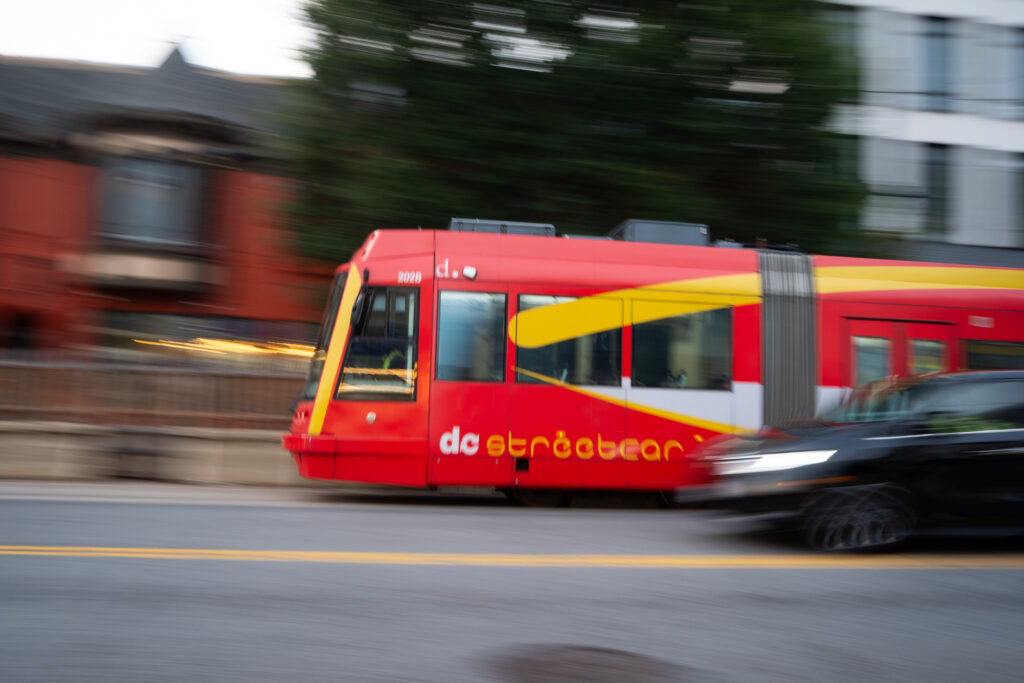
The D.C. Streetcar was a bad idea, poorly executed. Now, after a decade of hemorrhaging money and becoming a symbol of government incompetence, the boondoggle will offer its final ride on March 31.
Few will miss it, because relatively few rode it — even though it was free to hop on. The average cost per rider was $19.73 in 2023.
The streetcar repeatedly failed to live up to its promises. Initial planning began in the 1990s. The city published a feasibility study in 2002 and broke ground in 2004. Three streetcars were ordered from a Czech company in 2005 but sat in European storage until 2009 because the city didn’t know what to do with them.
In 2011, the District’s Department of Transportation announced the H Street Line would open in 2013. Beset by delays, the 2.2 miles of track finally opened in 2016.
It was comically over budget. Construction cost about $200 million. Operating the streetcars cost $10 million every year.
Double-parked vehicles often blocked the streetcars, leading police cruisers to escort them. Many didn’t dare ride because of how many homeless people camped out. In 2019, around 3,600 people rode the streetcar daily. By 2023, ridership fell to around 1,800 people a day.
Those folks never managed to get far. The city paid to lay track for a second Anacostia line, but it never opened. Dead-enders insist the project could have succeeded if government had just spent been willing to spend way more money. Real trollyism has never been tried.
Finally, a serious structural budget deficit has forced city leaders to pull the plug. Outgoing D.C. Mayor Muriel E. Bowser (D) says “next generation” electric bus service will replace the streetcars by mid-2029. In the meantime, the chair of the D.C. Council’s transportation committee announced plans to budget $250,000 for a study of replacement transit options.
Of the many lessons from this debacle, perhaps none is more important than the fresh reminder of the sunk-cost fallacy. Year after year, D.C. politicians were unwilling to expend the political capital necessary to stop wasting millions of tax dollars, because they were afraid of antagonizing a small but vocal community of die-hard advocates for public transit. It’s better late than never to stop throwing good money after bad, but D.C. could have stopped this streetcar in its tracks two decades ago.
The post A streetcar no one desired appeared first on Washington Post.