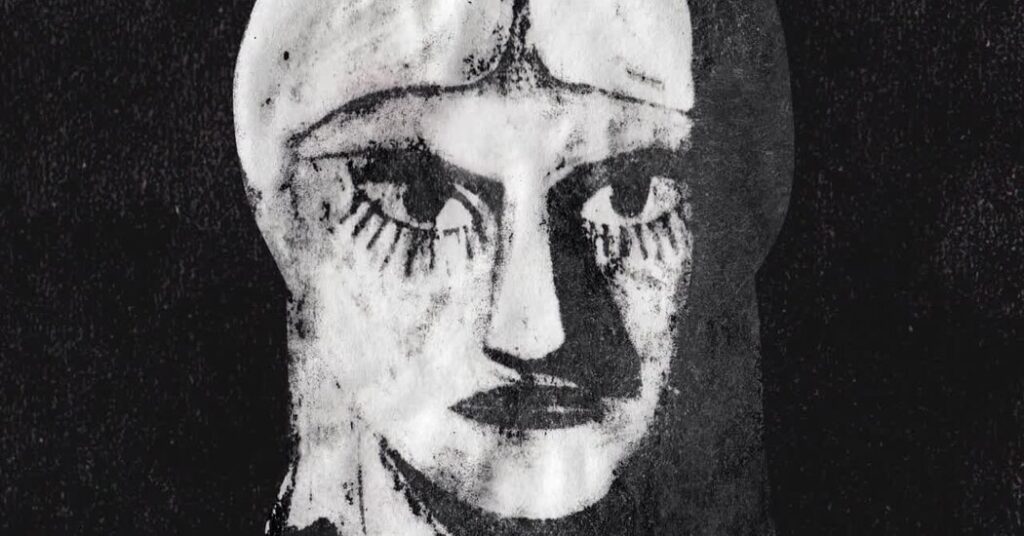
For a 2,500-year-old Greek princess, that Antigone sure gets around. Since her stage debut in 441 B.C. in Athens, hundreds of plays, films and operas have told her story. She might be our most adapted mythic figure. Who’s her competition? Odysseus? Anansi? Batman?
“Antigone,” Sophocles’ tragedy, seems like simple heroine stuff. A girl risks her life to give her brother a ceremonial burial after it has been expressly forbidden by their uncle, Creon, the king of Thebes. But the play and her conscientious-objector character keep finding new relevance: In the first few months of 2026, Antigone is visiting New York four times, in four different stage adaptations. (Her omnipresence is like a rush of white blood cells — there’s an infection somewhere in the body politic.)
Perhaps we return obsessively to “Antigone” because it still encompasses a mystery. Sophocles was writing when both theater and democracy were young; the secrets of each are embedded in the play. At its deepest point, the tragedy warns us not to obey only a single ethos. Things that appear antithetical — like Antigone and Creon — can be related. The world isn’t really made up of opposites. One word, Sophocles will show us, can contain it all.
I first read “Antigone” in high school. Since then, I’ve seen more than a dozen productions and frequently teach the play. After years of thinking about her and learning from her with students, I’ve realized that the finest analyses of “Antigone” are actually other Antigones: Each adaptation shows us her face in a new light. She may be a riddle, but here are some of the clues I — and others — have used to try to unravel her.
Older Than the Alphabet?
Even when Sophocles first wrote about her, Antigone was an old, old character. She’s listed as a child of Oedipus in a text from the eighth century B.C., which means she may be as old as the Greeks’ adoption of the Phoenician alphabet.
For us, Oedipus remains the more famous figure, because his story is read more often in school. While trying to dodge a prophecy that he would marry his mother and kill his father, Oedipus — accidentally — does both. Antigone and his other children are thus his sister-daughters and brother-sons. Antigone’s name means “against reproduction” or possibly “born to oppose” or “in place of the parents.” (It suggests an angle that has bent wrong.) Her nature expresses her family’s awful contamination, but also her ability to end a cycle — no reproduction, after all.
Antigone counteracts her parentage in other ways, too. We learn from Sophocles’ “Oedipus Rex” that fate is unavoidable and, given our imperfect knowledge of the world, doing the right thing can be impossible. But Antigone isn’t wrestling with a prophecy. In her story, fate is what one powerless girl makes it, and right action is possible, as long as we don’t fear the consequences. (Why do syllabuses prefer the “submit to destiny” drama to the “fight like hell” one? Ask your teachers.)
The Boy in the Road
After Oedipus’ fall from power, Antigone’s brothers, Polyneices and Eteocles, quarrel over the throne; eventually, Polyneices lays siege to Thebes. Just before “Antigone” begins, each brother has killed the other. The new king, Creon, their uncle, then refuses to bury Polyneices — he issues an edict that his nephew is to be left in the road for scavengers. “I shall not befriend the enemy of this land / for the state is safety,” Creon says.
Polyneices, abandoned in the street, is still one of our most terrible images of a world gone wrong. It demonstrates a government turning against its own people; there are few greater moral horrors than letting an exposed corpse fester.
And adaptations of “Antigone” have found that boy in the road repeatedly. In 2008, in Athens, a policeman fatally shot 15-year-old Alexandros Grigoropoulos, setting off citywide protests. In 2010, the Italian theater company Motus investigated the killing in “Alexis. A Greek Tragedy,” a multimedia riff on “Antigone.” At the end, audience members were invited to join the fray.
Theater of War’s “Antigone in Ferguson” (2016) discovered another Polyneices: Michael Brown, the 18-year-old killed in 2014 by a police officer in Ferguson, Mo., and left for four hours in the summer sun. Ancient tragedy included choral odes, sung responses from a group just outside the action. Here, the chorus consisted of Ferguson residents, including kids and cops, harmonizing in new settings of Sophocles’ songs.
After George Floyd, after Alex Pretti, we — the audience — may yet again be thinking about the places where the state deals out death. So often, official violence is hidden behind walls, but when it happens in the street, Sophocles tells us, the whole kingdom shakes.
Drama of Opposition
The Sophoclean Antigone rebels for love. By sprinkling dust over her brother — “burying” him ritually — she disobeys Creon. She and her uncle then do verbal battle: It’s conscience versus obedience, justice versus order.
Every age has had its version. Jean Anouilh’s exquisite wartime “Antigone,” written in 1943 in Paris, under Nazi occupation, sought to keep the Vichy censors unsure if they were being criticized. They must have been crummy censors. When Antigone shouts, “If life cannot be free, gallant, incorruptible, then, Creon, I choose death!” she certainly sounds like a member of the French Resistance.
The play is particularly good at representing life under a law that dehumanizes its own subjects. Take, for example, the apartheid-era “The Island,” from 1973, devised by the Black South African actors John Kani and Winston Ntshona and the white playwright Athol Fugard. Two cellmates prepare a performance of “Antigone,” only for one to learn that he will be released. Rehearsing defiance gives the man left behind new fortitude. “I honored those things to which honor belongs,” he shouts, just as thousands of Antigones have before him. At the time, segregationist law prohibited the collaborators from fraternizing let alone writing an incendiary play about prison conditions. (Kani and Ntshona won a Tony for their work in 1975; they were arrested for it in South Africa in 1976.)
Many adapters focus on the anti-authoritarian aspect. But Sophocles’ play is a drama of opposition, in which two uncompromising ideas of duty, both strong, do combat. Creon must rebuild a Thebes torn apart by corrupted family bonds. All he wants is rational discipline, secular decision making and peace. Antigone, though, will obey only unwritten laws and religious necessities. The gods, she swears, are with her, though she can’t prove it.
The line between terrorist and freedom-fighter, religious zealot and righteous believer keeps moving. This ever-shifting contest of ideas has made “Antigone” into an honorary philosophical text. Everyone from Hegel to Heidegger to Judith Butler have meditated on its dialectical thinking in which, as the pre-Socratic Heraclitus once wrote, things pass into their opposites.
‘Bad Girl’ Archetype
Antigone can be an extreme character. The word used to describe her, and many Sophoclean protagonists, is deinos. It means “strange” or “uncanny,” describing a world-breaking stubbornness that is simultaneously unyielding, magnificent and frightening.
Even when her sister, Ismene, is trying to comfort her, Antigone throws herself in harm’s way. Her unreasonable righteousness is indistinguishable from self-destruction. Antigone never tries to save herself, or operate in secret. Instead, she speaks out, placing her beyond Creon’s ability to forgive — and also giving her qualities beyond the human. “I follow death, alive,” she says.
Antigone, deinos to the max, created the model for a particular kind of (anti)heroine: the “bad girl.” She is disruptive, a total pain, unpliable and correct. Sometimes this figure is interpreted as a kind of punky riot grrl, or a protofeminist, or a mentally troubled woman. Thanks to Sophocles, who was writing in a time when women didn’t rate as citizens, “girl” is now another word for “courage.” Imagine one, arms akimbo, ponytail flying, and you automatically picture her facing down the world.
At the play’s climax, Creon sends Antigone to her death by walling her up in a tomb. She becomes a living person in the house of the dead, just as her brother was a corpse in the land of the living. This out-of-place-ness defines her; try to put her into a slot, and she will not fit.
The Chorus of Man
The poetry in “Antigone,” even when filtered through translation — or possibly because it must be filtered through translation — contains astonishing richness, ideas that change as you tilt the page. That tricky word deinos that describes Antigone also shows up in the play’s most beautiful choral ode, which may be the greatest piece of writing in Greek drama.
After a messenger informs Creon that Polyneices’ body has been disturbed, the king promises retribution. And then, oddly, the chorus chooses to sing about mankind and its resilience. They use the word deinos — Antigone’s condition of marvelous weirdness — to describe all of us.
How each translator approaches this untranslatable word tells you a great deal. Robert Fagles, for instance, calls mankind a “wonder”:
Numberless wonders
terrible wonders walk the world but none the match for man —
that great wonder crossing the heaving gray sea
Oliver Taplin translates the word as “formidable,” while Elizabeth Wyckoff uses both “wonder” and “stranger” to capture how eerie our passage is through the world. Paul Woodruff adds “terror” to the mix:
Many wonders, many terrors,
But none more wonderful than the human race
Or more dangerous.
And, whenever I am in doubt, I listen to the truly great musical setting of this text in Lee Breuer and Bob Telson’s “The Gospel at Colonus.” It takes the most hopeful option for translation, “wonder,” but then sets it to music so yearning that we hear how insubstantial mankind really is.
Numberless are the world’s wonders
But none more wonderful than man
So, should mankind be feared or wondered at? Are we a terror or a gift? Are we of the world, or are we the strangers who break the world apart?
Yes, “Antigone” tells us. Yes, absolutely.
Helen Shaw is the chief theater critic for The Times.
The post The 2,500-Year-Old Greek Heroine Whose Story Never Gets Old appeared first on New York Times.