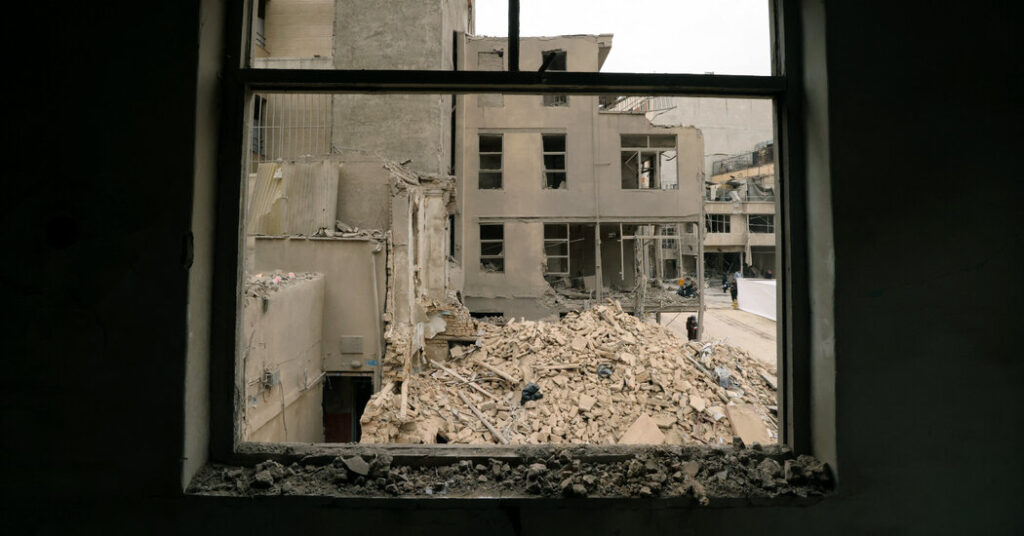
Let’s ponder for a moment the vast sums that we’re pouring into the war with Iran.
The Pentagon has requested $200 billion (more than $1,400 per American household) to fund the war, but even that understates the total cost.
Linda Bilmes, a Harvard expert on financing war, told me that most of the costs will arrive later. For example, any soldier who develops a medical disorder or aggravates an existing one will receive lifelong benefits and medical care. If today’s troops claim such benefits at the same rate as those who participated in the 1990-91 gulf war, that alone would eventually cost at least $600 billion, Bilmes said. Not to mention, of course, the human toll of all of this.
All told, she expects this Iran war to cost taxpayers more than $1 trillion.
Here are some ideas of what the war money could be used for instead. My calculations are conservative, based on Pentagon reporting that the first six days of the war cost $11.3 billion — and even that incomplete tally amounted to more than $1.3 million a minute.
-
For a bit more than two weeks of this war, we could offer free college education to every American family earning less than $125,000 annually, at a cost of around $30 billion a year.
-
For less than three weeks of war, or $35 billion, we could run a nationwide pre-K program for 3- and 4-year-olds.
-
For $75 million, about an hour’s worth of war, we could provide three books free to every child in America who is living under the poverty line, according to Kyle Zimmer of First Book, a nonprofit that works on early literacy. Research suggests that books like these can help get children reading and improve their outcomes.
-
A woman dies in the United States every two hours, on average, from cervical cancer. Screening all uninsured women who need it would cost perhaps $1 billion and could save hundreds of lives, according to Dr. Linda Eckert, a cervical cancer expert at the University of Washington. That’s less than 13 hours of the war bill.
-
We could get glasses to all 2.3 million low-income schoolchildren in the United States who need them but don’t have them. The base cost would be about $300 million, according to Vision to Learn, a nonprofit that does this work. The bill would be what we spend on four hours of this war.
-
For about $34 billion a year, less than three weeks of war, we could restore health insurance subsidies that the Trump administration let expire last year. One analysis predicted an additional 8,800 preventable American deaths as a result.
The war money would save even more lives if we allocated part of it abroad. Indeed, we spent more on the first three days of war than we spent ($4 billion) on all humanitarian aid in 2025. Consider what we could achieve internationally:
-
For $400 million or less, a bit more than five hours of war, we could deworm all children in need worldwide, according to Evidence Action, a nonprofit that works on deworming. This would result in stronger, healthier children and adults.
-
For $380 million, less than five hours of war, we could provide vitamin A supplementation for the 190 million children who need it. Helen Keller Intl, a nonprofit engaged in this work, says this would prevent up to 480,000 child deaths each year and virtually eliminate blindness from vitamin A deficiency.
-
About one day’s worth of war spending could save more than 350,000 lives from malaria, through a rigorously studied screening and prevention program, according to Esther Duflo, an economist at M.I.T.’s Abdul Latif Jameel Poverty Action Lab.
-
For $4.3 billion, less than three days of the war bill, we could largely end the most terrible form of malnutrition, called severe wasting. That would save about 1.5 million children’s lives annually. We would accomplish something historic: For the first time in the history of humanity, large numbers of children would no longer be starving to death.
We have to know that numbers like this are never totally reliable — but that’s true of military costs as well. George W. Bush’s administration in 2003 put the cost of the Iraq war at $40 billion; it ended up costing perhaps $3 trillion.
Moreover, my figures are based on only the initial costs of the Iran war. And even the estimate of $1 trillion for the full cost doesn’t include the bills for more expensive gasoline we’re now paying and for pricier fertilizer and food that are likely soon.
If we reallocated this war spending to needs at home and abroad, Americans would have access to school from pre-K to college and would have health insurance, and large numbers of children worldwide would not starve to death — and we would still have billions of dollars left over.
We can cough up the cash when there’s political will, such as to drop bombs halfway around the world. But where is the political will to get people health care or education, to build rather than to destroy?
I’ve chosen my 2026 win-a-trip winner, Brunella Tipismana Urbano, and she’ll join me on a reporting trip this year (possibly to Bangladesh). Tipismana Urbano has had a remarkable journey already: She grew up in Peru, taught herself English and will graduate this year from Yale with almost perfect grades while working as a student journalist, writing for Bloomberg and penning a novel. The runners-up are Kaja Andrić of New York University, Michal Ruprecht of the Wayne State University School of Medicine and Jessica Sachs of the University of Colorado, Boulder. Congratulations to all.
The Times is committed to publishing a diversity of letters to the editor. We’d like to hear what you think about this or any of our articles. Here are some tips. And here’s our email: [email protected].
Follow the New York Times Opinion section on Facebook, Instagram, TikTok, Bluesky, WhatsApp and Threads.
The post The $1.3-Million-a-Minute War appeared first on New York Times.