EVERYBODY’S FLY: A Life of Art, Music, and Changing the Culture, by Fred Brathwaite, a.k.a. Fab 5 Freddy, with Mark Rozzo
In 1981, Blondie’s “Rapture” was the first single that featured rapping to reach No. 1 on Billboard’s pop charts. Debbie Harry’s endearingly clumsy rhymes started with a curious line — “Fab 5 Freddy told me everybody’s fly.”
And around the world, the question rang out: Who or what is Fab 5 Freddy?
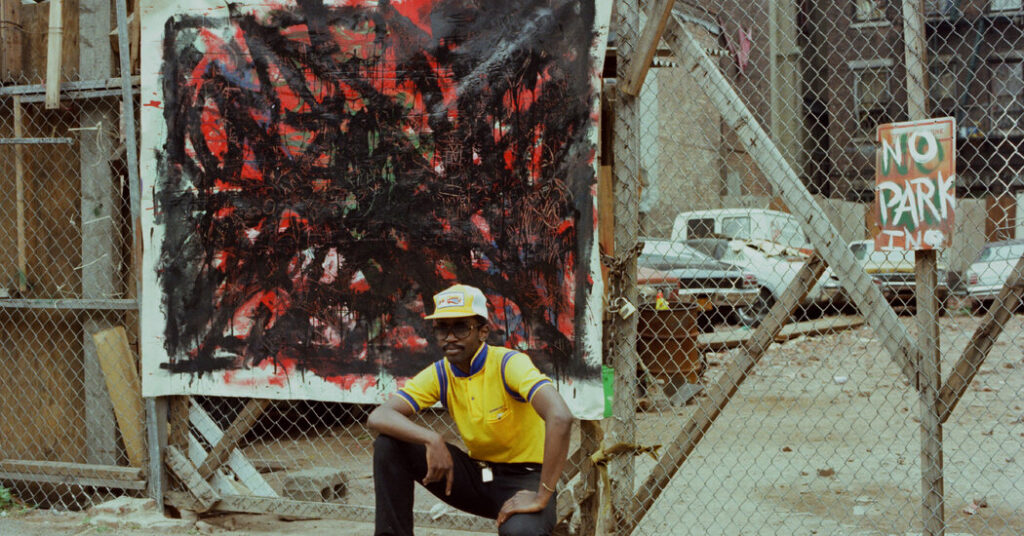
It wouldn’t take long to find the answer. Fab would achieve fame as a visual artist, filmmaker, TV host and formative tastemaker in hip-hop’s global takeover. When Blondie shouted him out in their lyrics, though, he was still primarily a scenester, bouncing among the legendary New York clubs of the ’70s and ’80s (CBGB, the Mudd Club, the Roxy, Paradise Garage) and the park jams and impromptu art galleries where the standards of look and sound were undergoing a revolution.
What blazes through the captivating, fast-moving memoir “Everybody’s Fly” is that Fab 5 Freddy does not play. He was having fun, sure, and caught some lucky breaks along the way. But from his early years, he understood the magnitude and potential of street culture; full of drive and vision, he was looking to the future, seeing around corners, keeping his eyes firmly on the prize.
“I was clear on the mission,” he writes, “to engage with the culture of my time, to be a champion of new modes of expression, to make art the centerpiece of life. And nothing was going to stop me.”
Fab was born Frederick Brathwaite in Brooklyn, the son of an accountant and a nurse. His father had bohemian leanings and progressive politics (he hung posters of Chairman Mao and witnessed the assassination of Malcolm X). The brilliant jazz drummer and activist Max Roach was young Fred’s godfather.
At his local public library, he was drawn to art and architecture books, and when he began to investigate the elaborate graffiti pieces splashing across the city’s trains and walls, he correlated the work to Futurism and Pop Art, as well as “the spirit of rebellion” in the ’60s counterculture.
He briefly flirted with street life, narrowly escaping a bust during a period when he was selling weed in the Catskills, after which he doubled down on his commitment to the new visual style — “All that ’70s conceptual art felt dry to me, overly academic and corny. What was needed was rhythm, color, urgency” — and, increasingly, the M.C.s, D.J.s and dancers creating a new language for music and movement.
Fab also sniffed out the similarities between the burgeoning hip-hop and punk scenes and hung out at CBGB “like a Black secret agent.” He gradually established a role as a translator for and connector between creative communities. “Whether through art, film or music,” he writes, “I have always tried to catalyze myself and others to new creations.”
As these pieces come together, it’s almost comical how many pivotal moments Fab is responsible for: He jets off to Italy as part of “the first international gallery show” dedicated to graffiti art, recommends the Funky Four Plus One to be the first rap group to appear on “Saturday Night Live,” even plays a critical role in establishing “hip-hop” as the umbrella term for the emerging culture.
This era culminates in the 1983 film “Wild Style,” conceptualized by and co-starring Fab; despite its low-budget limitations, it’s an essential document, often considered hip-hop’s greatest movie.
A regular in East Village galleries and a fringe player in the Andy Warhol/Interview magazine set, Fab encountered Keith Haring and Jean-Michel Basquiat, fellow painters who shared his ambitions — “like generals plotting moves on a battlefield map, looking to invade new territory.” He writes fondly of Haring (he was there when Haring introduced his signature “radiant baby” figure) but felt a different kinship with his fellow Brooklynite Basquiat.
“Like me, Jean had spent serious time in museums and was hip to art history,” Fab writes. “Here was another Black kid who came from where I came from and knew all this stuff.”
Fab notes that while the overwhelmingly white downtown art scene “could be clueless or insensitive at times,” mostly it was “a nice little bubble where skin color didn’t mean a lot.” But the pressures and expectations around Basquiat became intense, and he swung between lashing out and pulling back. In one poignant moment, the two artists meet up and Basquiat pulls a tin of caviar out of his pocket, which they smear on Wonder Bread “like two kids eating PB&Js.”
As hip-hop’s popularity exploded, it was inevitable that its unflappably cool, universally respected ambassador would find a larger platform. For Fab, this arrived in 1988 when he became the host of “Yo! MTV Raps,” the cable channel’s first show devoted to urban music. He describes his onscreen persona as “still me — but with a little more jive, a little more hustle, and little more … Yo! Yo! Yo!”
The language in “Everybody’s Fly” (written with the Vanity Fair contributing editor Mark Rozzo) is plain-spoken, no-nonsense, with a feel for the speed and action of the time. Fab’s story is also a reminder that cultural transformation doesn’t just happen — that hip-hop’s radical energy, creativity and perspective also required leaders with the dreams and determination to push it forward, often in the face of resistance to art that was so Black and so strong.
“I was constantly being challenged by self-appointed cultural gatekeepers,” Fab 5 Freddy writes. “Finding ways around their ignorance was like playing chess: I always had to think three moves ahead. Checkmate!”
EVERYBODY’S FLY: A Life of Art, Music, and Changing the Culture | By Fred Brathwaite, a.k.a. Fab 5 Freddy, with Mark Rozzo | Viking | 326 pp. | $32
The post Fab 5 Freddy Remembers Hip-Hop’s Global Takeover appeared first on New York Times.