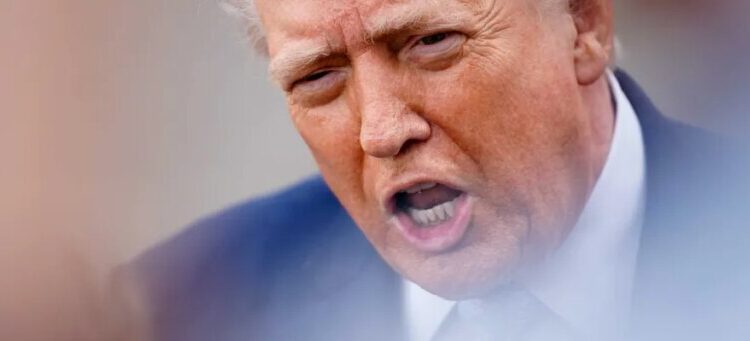
As the Trump administration seeks $200 billion to help pay for the war in Iran, understandable bipartisan skepticism has emerged on Capitol Hill. There’s a good case to make for more military spending, but it’s on President Donald Trump to do the hard work of convincing Congress.
“It’s a small price to pay to make sure that we stay tippy top,” Trump said Thursday, adding that he wants the armed forces to be in the best shape they’ve ever been.
Lawmakers are angry the president didn’t consult with them in advance of hostilities, but concerns about critical shortages existed long before Tomahawks hit Tehran. The White House would be wise to frame its request as a broader supplemental, which could draw on existing bipartisan support for rebuilding America’s defense industrial base.
The United States has struck more than 8,000 targets in Iran while expending thousands of expensive, slow-to-replace air-defense interceptors throughout the region. This has been a remarkable display of American military capabilities. In some cases, the U.S. has a deep stockpile of munitions and healthy production lines to replace what is being used in the conflict. Yet air defenses in particular are under strain, and production can’t keep up.
Some progress has been made in recent years, but the U.S. remains woefully unprepared, as the war in Ukraine has proved. Allies willing to spend more on their own defense face years-long backlogs to purchase hundreds of billions of dollars worth of American weapons. The war in Iran may have had a short-term deterrent effect as China saw how ineffective its air defenses were against U.S. forces there and in Venezuela, but Xi Jinping will soon notice America’s dwindling stockpiles.
The U.S. military needs more money not for promoting democracy or picking needless fights but to keep international trade flowing and deter future aggression.
The White House doesn’t deserve or need a blank check to make that happen. Congress has the constitutional responsibility to appropriate the money. The best way forward is a supplemental that would narrowly authorize spending for the most critical munitions across several years.
While it’s understandable to worry the U.S. is spending too much on defense, history provides context. Throughout the Cold War, the U.S. consistently spent more than 5 percent of GDP on its military. It hasn’t reached that level in decades, hovering around 3 percent in recent years.
In January, Trump announced he would request a $1.5 trillion defense budget for 2027, which would bring expenditures closer to the 5 percent NATO allies recently agreed on. It’s unclear whether the $200 billion figure counts toward that larger number, but action would be welcome regardless.
America has the technical prowess and financial ability to maintain its military preparedness around the world. It would be a shame if the country simply chose not to do it.
The post Another $200 billion for the military? appeared first on Washington Post.