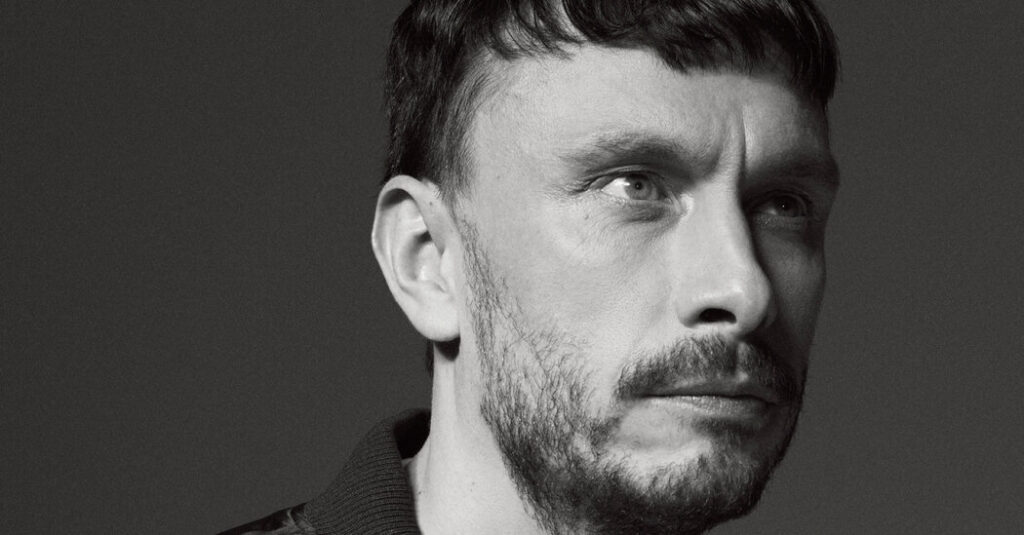
In 2024, the relatively unknown Scottish writer and performer Richard Gadd had the strange experience of seeing the lowest moments of his life become the stuff of viral entertainment. His unsettling Netflix show, “Baby Reindeer,” which was based on his experiences as a victim of sexual assault and stalking, unexpectedly became one of that year’s biggest critical hits as well as one of the streamer’s most popular shows ever. That acclaim catapulted Gadd, 36, into a heightened and uncomfortable level of personal and professional attention.
His response to that discomfort has been to go deeper. His new, highly anticipated HBO limited series, “Half Man,” which premieres next month, is about the decades-long, mutually destructive friendship between two men, the slight and thoughtful Niall, played by Jamie Bell, and the brutish and violent Ruben, played by Gadd, who bulked up considerably for the role. Unlike “Baby Reindeer,” the show is not based in fact. But what “Half Man” shares with its predecessor is a brutally unflinching exploration of sexual confusion, tortured masculinity, emotional abuse and the impact of trauma (with some dark laughs thrown in). Those are all issues that Gadd himself is still trying to understand both in his art and, to varying degrees of success, his life.
Subscribe: Apple Podcasts | Spotify | YouTube | Amazon | iHeart
For years, you were working as a performer, doing stand-up comedy, but the work you did was often intentionally alienating. It’s not as if you’d been trying to do some mainstream thing. As a result, I imagine that the possibility of enormous success was not on your radar. So what did achieving success show you about the reality of what it can or can’t do for you? The best thing about success is that it leads to opportunity, because all I really care about is working on the next thing. Fame, on the other hand, I’m still coming to terms with. At the best of times, I’m a self-conscious person. It’s so funny: I look back on those early comedy days where I was performing this alienating style to comedy clubs up and down the country. I used to think: Why is no one getting this? This is the cusp of brilliance! In terms of myself, fame has led to a certain degree of discomfort in the way I go about my life. You always have to think about what you’re doing and where you’re going. I worry about people coming up to me. They’re almost like projections of my own fear. I’m just wired to think in an anxious way. I always think there’s something lurking that might be hard to deal with in a social situation.
One of the central questions of the new show, “Half Man,” is, What does it mean to be a man? That also came up in “Baby Reindeer.” For yourself, do you have an answer to that question? Wow. That’s a tough one to answer. I remember a press release going out with “Half Man” saying it will get to the bottom of the question of what it means to be a man. I was busy writing at that point, and a press release comes to your desk — you’re just like, I don’t have time for this. So I worry that a lot of people are heading into “Half Man” with me somehow answering an almost existentially impossible question. But for myself? No. I suppose that’s why I write these things, because I’ve always had a void within me that I can’t quite explain. A certain hole in the soul that perhaps comes from pressures that I felt as a man.
What were some of those struggles? A lot of the ways broken masculinity operates in today’s society can be traced back to certain repressions from years ago. The ’80s in this country was a very unforgiving time for people who grew up different from everyone else. That leads to repression, which can lead to broken and damaging behavior in later life. I know it’s quite heavy stuff to get into, but there are certainly things that happened in my life that I’ve spoken about publicly that I found very hard to come to terms with due to false ideas that this doesn’t happen to a man and this shouldn’t happen to a man and men shouldn’t be vulnerable in this way — all stuff that I’ve rejected. In fact, being vulnerable or admitting to my biggest secrets has led to the biggest freedom in my life.
I assume you’re referring to the assault that happened to you. How do you achieve liberation through making art about personal trauma? Is there a moment where you’re able to go, OK, I have now moved forward? It’s interesting. When we keep something in our head, it can grow to intolerable levels. The shame and fear and guilt and all the feelings around complicity or feeling like an idiot was a big part of the battle that I faced. It built to intolerable levels where I felt all I was doing was whipping a billiard ball around my head over and over again, to the point where it was just ricocheting harder each time. I couldn’t keep it in any longer. The first thing I ever did before I spoke to anyone about it was I wrote it down. I think what art has always done is given me a playground to explore things that I’m struggling with. I’m sure “toxic masculinity” is a word that people are going to synonymize with the show. For something to be toxic, like drugs are toxic, they have to be intoxicating. The normalization of these things that were so casually thrown around in the ’80s, like slurs, leads to a repression in people who are scared to admit certain things.
Is there anything about yourself that you’re still scared to admit? Probably. The journey of life is trying to come to terms with yourself. I’ve always been quite confused sexually. Even as I sit here, 36 years old, I still sometimes feel confused. I’ve tried many labels in my life, and the labels never brought me any sort of comfort. Comfort comes from within. No external answer exists to an internal conflict, in my opinion. Inconsistency is the confusing nature of life. Accepting that I might never stand on solid ground is a form of acceptance. Some people just wrestle existentially, and that’s the way it is.
Tell me about inhabiting the character of Ruben, because your physical transformation is quite striking. I think you gained 50 pounds of muscle. I knew that in order to explore what people consider an alpha male character, I needed to be big. I worked out six days a week. I had a nutritionist. I had the meals made for me and sent to me and I had to eat them at certain times. I didn’t stray from my diet once, apart from days where I do topless scenes and I would go through a process of dehydration to make the muscles more defined. It’s incredible how it works. I would be looking at myself in a mirror the day before, thinking I’m just not there.
Are you someone who has to be intentional about your relationship with your body? Yeah. I’m always down on it. Sometimes with Ruben, I’d wish I could’ve been a bit bigger. A lot of gymgoers have a sense of body insecurity and are not able to see the reality.
Almost a dysmorphia. Exactly. I would have it with my personal trainer. I’d be like: “I need to get bigger. What are we going to do?” It’s so innately human to have body issues or insecurities.
I want to ask about something you alluded to earlier. For many artists, particularly ones who have been working on the margins, there might be a sense that having success could fill some hole that was there. Like, When I get successful, I will feel different. Did you have those feelings? Having lived that out, I’m not sure that’s the reality. I always think the bad things times a million now because there are more people looking at me. Chasing success can be great for motivating you, but chasing fame — idolatry and being loved — will never answer the question of whether you love yourself. And I’m not saying I do love myself. I love myself a lot more than I did 10 years ago. It’s funny, I always thought of myself as a fairly cultured person, but I remember the ending of “RuPaul’s Drag Race,” where he goes, “If you can’t love yourself, how the hell are you going to love someone else?” I’m like, Ru, you’re killing me right now! I would watch that and sit uncomfortably in my chair because it’s so true.
I wonder if that connects to what you said earlier about always feeling a hole in the soul. Do you have any clarity about where that hole came from? The big turning point in my life was being sexually abused, groomed. My whole physiology, psychology, sense of self changed dramatically overnight, and I felt completely disconnected from the world. I remember I was in London working at a pub and I could only ever afford the bus because the tube was too expensive. So I walked everywhere. I lived so far away from Camden, where the pub was, and I remember feeling so disconnected from life, wandering around these streets and no one ever even looks at you. But if I look back at my life, there was always an insecurity and a kind of listlessness. When I went to university, I remember this cloak of self-consciousness coming over me. I felt so lost and insecure. I didn’t know who to be or what to do and I probably tried to be several different people before I tried to be myself. So I think that hole in the soul has always been there. In the end, I turn to art. The reason people create art is to find meaning in life where they felt none. And I guess that’s the journey I’m on as well.
What was the experience like of not only becoming a publicly recognizable figure, but becoming a recognizable figure for a piece of work that was about trauma that you suffered? Like, one person’s bingeable show was the worst event of your life. Did you feel any strangeness around that? Yeah, it was very destabilizing and very interesting. I never want to act like I didn’t think “Baby Reindeer” was going to be a success. I did think it was. But did I think it would be a mainstream sensation? I didn’t think for a second it was going to do that. And that, of course, brings with it a multitude of opinions and comments. Some of those opinions can be quite harsh. But I’ve gotten used to it, in a way.
I’m trying to get at something slightly different. Maybe this can be illustrative: I did an interview with Kristen Stewart, and I mentioned that I can have discomfort or disdain for my physical appearance. After that interview came out, people would say they liked it, and I would think, Oh, this person now knows a deep insecurity I have. It seems to me that you’ve had an extreme version of that. Did that have any effect on how you related to people? I absolutely relate to what you’re saying and I totally get what you mean. Since “Baby Reindeer,” I feel like I’ve been walking around naked. One of the worst things is when you see a group at a table pointing over and laughing. You’re like, Who made what joke? But they might not be making a joke. They might not have anything to do with you. But that’s your brain creating reasons to be sort of self-destructive. But look, on the whole, it was one of the best things I did, putting all that stuff out there for the entire world to see, because I’ve got nothing to hide anymore. That can feel freeing. It’s that old Janis Joplin song, isn’t it?
“Me and Bobby McGee.” Yeah, “freedom’s just another word for nothing left to lose.” In a way, I feel like people can’t hurt me so much anymore.
I went back and read years’ worth of interviews with you, and in so many of them, you’re so open and soul-bearing and honest. I found myself feeling almost protective of you, and it just makes me want to know — answer this however honestly you want: How do you feel about yourself these days? [Laughs] I don’t know. Better than I did. I’m more settled in myself. I used to be in a constant battle because I couldn’t accept certain parts of myself or I had been through things I couldn’t forget or I was so self-damning. The way I would speak to myself was appalling. Sometimes I think half the battle in life is thinking that there is some sort of switch where it is all OK. That you can have a “click” moment in life where you are at peace with yourself and with everyone, and you can wander in a room and you won’t care what people think, and can have an interaction and won’t care if you’ve come across badly. But life is challenging and life is hard and a lot of it is accepting that the struggle will always mutate into different struggles, and it’s how you manage those choppy waters.
I read in an interview that you hadn’t had same-sex attraction until after your assault. Is that right? Yeah, that is true. I know that’s a controversial idea. I’ve never said it’s because of that. I’d never say that. I say that perhaps it forced me to look at myself, to re-examine myself. Maybe I was strutting from A to B, repressing myself in such a way that I never looked before. I’m not sure. All I know is that I went through a period — this is radically honest — of almost feeling asexual and then getting very confused and then exploring that and realizing that I’m fine both ways. Even now, I’m still a little bit lost. I do think that abuse of that nature can leave you uncertain in your body, but I’m not saying that abuse makes you gay. My truth, which nobody can take from me, is that I didn’t question myself until that happened.
It seems like a hard one to wrap the head around. Absolutely. That’s why I always like my shows to be inconsistent in a way. People doing and saying things that aren’t necessarily clear. You see coming-out things on television, and it’s like all the character needs to do is say “I’m gay” and everything’s fine. Whereas in reality, it’s not about saying it or people knowing, it’s about saying to yourself and you knowing. That’s a fascinating part of self-acceptance. And people are all sorts of everything. I think that’s important. That’s being human.
Given how much of your work is about processing darker things, do you think art can be a way to express joy or optimism? Could you imagine doing a lighthearted piece of work? I have been thinking about doing a lighthearted piece of work, but I have this theory: Your art chooses you. I think because my understanding of life is contradiction and internalized pain — not to sound so goth! — even if I did do a comedy, the characters would still have some sort of comedic link to pain. But the idea excites me. Never say never, I suppose.
On the idea of working through your experience: Is there ever any sense of “I’d actually like to transcend this and be on the other side and on to other things”? It’s a good question. I suppose I would say that one would hope that I would get to that point. How close I am to that is quite far. I would hope that one day I do something that’s so far removed from me that it feels like some sort of release, like it’s not even a part of me. If I was to move away, I would have to find some sort of divine peace and spirituality, which feels quite far at the moment. But everything’s getting better. So we’ll see.
This interview has been edited and condensed from two conversations. Listen to and follow “The Interview” on Apple Podcasts, Spotify, YouTube, iHeartRadio or Amazon Music. Follow us on Instagram and TikTok.
Director of photography (video): Rob Wilton
David Marchese is a writer and co-host of The Interview, a regular series featuring influential people across culture, politics, business, sports and beyond.
The post After ‘Baby Reindeer,’ Richard Gadd Confronts Male Sexual Repression appeared first on New York Times.