When the United States and Israel initiated the war against Iran last month, their messages were perfectly in sync on the sweeping goal of regime change.
President Donald Trump told Iranians to seize their “only chance” for generations to “take over your government,” and Prime Minister Benjamin Netanyahu implored them to “cast off the yoke of this murderous regime.”
But nearly three weeks into the conflict, the war aims are diverging between a U.S. president who saw the historic opportunity of a quick military victory with only modest economic pain and an Israeli leader with grander visions of toppling a regime he’s sought to vanquish for 40 years, said multiple U.S., Israeli and Middle East officials and lawmakers familiar with the matter.
Trump’s latest outburst against Israel’s attacks on Iran’s huge South Pars gas field on Wednesday laid bare the tensions between the two allies and the inconsistency of the president’s approach to the conflict.
Trump said Israel had “violently lashed out” at Iran and distanced himself from the assault on the world’s largest natural gas deposit, which Iran shares with Qatar, a close U.S. ally and host of Washington’s biggest military base in the Gulf.
“The United States knew nothing about this particular attack, and the country of Qatar was in no way, shape, or form, involved with it,” Trump said on Truth Social.
But multiple officials directly contradicted that claim in conversations with The Washington Post, saying that while the U.S. was not involved in the strike, the Israelis informed Washington about the attack in advance.
The incident, which drove energy prices higher and prompted retaliatory Iranian missile fire at Qatar’s main gas facility and Saudi Arabia’s capital, was indicative of Trump’s vacillation as he’s tried to manage an unpopular war that has killed 13 Americans to date.
Trump has marveled at the devastation the military campaign has wrought on Iran’s regime while recoiling at the catastrophic economic impacts rippling across the globe, said U.S. officials, who like others spoke on the condition of anonymity to discuss the president’s thinking.
Netanyahu’s months-long campaign to convince Trump to attack Iran and Secretary of State Marco Rubio’s off-the-cuff disclosure that Israel’s determination to strike compelled U.S. officials to act, infuriated Trump’s “America First” supporters, who questioned a foreign power’s role in bringing the U.S. to war.
The administration tried to reset the narrative that the war was Trump’s decision alone but that message was undercut by this week’s resignation of the president’s top counterterrorism official, Joe Kent, who wrote in his resignation letter that the U.S. was dragged into another Middle East war “due to pressure from Israel and its powerful American lobby.”
Netanyahu, for his part, is seizing an opportunity to decimate an arch rival under a U.S. president that has given him a longer military leash than any other leader in American history, officials said.
The goal of regime change is reflected in Israel’s military tactics. About 40 percent of its estimated 8,000 strikes have been against Iranian security forces and installations that would be used to suppress another popular uprising, a Middle East security official said. Besides the assassination of Iran’s supreme leader, Ali Khamenei, at the outset of the war, Israel has killed scores of Iran’s political and military leaders, including Ali Larijani, secretary of the Supreme National Security Council, and Gholamreza Soleimani, commander of the Basij paramilitary forces.
Both U.S.and Israeli intelligence officials acknowledge, however, that Iran’s regime is “not cracking” and its hold on power remains intact.
The White House denied that Trump has allowed the war’s scope to become murky or open-ended.
“Unlike the years-long foreign entanglements of the past that lacked clear objectives, President Trump has outlined four distinct goals for Operation Epic Fury,” said a White House official.
The goals are destroying Iran’s ballistic missile program, sinking its navy, neutralizing its regional allies and guaranteeing it can’t obtain a nuclear weapon, the official said.
Israeli officials denied that the two countries are misaligned, saying Trump and Netanyahu talk almost every day and are pursuing a divide-and-conquer strategy based on their mutual strengths. “Israel coordinates everything with the U.S.,” an Israeli official told The Post last week.
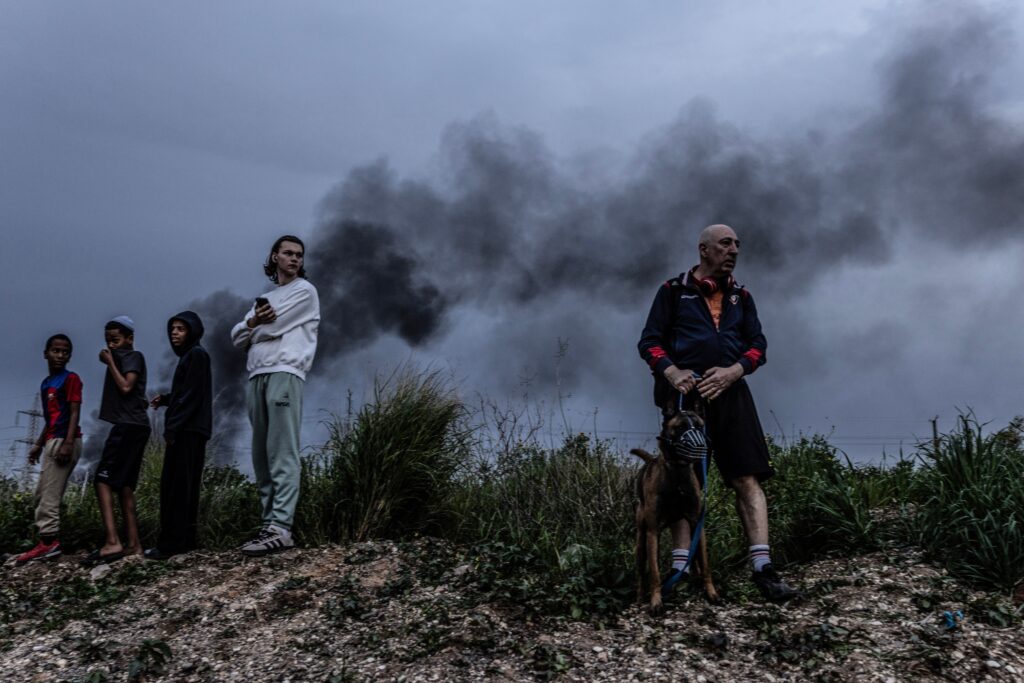
But other officials say significant cracks in the alliance began to emerge in the second week of the war as Israel’s attacks on Iran’s oil facilities unleashed clouds of toxic smoke and acid rain and the compounding economic impacts of Iran’s closure of the Strait of Hormuz began to sink in.
“Israel is pursuing a scorched-earth campaign of regime change, which is not what our goal is,” said a senior U.S. administration official. “Bibi wants to wreck Iran’s economy and decimate its energy infrastructure. Trump wants to keep it intact.”
Rubio took a more diplomatic approach in his discussions with U.S. lawmakers in early March, clarifying the American role but not defining it against Israel’s objectives, said officials who attended his briefings.
“He said the U.S. was not pursuing regime change but didn’t spell out the scope of Israel’s ambitions,” said an official who attended one of Rubio’s briefings.
In a House Intelligence Committee hearing Thursday, asked about the apparent misalignment of U.S. and Israeli war aims by Rep. Joaquin Castro (D-Texas), Director of National Intelligence Tulsi Gabbard said, “The objectives that have been laid out by the president are different than the goals laid out by the Israeli government.”
In a news conference Thursday, Netanyahu described the coordination between the U.S. and Israel as unparalleled, but at the same time he sought to avoid directly contradicting Trump’s claim that he had been blindsided by the gas fields strike. “I don’t think any two leaders have been as coordinated as President Trump and I,” Netanyahu said.
When asked about Trump’s criticism, however, Netanyahu said he would only offer two facts: “Fact number one, Israel acted alone against the Asaluyeh gas compound. Fact number two, President Trump asked us to hold off on future attacks, and we’re holding off.”
Israeli planners say they would see having Iran’s government toppled and replaced with something better as a welcome effect of the attacks, not a primary ambition. Experience shows, they say, that regime change doesn’t often come from the sky. It is more likely to take troops, internal coups, public uprisings or other dynamics on the ground.
“We don’t believe that there is a high likelihood to overthrow a regime with the kind of air campaign we planned for Iran,” said an Israeli official.
Instead, officials hope the intensity of aerial assaults — now totaling about 16,000 U.S. and Israeli strikes combined — will eventually embolden domestic opponents to resume the protests that were gaining momentum before Iranian troops killed thousands in a January crackdown, and render Iran’s security forces less able to stop them.
But other senior Israeli officials have told U.S. counterparts they expect Iran’s opposition to get “slaughtered” if they take to the streets because Iran’s security forces have the “upper hand.”
Declaring ambitious goals for the war serves Netanyahu politically at home, where 93 percent of Jewish Israelis support the war and most want it to continue until the regime falls, according to polling by the Israel Democracy Institute.
Unlike the U.S., which has largely focused on military targets, Israel has pummeled a vast array of Iranian internal security targets in a campaign that accelerated in the war’s second week. They include multiple headquarters buildings of the powerful Islamic Revolutionary Guard Corps and police and Basij security checkpoints across the country, along with emergency hiding places where paramilitary forces tried to take shelter.
Israel estimates it has killed roughly 3,500 Iranian security and military personnel since the strikes began Feb. 28. The number of civilian casualties associated with those strikes is unknown.
The most high-profile killing of civilians, however, occurred at the outset of the conflict with the suspected U.S. bombing of an elementary school that killed scores of children.
A Western intelligence official, while not predicting the regime’s imminent fall, said there are signs of friction between the IRGC and the Basij and indications that commanders are reluctant to communicate electronically for fear of disclosing their location. Khamenei’s son and successor, Mojtaba, who was wounded in the strike that killed his parents, has not been seen publicly, noted the official, who spoke on the condition of anonymity to discuss secret assessments.
Trump has repeatedly declared Operation Epic Fury a success, but he has given shifting timelines for when and how he will declare it over. For now, Iran’s regime remains in place and, according to U.S. intelligence assessments, is more hard-line than before. Oil was over $110 a barrel Thursday, and the Strait of Hormuz remains largely closed to marine traffic.
Trump is now weighing a decision whether to escalate, including by sending in ground troops, officials familiar with the matter said. Such a move would be politically risky for Trump but could be necessary to open Hormuz — or effect regime change.
The president seemed to pull back from the idea Thursday, at least for now. “No, I’m not putting troops anywhere,” he said.
Greg Miller in Tel Aviv contributed to this report.
The post U.S.-Israeli rift widens over potential endgame in Iran appeared first on Washington Post.