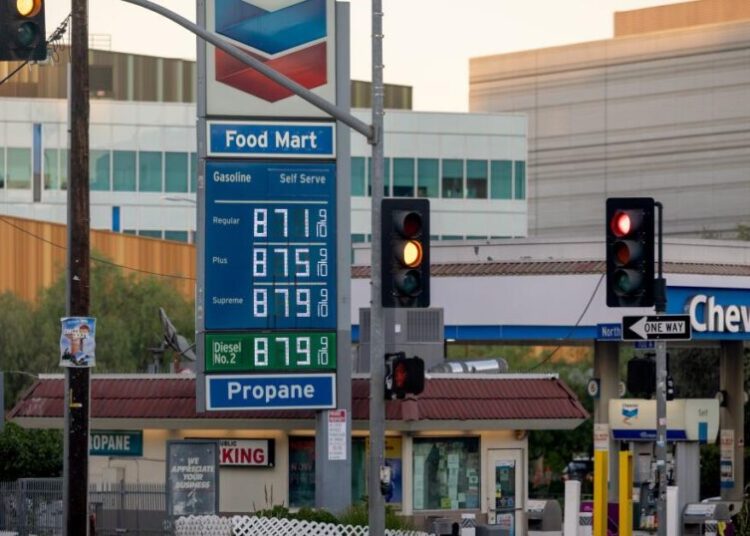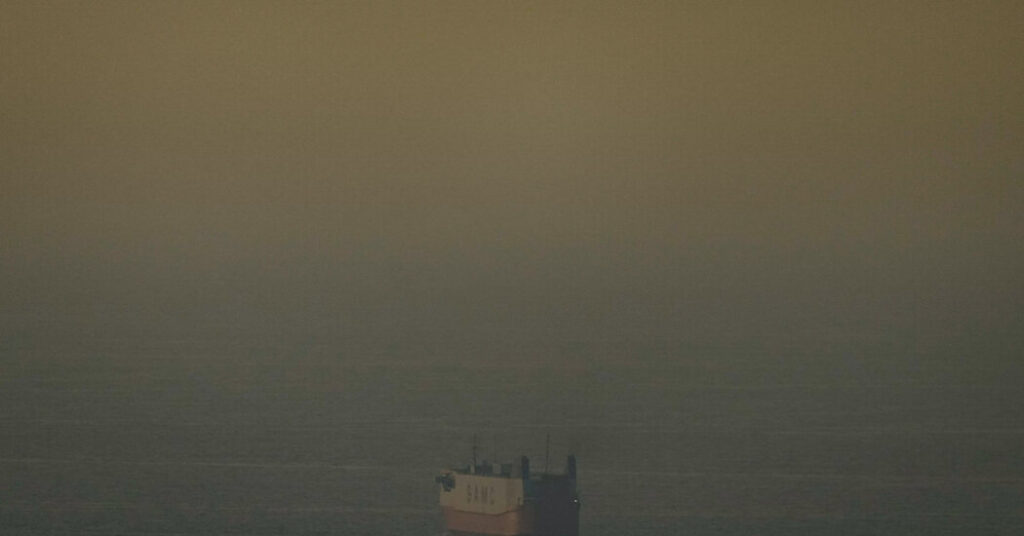
U.S. warplanes and attack helicopters have ramped up assaults against Iranian drones and naval vessels, American officials said, in an effort to reopen the Strait of Hormuz, the strategic waterway that Iran has effectively closed to most Western ships. The de facto blockade has helped drive up oil prices and rocked the global economy.
The intensified attacks came as the U.S.-Israeli war in Iran approached the three-week mark with no clear endgame or timeline outlined by American or Israeli leaders and a weakened Iran still firing missiles and drones at other countries in the Middle East.
Israel said on Friday that it had launched strikes against targets in Tehran after Iranian missile fire set off sirens in Jerusalem and northern Israel overnight. The Israeli military, which has been systematically killing Iran’s leaders, said it had slain Ali Mohammad Naini, the spokesman for Iran’s Islamic Revolutionary Guards Corps. The Guards confirmed that he had been killed but did not give details.
Kuwait said that drone attacks had caused fires at an oil refinery for the second consecutive day. Those attacks, part of a series of Iranian strikes on oil and gas infrastructure in the region, have led to fears of lasting disruptions in global energy supplies.
Iran attacked energy sites this week, after Israel struck the South Pars natural gas field; it is shared by Qatar and is a major source of Iran’s domestic energy. Bahrain, Saudi Arabia and the United Arab Emirates said on Friday that they were intercepting drone and missile strikes, although the targets were not immediately clear.
Iran has also warned that it could target American and Israeli military personnel. A statement attributed to the senior spokesman of the Iranian armed forces and published by the country’s Fars news agency on Friday said that “tourist attractions, resorts and entertainment centers around the world will not be safe for you.”
In the Strait of Hormuz, American military commanders are still trying to counter Iran’s ability to effectively blockade most merchant vessels. About one-fifth of the world’s oil and a large portion of the fertilizer that nourishes global crops passes through the strait.
Strikes have hit multiple vessels in or near the strait since the United States and Israel started bombing Iran on Feb. 28. Iran has claimed responsibility for some of the attacks. This month, U.S. officials said that Iran had also begun laying mines in the waterway, although an Iranian deputy foreign minister, Majid Takht-Ravanchi, denied that Iran had deployed mines.
Gen. Dan Caine, the chairman of the Joint Chiefs of Staff, said on Thursday that low-flying Air Force A-10 Warthog planes had been “hunting and killing fast-attack watercraft” operated by the Revolutionary Guards in the contested sea lanes. The A-10 was developed to provide close air support for U.S. ground troops but has been repurposed to strike ships at sea, he said.
General Caine also said that some regional allies, which he did not identify, were using Apache helicopter gunships to “handle one-way attack drones,” one of the most potent weapons Iran has deployed to strike neighboring Arab countries and their energy sites across the Persian Gulf.
The attacks over the strait are the latest effort by the United States to try to reopen the waterway, which is about 21 miles wide at its narrowest point. This week, U.S. Central Command said that fighter bombers had dropped several 5,000-pound penetrating bombs on underground missile silos near the strait.
About 2,500 additional Marines aboard three warships are heading to the Middle East from Southern California, U.S. military officials said on Friday, joining the more than 50,000 American troops assigned to the operation.
The Marines, who will deploy next month, are expected to take the place of some 2,200 Marines who were quickly deployed to the region last week from Japan, a military official said. It was unclear how the Marines would be used, but they could help clear the strait or seize Kharg Island, Iran’s oil hub in the northern part of the Gulf.
President Trump has said he has no plans to send American ground troops into Iran, but he has been far from definitive. “I’m not putting troops anywhere,” he told a reporter at the White House on Thursday, adding, “If I were, I certainly wouldn’t tell you.”
Mr. Trump has also sought to enlist American allies to help reopen the strait while insisting the United States does not need any help.
On Friday, Britain gave permission for the United States to use its bases to attack Iranian targets that were threatening ships in the Strait of Hormuz. Previously, Britain said the United States could use its bases only to attack Iranian facilities that were threatening British personnel and allies in the region. Officials said that British military forces would still not participate in the attacks.
In a social media post, Mr. Trump again lashed out at NATO allies for rebuffing his call to send warships to escort vessels in the strait. “COWARDS, and we will REMEMBER!” he wrote.
The Trump administration has been trying to bring down high oil and gas prices, which can drive up the cost of consumer goods. Treasury Secretary Scott Bessent said on Thursday that the United States might lift sanctions on Iranian oil in an effort to shore up the global market, reversing years of U.S. measures to cripple Tehran’s economy.
Mr. Trump said on Thursday that he had told Prime Minister Benjamin Netanyahu of Israel to stop attacking Iran’s energy sites, a request Mr. Netanyahu said he would honor.
In Iran, the war cast a pall over Eid al-Fitr, a holiday commemorating the end of the Ramadan fasting month, and Nowruz, the Persian New Year, which usually fills Tajrish Square in Tehran with the joyful clamor of merchants and customers haggling over flowers, tableware and painted eggs.
This year, the mood in Iran was subdued, as people closed out a year in which they had endured deepening economic misery, a brutal massacre carried out by government forces and the U.S.-Israeli bombardment, which has killed civilians, destroyed homes and put the nation more on edge.
Iran’s new supreme leader, Ayatollah Mojtaba Khamenei, released a public statement for Nowruz and Eid al-Fitr on Friday that denied that either Iran or its proxies were to blame for recent strikes in Turkey and Oman. He also pledged to address the country’s economic woes, declaring the coming Iranian year’s slogan to be “a resistance economy under the shadow of national unity and national security.”
The statement was printed by Iranian news media and released in an audio recording on social media and state television, but it was not clear whose voice was in the recording.
Ayatollah Khamenei has not been seen or heard in public since he was named supreme leader almost two weeks ago, after an Israeli airstrike killed his father and predecessor, Ayatollah Ali Khamenei. Pentagon officials have said they believe the son was seriously wounded in the U.S.-Israeli bombing campaign.
Reporting was contributed by Michael D. Shear, Ashley Ahn, Yeganeh Torbati, Helene Cooper, Karoun Demirjian, Leily Nikounazar, Ephrat Livni and Arash Khamooshi.
Adam Rasgon is a reporter for The Times in Jerusalem, covering Israeli and Palestinian affairs.
The post U.S. Attacks Iranian Drones and Vessels to Try to Open Strategic Shipping Lane appeared first on New York Times.