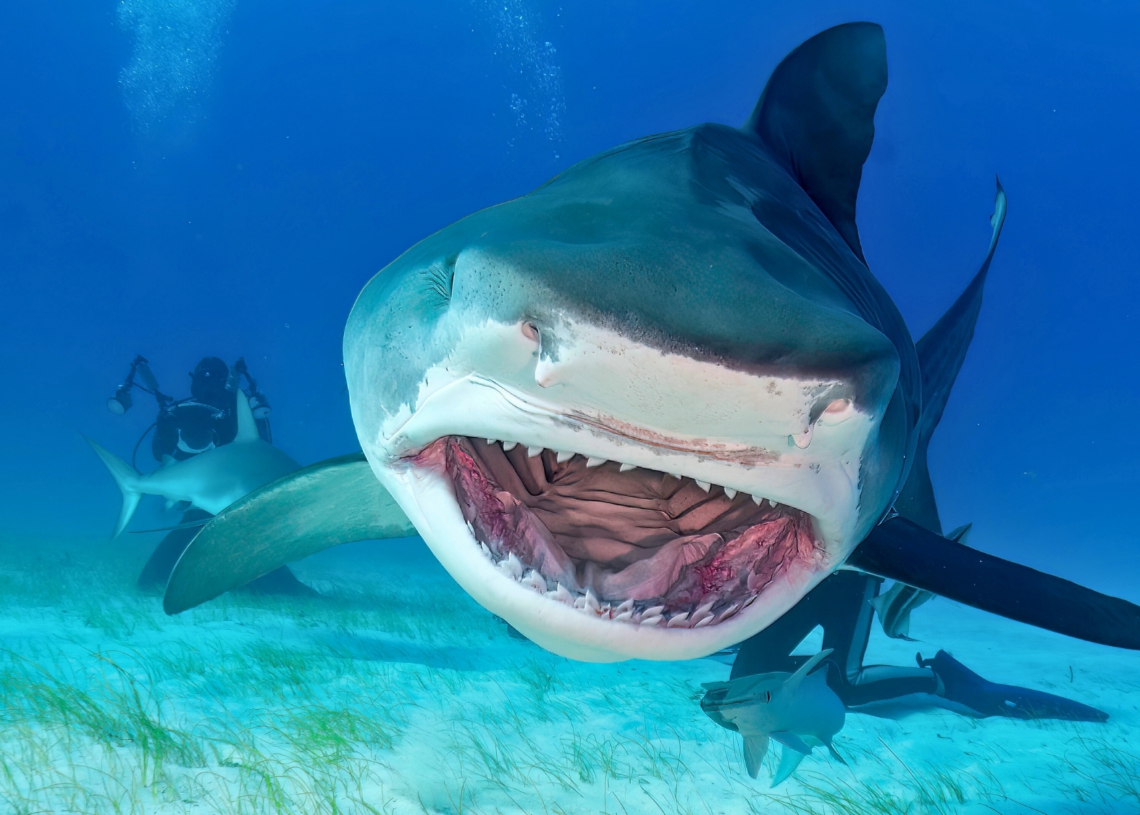
The crystal clear waters of the Bahamas are filled with enough traces of human pharmaceuticals and illegal drugs that it’s showing up in shark blood.
A new study published in Environmental Pollution found that sharks off the coast of the Bahamas are carrying trace amounts of various drugs. The research team, led by biologist Natascha Wosnick, analyzed blood samples from 85 sharks near Eleuthera Island. Nearly a third tested positive for substances including caffeine, anti-inflammatory drugs like acetaminophen and diclofenac, and in one case, cocaine.
Species affected included nurse sharks, Caribbean reef sharks, and a juvenile lemon shark.
Sharks in the Bahamas Are Eating Tons of Drugs
Caffeine showed up most often, followed by over-the-counter painkillers like ibuprofen and acetaminophen. You don’t think about it once it clears up your headache or dissipates a muscle ache, but those common everyday painkillers do eventually leave your system and, as this study shows, eventually make their way into our waters.
The researchers say the likely sources are all human-related, such as sewage runoff, waste discharge, and, of course, tourism. Tourists wading in the beautiful waters of the Bahamas will pee in those beautiful waters, releasing trace amounts of whatever drugs they’ve imbibed, both legal and illegal.
Cocaine was an isolated finding, and its presence in the shark’s blood rather than its muscle tissue suggests it had been exposed fairly recently. The researchers point out that sharks are opportunistic feeders who investigate unfamiliar objects they encounter, just in case they might be edible. That includes inedible objects like, say, a brick of cocaine that was either lost or discarded as it was being trafficked.
The most concerning part of all this is the biological changes that could result from this wild cocktail of drugs. Sharks with contaminated blood showed shifts in metabolic markers tied to stress and energy use. The researchers aren’t sure what the long-term effects of exposure might be, but similar studies in other species have shown that exposure to stimulants like caffeine can alter behavior, affecting feeding, movement, and the animal’s response to risk.
Obviously, the natural headline here is that there are sharks on drugs in the Bahamas. While that was technically happening, that’s a much more sensationalistic take. The reality is that we humans are blissfully unaware of the fact that the drugs we put in us eventually leave us and end up saturating whatever they flow into, like microplastics.
It’s a kind of contamination that’s easy to ignore because it’s invisible. Just because we can’t see it doesn’t mean it doesn’t have serious ramifications… some of which might be directly affecting our food chain.
The post Sharks in the Bahamas Are Full of Cocaine, Caffeine, and Painkillers appeared first on VICE.