Three weeks into a war in the Middle East that is roiling energy markets, Asia is confronting one of the first major consequences of an oil shortage, as jet fuel prices surge to record levels and governments scramble to keep flights running.
Airlines have canceled thousands of flights, stranding tens of thousands of passengers. Major regional energy suppliers, including China, South Korea and Thailand, are restricting exports, while import-dependent countries like Vietnam are forced to ration and call on others for help.
The accelerating crisis offers a first glimpse of what happens when oil supplies are suddenly choked off by an unexpected crisis with no clear end in sight. The pain is most acute in Asia, where countries rely on Middle Eastern oil and have limited stockpiles, and experts warn that it may foreshadow more disruptions if the war drags on.
“We’re peering into what our gasoline and diesel future is going to look like if this doesn’t get resolved,” said James Noel-Beswick, the head of commodities at Sparta Commodities, a data firm.
“Jet is kind of a canary in the coal mine,” he said.
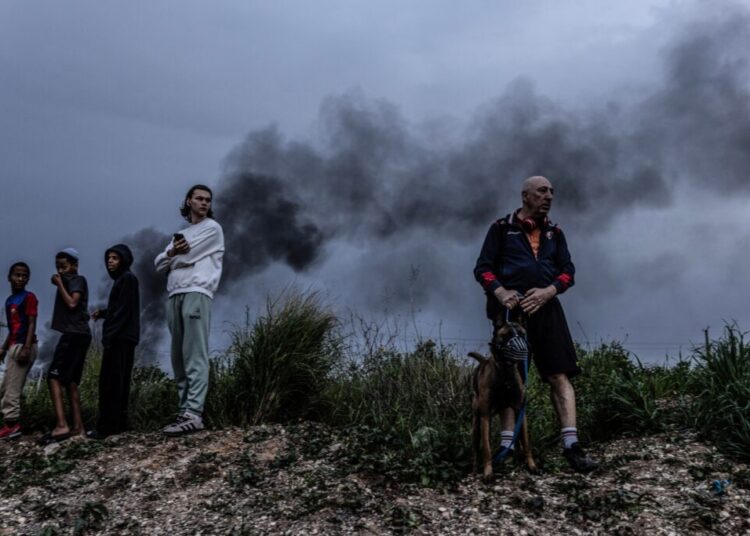
The risk of oil shortages rippled across Asia within days after the United States and Israel went to war against Iran, bringing shipping through the Strait of Hormuz to a halt. About a fifth of the world’s oil flows through the narrow shipping corridor along Iran’s southern coast, and most of it ends up in Asia.
In Indian cities, people started hoarding liquefied petroleum, widely used for cooking. Bangladesh canceled university classes. The Philippines has moved to a four-day workweek. In Vietnam and Thailand, gas stations posted “sold out” signs as governments with limited stockpiles imposed emergency conservation efforts.
Then came a shock no one expected. Jet fuel prices spiked to a record high of more than $200 a barrel, more than doubling the prewar price.
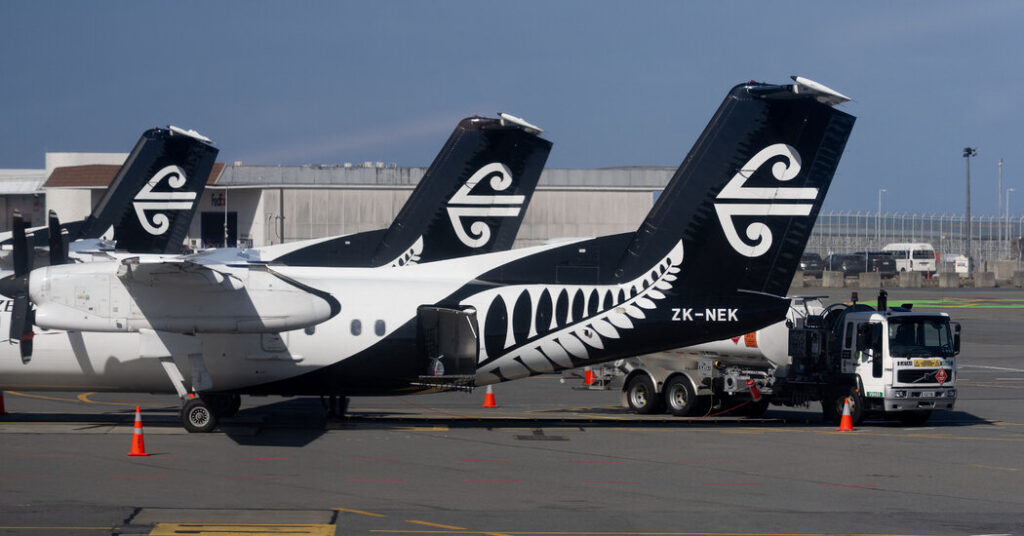
“It is at unprecedented levels,” Nikhil Ravishankar, the chief executive of Air New Zealand, told a local media outlet last week after it canceled around 1,100 flights through early May.
Jet fuel prices have risen faster and more drastically than the price of Brent crude, the global benchmark for oil, which settled at $108.65 a barrel on Thursday — up about 50 percent since the war started.
Jet fuel is often the first refined oil product to run short, in part because it is held to stricter quality standards than other fuels. It must be stored in specialized tanks, making large reserves costly, and it cannot sit for long periods without degrading. As a result, there is less buffer to absorb supply disruptions. And unlike gasoline or diesel, which have more flexible supply chains, jet fuel depends on specific components that are harder to substitute, leaving fewer alternatives when supplies tighten.
The structure of the global fuel system magnifies the problem. Countries that extract crude oil are often not the ones that refine it. South Korea, for example, is a major exporter of jet fuel, but relies heavily on imported crude, much of it from the Strait of Hormuz.
Countries like Australia have reduced their refining capacity over the years, leaving them more dependent not only on imported oil but also on other countries’ willingness and ability to refine and sell it.
China was one of the first countries to restrict exports of refined oil products, including jet fuel, days after the fighting began last month. The move reverberated across the region, where China supplies at least half the fuel consumed in some countries.
In recent days, Thailand, a major supplier to Vietnam, imposed a temporary ban on certain fuel exports, including jet fuel, while South Korea capped exports of some gasoline and diesel products, further squeezing jet fuel supplies as refineries put a priority on domestic demand.
“We’ve seen a ban on crude product exports, and China has been one of the first to do so,” said Neil Beveridge, the director of research at Bernstein, a market research firm, citing conversations with traders and companies in the oil sector. The moves prompted companies to hoard oil on the expectation that the situation would only get worse, he said.
In Vietnam, fears of price spikes and fuel shortages have incited panic. Hundreds of drivers on motorbikes, the main mode of transport in the country, have lined up late into the night outside gas stations in Hanoi.
The situation has grown so dire that Vietnam’s foreign minister and prime minister have met with ambassadors and senior officials from China, South Korea, Thailand, Japan and the United Arab Emirates, urging them to help, including sharing access to strategic reserves.
Nearly three-quarters of Vietnam’s aviation fuel is imported, mostly from China and Thailand. Vietnam’s Civil Aviation Authority warned this week that jet fuel shortages could emerge as early as April. Vietnamese airlines are weighing fare increases and flight cuts to cope with rising costs and tightening supplies. Even at higher prices, securing additional fuel remains a serious challenge.
“Access to fuel supplies is extremely difficult at the moment, as it depends entirely on external factors, particularly the conflict in the Middle East,” said Bui Ngoc Bao, chairman of the Vietnam Petroleum Association.
For Australia, the current shock is a situation long flagged as a vulnerability because of the nation’s reliance on imports, including in the government’s own review. The country imports 90 percent of its fuel and had about a 32-day supply of jet fuel on hand in early March, according to the country’s energy minister.
A local media report that at least one fuel tanker bound for Australia failed to load at a Chinese port in mid-March fanned fears that shortages were ahead.
On Thursday, Prime Minister Anthony Albanese reassured the public that the country’s fuel supply remained secure, attributing any shortages to panic buying, noting that demand had more than doubled in some regions. At the same time, he announced a task force on fuel security, saying he wanted the country to be “overprepared.”
As a part of the measures, Australia will also keep more of the domestically produced fuel in the country, he said.
“The conflict is an unprecedented shock to global energy markets,” Mr. Albanese said, adding: “Already, Australians are feeling the consequences of this.”
The chief executive of Sydney Airport, which accounts for 40 percent of the country’s jet fuel consumption, said last week that the airport typically held around a 25-day supply. But the reliability of that stock “depends on international shipping lanes, global refining capacity and geopolitical stability,” the executive, Scott Charlton, said in remarks at a summit on renewable fuels.
Of the war now jeopardizing all those fronts, he said: “We’re reminded quickly how interconnected energy, aviation and geopolitics are.”
Muktita Suhartono contributed reporting from Bangkok, and Murphy Zhao from Hong Kong.
Alexandra Stevenson is the Shanghai bureau chief for The Times, reporting on China’s economy and society.
The post Scramble for Jet Fuel Shows How Energy Shortages Are Rippling Across Asia appeared first on New York Times.