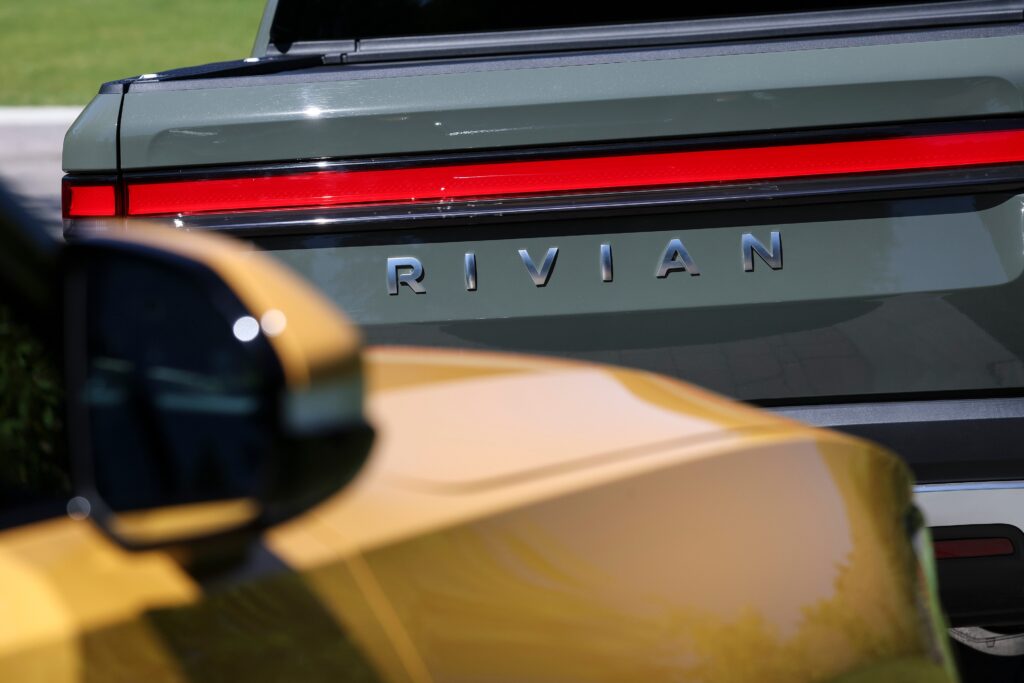
Rivian’s struggles offer a cautionary tale to investors. A company that structures its business around generous government handouts is like a house built on sand — with just one political wave, its foundation could disappear.
The maker of electric trucks saw its market cap exceed $150 billion after going public in 2021, making it more valuable than General Motors or Ford. Now worth less than $20 billion, the company is scrambling to reinvent itself after the Trump administration and Congress ended various tax breaks for electric vehicles.
Rivian got a much-needed shot of adrenaline this week as Uber announced plans to invest as much as $1.25 billion if the company can deliver 50,000 autonomous vehicles. The big bet on robotaxis is a promising sign that the EV industry can evolve and survive without government largesse.
All EV manufacturers took a sales hit last year, but Tesla was better positioned to weather the storm because it was already profitable. Rivian has yet to break even. Unlike GM or Ford, its lineup is 100 percent electric, meaning it had few alternatives to fall back on. The company’s best hope of survival, it seemed, was to deliver later this year on its new SUV model, the R2, without any production delays and at a competitive price — quite the tall order, especially with high tariffs.
Rivian’s woes are not entirely a function of political mood swings. It struggled to scale production during the post-pandemic supply chain crunch. China’s chokehold on lithium made it difficult for manufacturers to bring down the cost of batteries, by far the most expensive part of EVs. (In 2019, Amazon, founded by Post owner Jeff Bezos, invested in a deal that included the purchase of electric delivery vans.)
Rivian has made other adjustments to compete in the changing market, including licensing its software to Volkswagen. It just might work. For the first time, the company generated more money last year from EVs than it took to build them.
Other domestic EV makers, from Tesla to the traditional automakers, are also trying to figure out how to play on a more level playing field. That competition can make everyone better, which leaves all Americans with better choices in the end.
The post Rivian and the danger of building a business on government largesse appeared first on Washington Post.