The Cuban government this week refused a request by the U.S. Embassy in Havana to import diesel fuel for its generators this week, calling the ask “shameless,” given the Trump administration’s fuel blockade on the island, according to diplomatic cables reviewed by The Washington Post.
The denial could force the embassy to order nonessential staff to leave Cuba in May or “possibly earlier,” the embassy warned Wednesday in a cable to the State Department.
The State Department did not respond to a request for comment.
The embassy, a large, diesel-consuming building along Havana’s Malecón waterfront esplanade, has relied on generators for power during frequent blackouts over the past 18 months. The administration’s blockade, intended to pressure the communist government into political concessions, has worsened the crisis.
Cuba has received no oil imports for the past three months, President Miguel Díaz-Canel said last week.
Staff at the U.S. Embassy have been consolidated into group housing to conserve fuel and are increasingly working remotely, according to a person familiar with conditions in Havana. Without Cuban government approval, there is no fuel, and without fuel the embassy will soon need to draw staff down, according to the person, who spoke on the condition of anonymity because they were not authorized to discuss the situation publicly.
The embassy had been running at half-staff and limiting generator usage at some residences to four hours a day, according to previous cables. Residences had been supplied with battery packs, solar panels and satellite phones.
The embassy sought permission to import two containers of fuel from the United States, according to this week’s cables.
While the Cuban Ministry of Foreign Relations told U.S. diplomats the plan was “bold,” it did not initially indicate it would block the shipment. But when it arrived Tuesday at Port Mariel, the ministry told the embassy the request had been refused.
In a diplomatic note to the embassy, the ministry said the administration’s fuel blockade was aimed at “causing the greatest possible harm to the Cuban economy, the well-being of the people, and their standard of living.”
“The Ministry interprets as shameless the claim by the diplomatic mission to access a good as a privilege that it denies to the Cuban people,” the ministry said, according to a State Department translation. The note was dated March 9, the day the ministry received the request.
The United States and Cuba have been adversaries for 65 years. Officials in Washington and Havana have held direct talks aimed at resolving differences, Díaz-Canel said last week. The administration has not made its demands of Havana public.
Secretary of State Marco Rubio said Tuesday that Cuba’s reforms so far have “not dramatic enough” and the country “can’t fix” its failing centralized economy. President Donald Trump, who this year ordered the military raid that captured Venezuelan President Nicolás Maduro in Caracas and has partnered with Israel in launching a war against Iran, said this week he would have “the honor of taking Cuba.” “We’ll be doing something with Cuba very soon,” he told reporters Monday.
Díaz-Canel said Tuesday that the United States publicly threatens Cuba almost daily.
“They intend and announce plans to seize the country, its resources, its properties, and even the very economy they seek to strangle to make us surrender,” he wrote on X.Cuba, he said, will respond to any “external aggressor” with “an unshakable resistance.”
The country’s worst energy crisis in decades has left communities without power for more than 30 hours at a time, Díaz-Canel said in a news conference last week. Dozens of thousands of people are waiting for surgeries for want of electricity, he said.
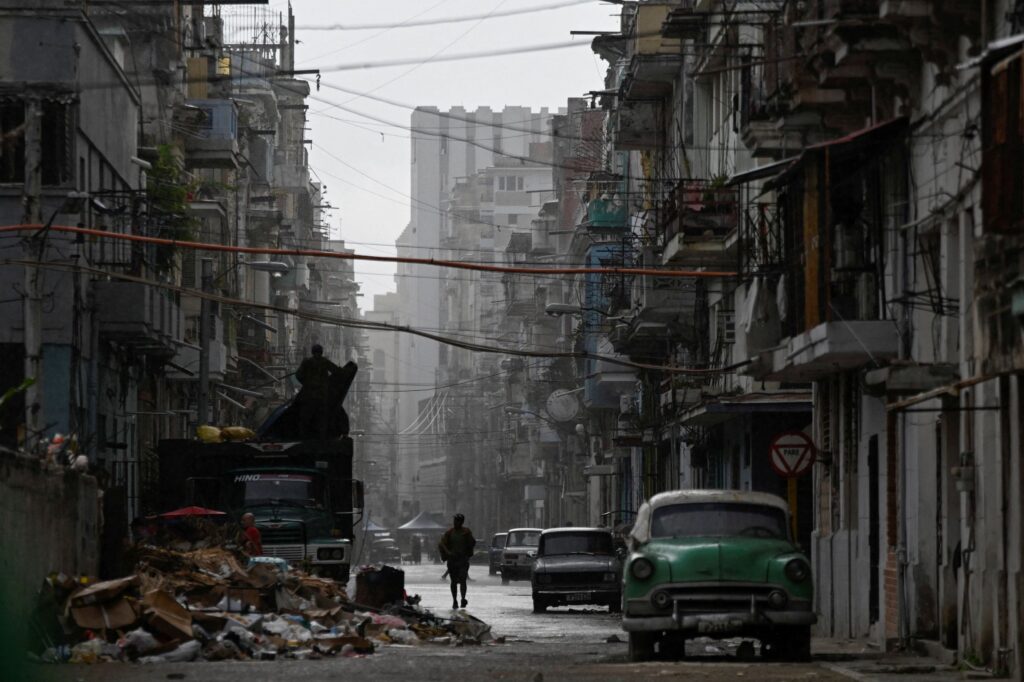
The entire island lost power Monday when the country’s electrical grid collapsed. Trash collection has been disrupted, prices are skyrocketing, and drinking water is scarce.
The U.S. Embassy assessed last week that the energy gap in Cuba “hovers around 60 percent. In a cable, the embassy suggested services risked reaching “zero hour,” when water, sewage treatment and electricity shut down.
A senior diplomatic official representing another country in Havana said other embassies are facing the same challenges. None have been able to purchase fuel for weeks, according to the official, who spoke on the condition of anonymity to discuss sensitive details. They’ve relied instead on reserves built up over several months. Some have reduced operations to two to three hours a day or four days a week. Some have shifted to remote work.
The Cuban government is preparing for all potential U.S. actions, including a military incursion, the official said.
Havana has shown a willingness to make concessions on economic issues, but not on political changes, the official said. Officials have grown frustrated at Trump’s continued threats against the island, leading to an “impasse.”
The post Cuba rejects U.S. Embassy request to bring in fuel, calls it ‘shameless’ appeared first on Washington Post.