Bret Stephens: Hi, Frank. I know we’d like to discuss other topics, domestic topics, but there’s this little matter of a big war in the Middle East. How do you see it going, and what do you think we should do?
Frank Bruni: Well, President Trump seems utterly taken aback by the closing of the Strait of Hormuz — which was predictable. He seems wholly aghast at our European allies’ reluctance to join this war — despite the contempt for those allies that he has almost consistently demonstrated. And he’s looking at the possibility of troops on the ground to confiscate Iran’s stockpile of enriched uranium — although he promised relatively swift, painless victory. How do you think it’s going, Bret?
Bret: Actually, pretty darn well, despite a drumbeat of criticism from commentators and some reporters who almost seem to want the United States and Israel to lose — probably out of political pique because they detest both Trump and Benjamin Netanyahu, the Israeli prime minister.
We went to war because we didn’t want Iran to get to the position where it could threaten the region, including its own people, with virtual impunity. Given the rate at which they were producing missiles and drones, they would have gotten there in a year or two. The steadily diminishing rate of Iranian missile and drone fire, down by roughly 90 percent since the war’s first days, suggests that the military campaign is working. Our casualties so far, thankfully, have been very few, and we haven’t lost a single aircraft to enemy fire.
Iran’s leadership is learning that there’s nowhere they can safely hide, which not only serves them right but also might help the next echelon of commanders be more open to meeting U.S. and Israeli demands to end their nuclear program and stop funding terrorist groups. And the Strait of Hormuz will be reopened as the United States steadily erodes Iran’s capacity to hold oil tankers at risk, though that might take a few weeks.
It took us nearly four years to win World War II. I don’t understand why so many people are collectively running out of patience after less than three weeks.
Frank: Wow. Are you really comparing this to World War II?
Bret: Well, OK. Maybe the first Gulf war, the one that took about six weeks to dislodge Saddam Hussein from Kuwait.
Frank: I very much appreciate your adjustment. But my misgivings with the argument you just made go well beyond your invocation of World War II. I don’t think this is a simple problem of patience; I think it’s a profound problem of trust. Absolutely nothing about the way in which the president, Pep Squad Captain Pete Hegseth and the rest of them have approached this military engagement — not the coyness about the word “war,” not the lack of any effort to explain the war to the public or build support for it, not the justifications and projections that change by the nanosecond — gives me and many others reason to believe the Trump administration’s progress reports or anything else they tell us, or rather sell us, about what’s going on.
And can we qualify all that’s supposedly gone right with a mention of something that emphatically went wrong — the killing of scores of children at an Iranian elementary school — and then Trump’s efforts to disavow any responsibility for it?
Bret: Absolutely. Appalling mistakes happen in war, which is what I assume this was. The right thing to do is to take responsibility and apologize for them — which would be a lot more than can be said for Iran’s deliberate targeting of civilians in Israel and the Gulf States.
Frank: I’m not drawing any equivalence, but apologies come hard to Trump, too. And, yes, hatred of him indeed intensifies many Americans’ opposition to this war. Contempt for Netanyahu adds fuel to that fire. But while I think both men are monumentally self-centered, titanically unscrupulous and shockingly callous crooks, I recognize the extreme evil of Iran’s rulers and am most definitely and ardently rooting for America and Israel. This isn’t Sunday football, though.
Bret: I agree, of course. I think one of the conceptual problems that proponents of the war inevitably face is that everyone can always see the downsides of action — whether they’re measured in higher gas prices, or burning buildings in the Gulf, or missiles raining down on Tel Aviv, or killed and wounded service members. But those have to be weighed against the downsides of inaction: Where would we have been if we had just continued to drift? I know many readers of this conversation will say the fault lies with Trump for abandoning diplomacy, but the reality was that even the Biden administration couldn’t get a deal, though it spent a long time trying. Iran is just a perfidious regime, and sooner or later we were going to have to confront it. My argument is that sooner is better, despite the price we’re paying now.
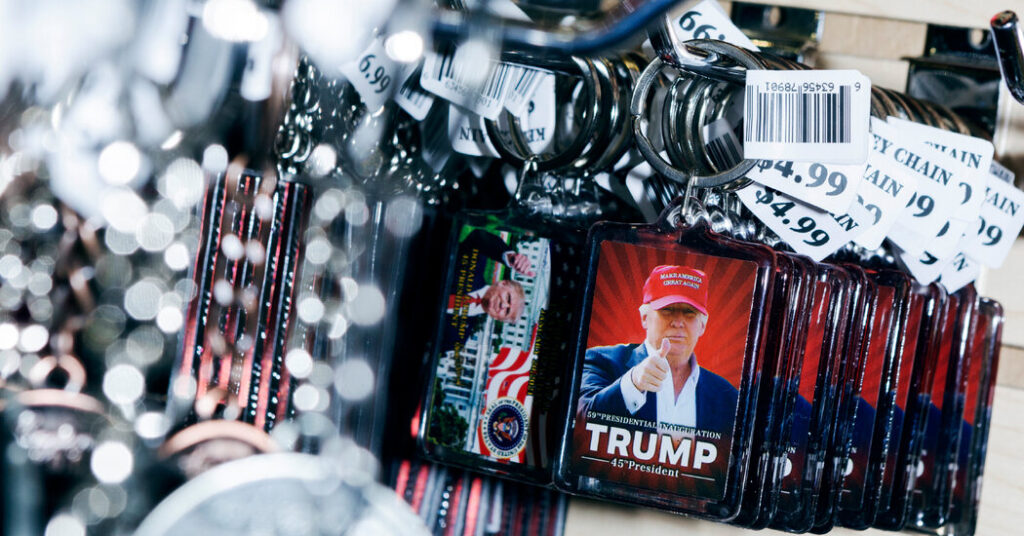
Frank: Apart from all of that, Bret, I have to vent my disgust with a dimension of this war that’s not just a matter of prissy manners but has real importance: the attitude Trump projects and the attire that reflects it. A baseball cap for the announcement of war. A baseball cap again — Trump-branded, and apparently available for purchase for $55 — for the Dignified Transfer of Americans killed in this confrontation back to the United States. Instead of mourning, merchandising. Military campaign as marketing opportunity. I understand that many voters are inured to this vacuum of dignity. They shouldn’t be, and I never will be.
Bret: For the love of sentences: “Instead of mourning, merchandising.” I nominate that one for your newsletter, Frank.
You might also have added his cavalier and persistent abuse of our European allies — threats of invasion; sophomoric put-downs of specific leaders; claims that the United States needs no help, followed by pleas for help — and his apparent mystification that they don’t want to help us out. Whatever else he achieves, and I try to give him credit when I think it’s due, he will go down in history as the most colossal boor ever to occupy the Oval Office.
But, to paraphrase Donald Rumsfeld, a nation goes to war with the president it has. So I’m supporting the mission, despite my deep misgivings about the man leading it.
Frank: You’re a Trump skeptic backing him in his current quest, but many Trump admirers — or admirers until recently — aren’t. The cracks in the MAGA movement grow only deeper, wider and cruder. When you have Megyn Kelly muttering “micropenis,” you know that there’s serious trouble afoot, or maybe that’s a-groin.
Bret: Is it too obvious for me to note that was below the belt?
OK, puns aside, we’re talking about Megyn Kelly’s vulgar feud with the Fox host Mark Levin (about whom she once declared a “crush”) over the war in Iran. Levin supports the war, as do most Republicans. Kelly has taken sides with Tucker Carlson, Marjorie Taylor Greene and the rest of the isolationist wing of the MAGA movement in opposing it on the grounds that it’s basically a war for Israel. We used to hear similar claims from bigots like Pat Buchanan, and we both know where his line of thinking led.
Frank: While many of the people who are complaining that we’re doing Israel’s bidding are bigots in general and antisemites in particular, I’m deeply uncomfortable with suggestions that questions about the particulars of America’s relationship with Israel at this precise moment in time are driven by antisemitism. Some of those questions (and questioners) are; some aren’t. And a person can worry about details of the U.S.-Israel alliance right now without disputing the bedrock importance of that friendship. I’m not saying you were suggesting it’s all antisemitism all the time. I’m just making a distinction I think is important.
Bret: It’s always legitimate to ask hard questions about where American and Israeli interests converge or diverge. But when someone like Carlson, the Nick Fuentes enabler, goes on about this being a war for Israel, I know where he’s coming from. Ditto for Greene, the Rothschild space laser fantasist. The fact that much criticism of Israel is not antisemitic shouldn’t blind us to the fact that some of it is. And the idea that wily Jews connive to drag gentiles into war is one of the oldest antisemitic tropes out there.
By the way, the same goes for Joe Kent, the recently resigned counterterrorism official, who blamed Israel for the fact that his wife was killed by ISIS and whose previous claim to fame was being an election denier with ties to the far right. When you’re a conspiracy theorist who finds a way to blame Jews for the act of Islamic radicals, you know you’ve left reality behind.
Frank: You’re right to sketch Kent’s background, and Democrats must be very careful not to overlook it or sugarcoat it in order to lionize him for coming out publicly against Trump’s war. He’s just confirmation of the fact that the war is dividing the MAGA coalition and will continue to do so. There’s a way of recognizing that without romanticizing Kent, and I worry that some Trump critics will fail to do that. Unfortunately, we live in an era of oversimplification and cheap theatrics.
Bret: Frank, the opposite of “oversimplification and cheap theatrics” is often to be found in the superlative foreign coverage of The Times. And nobody embodied that coverage better than John Burns, the fearless Times reporter who died last week at 81. I never got to meet him, but I always looked for his byline — whether it was from Pakistan or Iraq or China or Gaza — and I always came away with the sense that he had dug as far as anyone could go into the heart of the story. Alan Cowell, another legendary Times reporter, gave him a beautiful obit, which closed with a few lines from Burns about how to keep the news straight. I think it’s worth quoting:
In our time, it has become common for young reporters to give as their moral code, indeed as their reason for choosing the profession, that they aim to create a better world. It is a handsome thing, but one that can foster a missionary complex — a hubris, even — that can favor a blindness to inconvenient facts to the advantage of others.
Words for all journalists to live by — even, if not especially, columnists with opinions to offer and biases on display.
The Times is committed to publishing a diversity of letters to the editor. We’d like to hear what you think about this or any of our articles. Here are some tips. And here’s our email: [email protected].
Follow the New York Times Opinion section on Facebook, Instagram, TikTok, Bluesky, WhatsApp and Threads.
The post Trump Is Putting His Stamp on the World appeared first on New York Times.