President Donald Trump did not ask much from our European allies before launching Operation Epic Fury. He didn’t ask them to join U.S. pilots in combat in the skies over Iran or to contribute money and material to support military operations. All he asked was for Europe to hold America’s coat as it defeats an enemy that threatens us all — by allowing U.S. forces to use the European bases where America has troops stationed to defend Europe and to fly over European airspace as Americans risk their lives to disarm the Iranian regime.
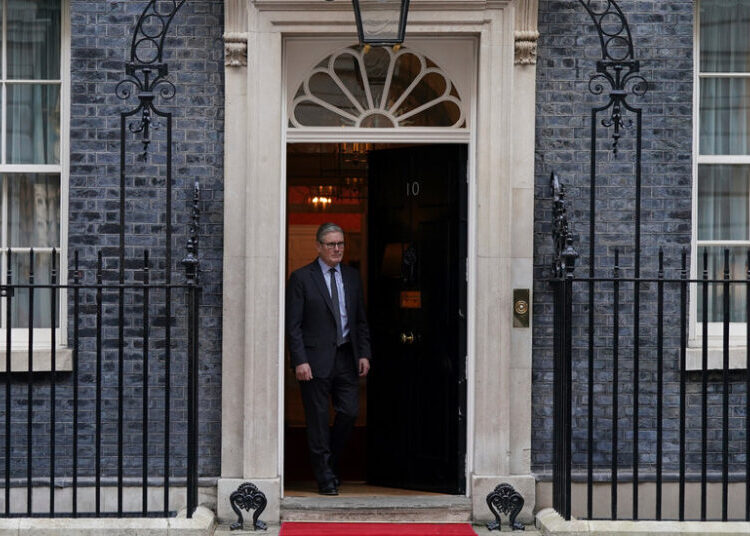
Apparently, even that was too much for some allies. British Prime Minister Keir Starmer declared that Britain does not believe in “regime change from the skies” and refused to let the United States use its own aircraft at RAF Fairford and the naval base at Diego Garcia in the Indian Ocean — backtracking only after Trump publicly excoriated him. Spanish Prime Minister Pedro Sánchez barred the U.S. from using its bases at Rota and Morón de la Frontera and forced Trump to withdraw U.S. refueling tankers stationed there. Though Germany has not stopped the U.S. from using its base at Ramstein, it has made clear it will not help the U.S. in other ways. “The war in the Middle East is not a matter for NATO,” German Chancellor Friedrich Merz declared, “therefore Germany will also not become militarily involved.”
Trump never asked for Berlin’s help in the military campaign to disarm and decapitate the Iranian regime. But now he’s asking for help in a discreet mission: preventing Iran from cutting off the Strait of Hormuz, one of the world’s most critical energy choke points.
Some NATO allies have stepped up. Estonian Foreign Minister Margus Tsahkna declared this week, “We are a small nation but we also maybe have some specific capabilities that [we] will be ready to offer if there is a need for any kind of support to [the] U.S.” Finland, which only joined NATO in 2023 and has limited naval capabilities, has similarly offered to help — and President Alexander Stubb has urged other allies to do the same. Ironically, Ukraine — which is not a NATO member — is proving to be a more reliable partner than many of America’s treaty allies, sending more than 200 military advisers to assist Middle Eastern countries in defending against Iranian Shahed drone strikes and offering the same assistance to the U.S.
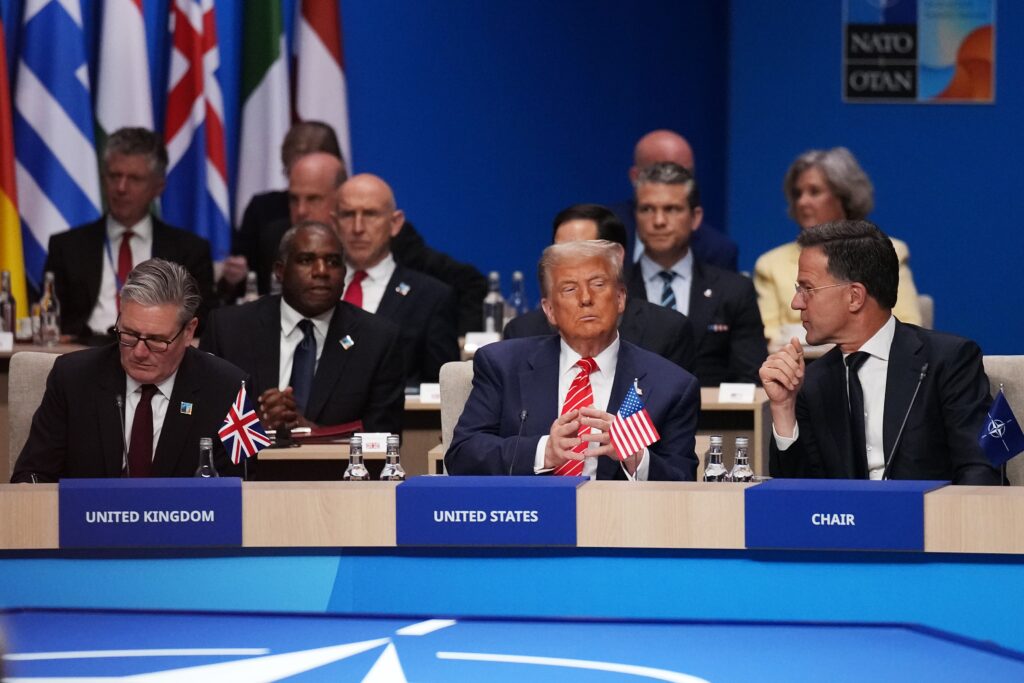
As usual, NATO Secretary General Mark Rutte is trying to save the Atlantic Alliance from itself. “I have been in contact with many allies. We all agree, of course, that the strait has to open up again,” he declared this week. “They are working on that collectively, to find a way forward.” On Thursday, at Rutte’s urging, Britain, France, Germany, Italy, the Netherlands, Japan and Canada released a joint statement condemning “de facto closure of the Strait of Hormuz by Iranian forces” and expressing “our readiness to contribute to appropriate efforts to ensure safe passage through the Strait. We welcome the commitment of nations who are engaging in preparatory planning.” We will see if those words turn into concrete action.
Rutte understands that the fate of the NATO alliance lies in the Strait of Hormuz. He also understands that Trump has done more to strengthen NATO than any previous president. When he took office in 2017, only five European allies were meeting their commitment to spend 2 percent of GDP on defense. Now, all except Spain are doing so — and have committed to raise that to 5 percent. But all that spending is meaningless if allies cannot be depended on to use those resources in a time of need.
Trump is expecting support not just from NATO. America’s Pacific allies are even more dependent on Persian Gulf energy than Europe is. Japan gets about 90 percent of its crude oil imports from the Middle East, while South Korea gets about 70 percent — most of which passes through the strait. Our allies need oil from the Persian Gulf more than America does, and they should be cooperating with the U.S. to reopen the strait as soon as possible.
With or without allied help, the United States will eventually restore the flow of oil and gas in the Persian Gulf. For Trump, the request for assistance is less a matter of ensuring the success of the mission than a test of the viability of U.S. alliances. “I’ve long said that we’ll be there for them but they won’t be there for us,” he said this week.
In the Strait of Hormuz, the smart allies have a chance to prove him wrong.
The post The fate of the NATO alliance lies in the Strait of Hormuz appeared first on Washington Post.