America’s beleaguered 1%, backed by their supporters in Congress, are pleading for your sympathy.
They say they’re treated unfairly by the federal tax code, you see, because inflation has sapped the value of their most cherished tax break, the preferential tax rate on capital gains. And they want it fixed.
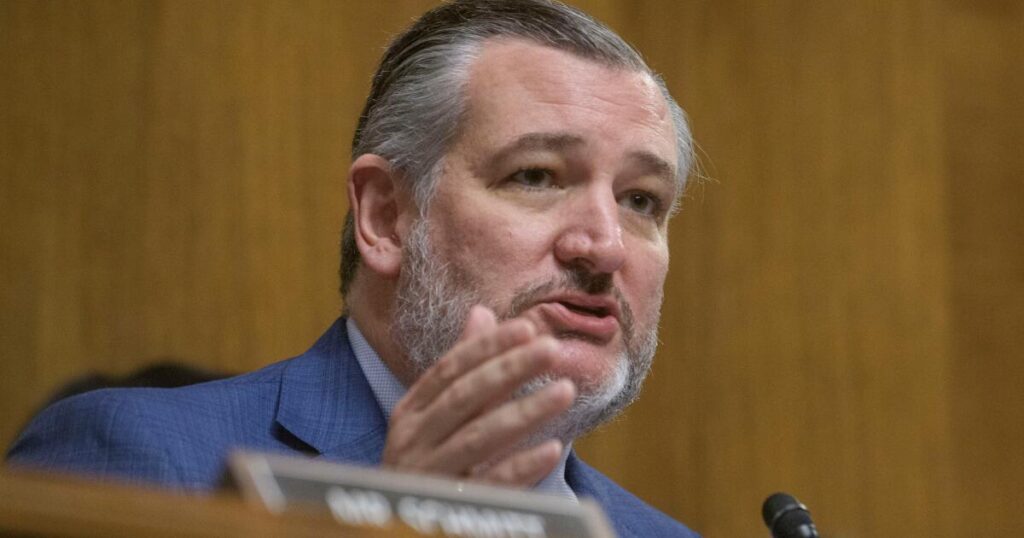
Inflation, says Sen. Ted Cruz (R-Texas), the leading proponent of this idea, has been “turning gains into an unfair tax burden.” Last year, he proposed to rectify this injustice via the Capital Gains Inflation Relief Act of 2025.
That was a rerun of similar bills he introduced in 2018 and 2021. None of them passed, so this time around, he’s proposing to circumvent Congress entirely by persuading President Trump to enact the break by presidential fiat.
The reaction by legal and economic experts outside the GOP echo chamber has been overwhelmingly negative. Whether Trump could enact the tax break via executive order is dubious , they say, and in any event the break is unwarranted and economically unwise.
“The argument proponents make,” wrote Steve Wamhoff of the Institute on Taxation and Economic Policy in 2019, “sounds logical until you think about it.” The legal and economic considerations haven’t changed since then.
As Wamhoff observed, there’s a certain amount of superficial logic underlying the argument that inflation in effect raises the tax rate charged on capital gains — the profits investors pocket from increases in the value of their stocks and bonds over time.
That’s because of how the gain is calculated. The math starts with the “basis,” the price originally paid for the asset, and proceeds to the final sale price. The difference is subject to the capital gains tax.
If the asset has been held for more than a year, the gain is taxed at a rate that tops out at 20%. This year, the rate is zero for taxpayers with income up to $48,350 ($96,700 for couples) and 15% for those with income up to $533,400 ($600,050 for couples). The top rate of 20% kicks in for those with incomes higher than that.
Gains on assets held for less than a year are taxed at the higher rates due on ordinary income, which this year top out at 37% on incomes over $640,600 ($768,700 for couples).
The issue raised by the proponents of change is that the basis is calculated on a pre-inflation value, but the gain on post-inflation values. Therefore, they assert, at least some of the gains reported by investors are due not to real advances in an asset’s value, but to inflation. They say no one should be taxed on inflation.
To illustrate, if you bought a share of stock for $5 a decade ago and then sold it for $9, your capital gain of $4 is subject to the tax. But if the value’s increase matched the inflation rate over that period, Wamhoff noted, “you have not genuinely profited.” Indeed, if your gain was less than the inflation rate, you might even be charged tax on an inflation-adjusted loss.
The remedy that Cruz proposes is to adjust the original basis for inflation. Say that due to inflation alone, that share of stock might have gained $3 in value. If one raises the basis by $3, the real taxable gain would be $1, not $4, quite a difference for the taxpayer.
There are a few problems with this narrative. Among the chief rationales for the lower tax rate on capital gains is to counter the effect of inflation. Adding the inflation indexing of the basis would mean accommodating inflation twice.
Another issue would be finding the right inflation index. Proponents of indexing typically cite the consumer price index, but that’s only one of numerous inflation measures the government calculates. Because the index tracks changes in the price of purchased goods, it’s not necessarily the right measure to adjust the values of capital assets such as stocks and bonds.
Then there’s the question of why only capital gains should be singled out for a special inflation adjustment. “Inflation distorts all forms of capital income and expense, not just capital gains,” observed Elena Patel of the Brookings Institution earlier this month. “Interest, dividends, rents: all of them partly reflect inflation.”
The impact of this change on the federal budget can’t be overlooked. The cost over 10 years, according to the Yale Budget Lab, would be $169 billion if the indexing rule were imposed only on newly purchased capital assets, but nearly $1 trillion if it were applied retrospectively to stocks and bonds already held by investors.
Also at issue is whether America’s rich really need another tax break. The tax cuts delivered by Republicans and Trump in 2017, during his first term, are estimated to be worth $1.5 trillion or more over 10 years. They were made permanent by the GOP budget bill enacted last year; the fiscal hawks at the Committee for a Responsible Budget estimate the cost of those provisions at more than $2.4 trillion over the next decade.
All that comes on top of a general reduction in top marginal federal income tax rates that have reduced them to the lowest level in a half-century.
As for the assertion by Cruz that inflation “will boost savings, spur investment, and create jobs nationwide,” there’s little evidence for that. Economists generally have calculated that whatever economic growth could be ascribed to the change would be washed out by the revenue loss from inflation-indexing only new purchases, and utterly swamped by the cost of indexing all holdings, past and future.
Nevertheless, Republicans have been relentless in trying to secure this tax break for their rich patrons. Legislation to enact the indexation of capital gains taxes was introduced in 1978, 1983, 1994, 1997 and 1998. Cruz introduced his own bills in 2018, 2021 and 2025.
All those efforts flopped in Congress. Accordingly, the advocates of inflation-indexing of capital gains have dusted off a workaround that first surfaced in 1992, during the George H. W. Bush administration. This is for the Treasury to rule on its own authority that “basis” means “inflation-adjusted cost.”
The Department of Justice and the Treasury subjected the question of whether the change could be made without congressional action to their gimlet-eyed scrutiny, and turned thumbs-down. “Not only did I not think we could, I did not think that a reasonable argument could be made to support that position,” then-Atty. Gen. William Barr said later. The Bush administration dropped the idea.
But Cruz, along with Sen. Tim Scott (R-S.C.) have urged Treasury Secretary Scott Bessent to revive it. Eight Republican lawmakers joined the parade, asserting in a March 5 letter that such a move would be “a straightforward administrative action grounded in fairness and sound tax policy.” (The Treasury Department didn’t respond to my request for comment.)
It should go without saying that with Democrats campaigning on an “affordability” platform, this idea sounds like political poison. It’s impossible to see it as anything other than a handout to the rich. How do we know this? Because it’s only the rich who have any significant exposure to the capital gains tax.
According to IRS data, about 75% of the income of the median American household, which earned about $84,000 in 2024, came from wages and only about 1.1% from capital gains. In the wealthiest households — those with $10 million or more in annual income— only about 12% came from wages but nearly half came from capital gains.
That may understate the value of capital gains for the wealthy. As Ed Kleinbard, the late taxation guru at USC, was fond of pointing out, the capital gains tax is our only truly voluntary tax. That’s because no one has to pay it until they sell the asset. If they hold it until their death, their heirs pay nothing, thanks to the “step-up” in basis for inherited wealth, which revalues the asset to its price as of the death of the owner, extinguishing the tax forever on what could be decades of gains.
After 48 years of unsuccessful politicking, one might be tempted to call the idea of indexing capital gains a certified washout. But when it comes to the GOP’s cherished hobby horses, it’s always too early to tell.
Bruce Bartlett, who served as an adviser to the Reagan and H. W. Bush administrations but has since become a most percipient critic of modern GOP economic nostrums, says the GOP’s peculiar genius is to keep even its unpopular policies simmering away in the expectation that, at some point in the future, a window will open up to get them enacted. That’s how they got abortion rights rescinded by the Supreme Court in 2022 — after 49 years of fighting against Roe vs. Wade.
When a GOP proposal fails to pass, Bartlett told me, “They put it on the shelf when the time isn’t right and when the situation changes they pull it off the shelf, dust it off, and they are ready to go again. … The left doesn’t do this. It waits until the political opportunity is ripe to even begin preparing. By the time they are ready, the opportunity has passed.”
The Republican fixation on relieving their rich patrons of the burden of capital gains taxes isn’t surprising. As I’ve reported in the past, the capital gains preference rate is the most valuable tax break the wealthy receive.
That’s because, in addition to being voluntary, as Kleinbard noted, it’s uncapped — unlike, say the deduction of mortgage interest.
This proposal doesn’t make sense even on its own terms. Isn’t it time for the proponents to drop the subject already?
The post Ted Cruz and his GOP colleagues are pushing yet another tax break for the 1% appeared first on Los Angeles Times.