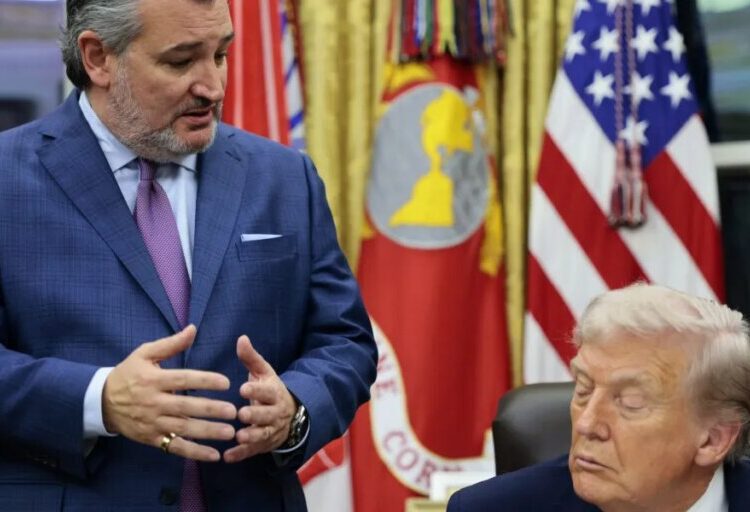
President Trump has taken on many ancillary roles in Washington: chairman of the Kennedy Center. The de facto chief architect of the city’s landmark properties. And now, the nation’s chief intelligence analyst.
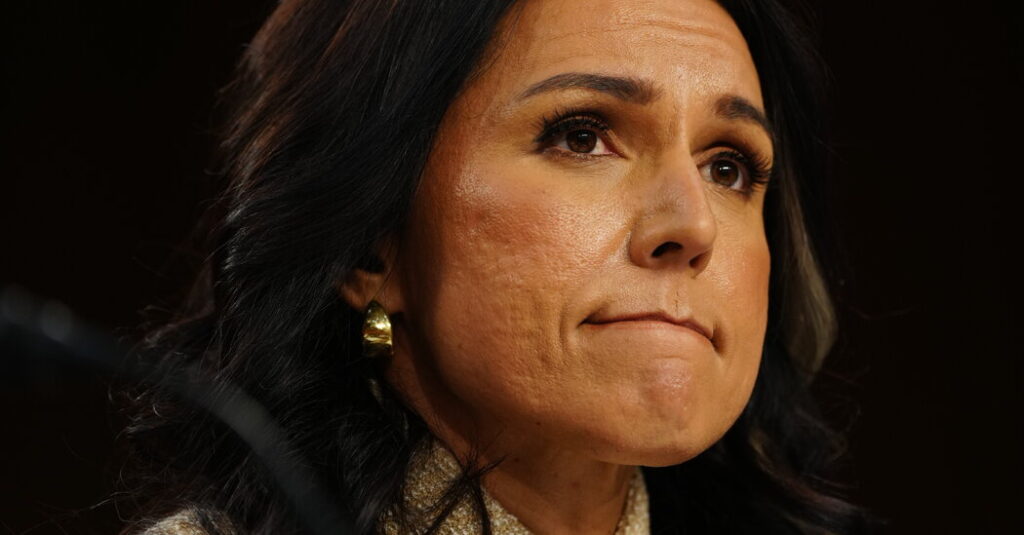
This revelation came from Tulsi Gabbard, the director of national intelligence. She had the unenviable task at a Senate Intelligence Committee hearing on Wednesday of squaring Mr. Trump’s comments about an urgent nuclear threat from Iran with a letter from one of her trusted aides that the country posed no “imminent threat.”
Her answer? Only the president can decide what is an “imminent” threat. In other words, she was turning one of the key roles of the intelligence community’s 80,000 employees — to make nonpolitical judgments about threats to American security — over to Mr. Trump.
Ms. Gabbard’s comments were necessitated by the decision of Joe Kent, her close adviser, to quit his counterterrorism position over his opposition to the war in Iran and his belief that Israel had pressured the United States into the conflict.
Democrats, long critical of Mr. Kent and his penchant for conspiracy theories, jumped on his comments about the war — creating at least a short-term communications crisis for the Trump administration. “I cannot in good conscience support the ongoing war in Iran,” Mr. Kent wrote in a letter to Mr. Trump. “Iran posed no imminent threat to our nation.”
Ms. Gabbard does not quickly turn on her allies, and she showed little desire to throw Mr. Kent under the bus or attack him. But she has remained in her position by being a careful student of Mr. Trump, and knows how to stay on his good side. And critiquing the president’s view of the threat from Iran was clearly not the way to keep your job.
So she came up with her line that it is Mr. Trump, not the intelligence community, that determines what constitutes a threat.
It was Senator Jon Ossoff, Democrat of Georgia, who pressed Ms. Gabbard the hardest on whether there was “imminent nuclear threat posed by the Iranian regime.”
“Yes or no?” he demanded.
Ms. Gabbard was ready with an answer. “It is not a responsibility of the intelligence community to determine what is or is not an imminent threat,” she said.
The senator, speaking over Ms. Gabbard, rejected the answer: “It is precisely your responsibility to determine what constitutes a threat to the United States.”
In fact, while the president has broad authority to interpret intelligence any way he deems proper, Mr. Ossoff was right: At the National Intelligence University, which trains the intelligence agencies’ future leaders, there is a large body of literature about the art and science of providing warning (although Ms. Gabbard has ordered the university merged with another government school).
John Ratcliffe, the C.I.A. director who has no love lost for Mr. Kent, chose a different tactic in answering questions about the threat posed by Iran.
“I think Iran has been a constant threat to the United States for an extended period of time and posed an immediate threat at this time,” Mr. Ratcliffe said.
Mr. Ratcliffe, far more adept than his predecessors at facing congressional questioning and still staying on Mr. Trump’s good side, also said that Iran was a destabilizing force in the Middle East, “one that has frankly been watered, fed and nurtured by policies of prior administrations” that “allowed them to become the threat that they are.”
Annual threat assessments have long been tricky endeavors for spy chiefs to manage, especially when the topic turns to Iran. Ms. Gabbard got crosswise with Mr. Trump over her comments at last year’s hearings about Iran’s nuclear ambitions. And during his first term, Mr. Trump said his intelligence leaders needed to go back to school after they appeared to contradict him on Iran.
Mr. Trump speaks frequently and bluntly, if not always precisely or accurately, so public intelligence assessments are almost inevitably going to be at odds with something he has said. That has been especially true this year, after Mr. Trump said he decided to initiate military action because he had a “good feeling” Iran was preparing to attack American interests.
Intelligence officials took pains at a hearing on Wednesday to avoid answering direct questions about what intelligence they provided to the president before the decision to strike as well as direct assessments of how the war was going.
But Ms. Gabbard offered the smallest bit of insight in her opening statement when she said that the Iranian leadership had been “largely degraded” by U.S. and Israeli attacks but that the government “appears to be intact.”
Still, there were some noticeable differences between what Ms. Gabbard read aloud and what she submitted to lawmakers.
In her statement, Ms. Gabbard said Iran’s nuclear enrichment program was “obliterated” in strikes last year, echoing Mr. Trump. There have been “no efforts since then to try to rebuild their enrichment capability,” her written statement said.
In her oral testimony, Ms. Gabbard said something quite different. Intelligence agencies assessed that before the current war, she said, “Iran was trying to recover from the severe damage to its nuclear infrastructure.”
Called out on the discrepancy by Senator Mark Warner of Virginia, the top Democrat on the committee, Ms. Gabbard said she had truncated her comments because they were running long. Mr. Warner snapped back that she “chose to omit the parts that contradict the president.”
Several Democrats unsuccessfully sought to pin down Ms. Gabbard on what information she had provided the president ahead of the war, including about Iran’s willingness to attack shipping in the Strait of Hormuz.
“I’m not going to comment on what the president did or didn’t ask me on any topic,” Ms. Gabbard insisted.
House lawmakers will have their own opportunity to ask questions Thursday, when the intelligence chiefs appear before them.
The nominal purpose of the hearing was to hear from Ms. Gabbard, Mr. Ratcliffe, the National Security Agency director, the F.B.I. director and the Defense Intelligence Agency director, and learn exactly how they were looking at threats.
The language in the document that is released alongside the hearing rarely changes significantly, even when administrations change from party to party. While it is not up to any White House to identify specific threats, presidents do rank priorities, which are reflected in the annual threat assessment. Past reports had spoken of climate change and public health threats. Mentions of those were gone from this year’s report.
Reports during the Biden administration placed Russia’s aggression and China’s ability to compete against the United States militarily and technologically at or near the top of the list. This year’s report included both of those threats, and used similar language to describe them, but border security and homeland defense led this year’s list.
David E. Sanger covers the Trump administration and a range of national security issues. He has been a Times journalist for more than four decades and has written four books on foreign policy and national security challenges.
The post On Iran, Gabbard Turned Intelligence Duties Over to Trump appeared first on New York Times.