The head of Live Nation, the concert giant that includes Ticketmaster, defended his company in a Manhattan courtroom on Thursday against accusations that it has used anticompetitive tactics to maintain a dominant position in the live entertainment business.
Michael Rapino, Live Nation’s longtime chief executive and one of the most powerful figures in the music industry, took the stand at Federal District Court in an antitrust trial initially brought against his company by the Justice Department.
But the federal government withdrew from the trial earlier this month after reaching a surprise settlement with Live Nation. Now a coalition of more than 30 states, dissatisfied with the terms of that agreement, are continuing the case on their own.
Under aggressive questioning from Jeffrey L. Kessler, a veteran antitrust lawyer representing the states, Mr. Rapino was repeatedly asked about how Live Nation protects its ticketing and concert promotion business against competitors, including whether it viewed its use of exclusive, long-term contracts as a “moat.”
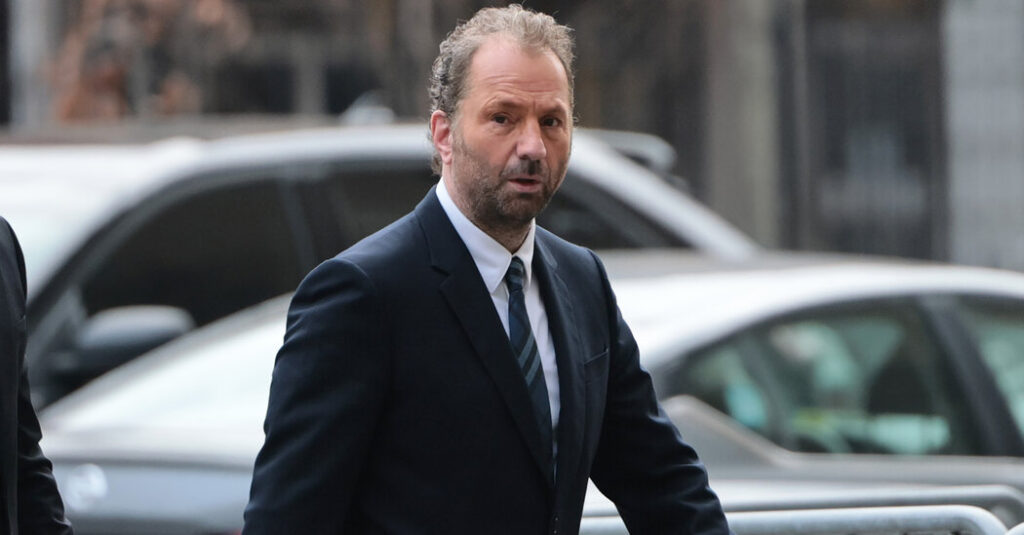
Mr. Rapino, who appeared in a crisp dark suit, with black stubble on his face, rejected that analogy. He portrayed his company as having worked hard to create a successful model that would make money for itself and for artists.
“The idea of business in general,” Mr. Rapino testified, “is that you want to build a better mousetrap than the other guy.” He portrayed Live Nation, which merged with Ticketmaster in 2010, as being “ahead of the curve” in establishing a vertically integrated business structure that would include venues, concert promotion and ticketing, which he said has since been emulated by other companies it now competes with.
Live Nation’s scale dwarfs that of any other player in live entertainment. Last year, it put on 55,000 shows and sold 646 million tickets. It owns or controls 460 venues around the world, according to its annual report, and in 2025 the company generated $25 billion in revenue — more than Spotify or the Universal Music Group.
But the complaint brought by the Justice Department and dozens of states accused Live Nation of using its various business arms as a self-reinforcing “flywheel” to stifle competition, which then drives up ticket prices and fees for millions of music fans.
Live Nation has denied it operates as a monopoly. Mr. Rapino described the flywheel concept partly as a tool to explain his business to Wall Street, but he acknowledged that the various parts of the company — including ticketing, concert promotion, venue operation and sponsorship — can work together to generate more business.
“If we have more shows,” he said, “we sell more tickets, sell more beer, make more concerts happen.”
Mr. Kessler grilled Mr. Rapino on Live Nation’s exclusive ticketing contracts and on its close relationship with another venue company, Oak View Group, that the government had portrayed as a onetime competitor that instead has worked as Live Nation’s partner and “hammer.”
Mr. Rapino confirmed that Live Nation had signed a 10-year contract with Oak View Group that could steer even more venues to Ticketmaster.
He also said concert venues often prefer exclusive contracts, and noted that the sports arenas and stadiums Live Nation serves are often sophisticated entities controlled by ultrawealthy families.
“I don’t tell the billionaire what to do with his venue,” Mr. Rapino said. “He tells me.”
Live Nation’s lawyers had successfully requested that Mr. Rapino’s compensation be excluded from the testimony heard by the jury, arguing it would be prejudicial. For the years 2022 to 2024, Mr. Rapino was paid a total of $195 million, according to the company’s most recent disclosures in securities filings.
Mr. Kessler also asked Mr. Rapino about evidence from private Slack messages, unsealed last week, in which two Ticketmaster employees joked about overcharging customers for parking and other fees, and gleefully bragged about “robbing them blind.”
“It’s disgusting,” Mr. Rapino said of the messages. “It’s not the way we operate.”
Those employees have not been fired or disciplined, though Mr. Rapino added, “I’m going to deal with it this week.”
Mr. Kessler joined the case only a week ago and was tasked with presenting volumes of evidence that federal lawyers had amassed over two years of preparation. The downside of that became apparent at several points, including one instance where he presented Mr. Rapino with an internal company document and asked if it showed that Ticketmaster had a 75 percent share of global ticket revenue.
“No, you’re reading it backwards,” Mr. Rapino answered. “I’m saying we have 25 percent.”
Under cross-examination by Live Nation’s lawyers, Mr. Rapino also addressed a phone call with his counterpart at the Barclays Center in Brooklyn, which dropped Ticketmaster for a rival. On the call, which was recorded, Mr. Rapino can he heard using profanities and telling the former Barclays chief, John Abbamondi, that it would “be a tough time to deliver tickets or concerts with a new competitor in town, regardless of ticketing.”
Mr. Abbamondi testified two weeks ago that he interpreted that statement as a clear threat that Live Nation would steer concerts away from Barclays if it did not keep Ticketmaster. Mr. Rapino was asked by Andrew Gass, one of Live Nation’s lawyers, whether he had intended that statement as a threat.
“Zero,” Mr. Rapino replied.
Olivia Bensimon contributed reporting.
Ben Sisario, a reporter covering music and the music industry, has been writing for The Times for more than 20 years.
The post Monopoly? Not a Chance, Says Live Nation’s Chief at Antitrust Trial. appeared first on New York Times.