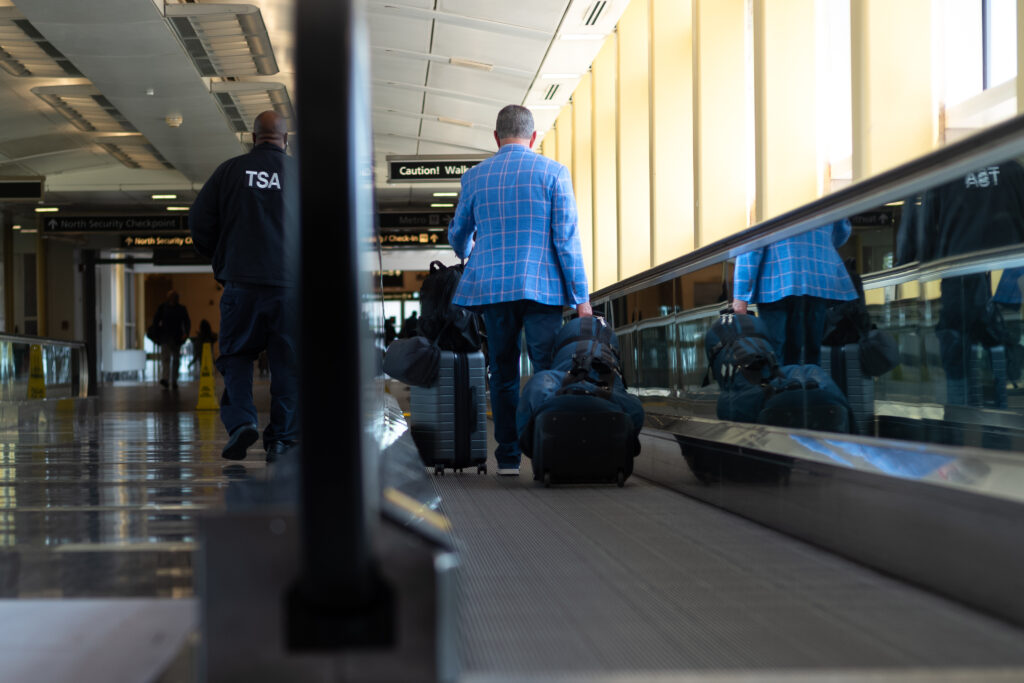
Thanks to an incredibly successful vaccination program, wild poliovirus has been eliminated in the United States since 1979. For this reason, it’s not a disease that you hear about often in the U.S. However, if you’ve got upcoming travel plans, it might be on your radar: The Centers for Disease Control and Prevention (CDC) updated a travel advisory earlier this month that recommends travelers take extra precautions when visiting certain countries where polio is circulating.
The CDC originally issued a polio-related global travel notice in 2022, but recently updated it to include the latest affected countries. The notice currently covers 30 destinations where poliovirus has been found within the past 13 months, either in reported cases in humans or in environmental samples — like wastewater — including in Europe (the United Kingdom, Germany, Poland), Africa (Tanzania, Chad, Somalia), South Asia (Afghanistan, Pakistan), Southeast Asia and Oceania (Laos, Papua New Guinea), the Middle East (Israel, Yemen) and others.
Keep in mind that “the risk of infection is low in all countries with continued high coverage of polio vaccination and strong sanitation and safe water supplies,” said David Heymann, a professor of infectious disease epidemiology at London School of Hygiene and Tropical Medicine. For example, in the United Kingdom, which is on the advisory list, there have been no confirmed cases of paralysis caused by polio caught in the U.K. since 1984. But as long as polio continues to circulate in some parts of the world, Heymann said, “there is a risk to all countries.”
It’s a good reminder that being up-to-date on the polio vaccine is essential for everyone, even if you don’t have any upcoming travel plans — and especially if you do plan to visit a place where the virus could be circulating.
In countries on this advisory, “people who travel there, if they’re not fully immune to polio, are at risk of contracting polio, and we don’t want that to happen,” said Art Reingold, a professor of epidemiology at University of California at Berkeley School of Public Health.
Here’s what to know if you’re planning a trip and wondering if there’s anything you should do to stay safe.
Why is polio still a global health concern?
Polio is a highly contagious disease that can spread through respiratory droplets, such as when someone sneezes or coughs, as well as through contact with an infected person’s feces, which is how it ends up in wastewater.
Before vaccines were available, “polio was a ubiquitous infection, pretty much everybody was infected,” said Paul Offit, director of the Vaccine Education Center and an attending physician in the Division of Infectious Diseases at Children’s Hospital of Philadelphia. In the mid-20th century, polio paralyzed or killed up to half a million people each year, many of them young children.
Some people infected with poliovirus are asymptomatic or have mild symptoms like a sore throat, fever or nausea. “But there is a small percentage of people who experience very severe outcomes,” said Marlene Wolfe, an epidemiologist and assistant professor at Emory University and co-principal investigator at WastewaterSCAN.
Those complications include meningitis and paralysis — the latter can affect muscles that support breathing, and polio patients sometimes could survive only if they used iron lung devices. (For example, one man lived for over seven decades in an iron lung.) Other survivors — between 25 and 40 percent — experience post-polio syndrome, which can cause decades of health problems such as muscle weakness, joint pain and fatigue.
Today, the inactivated polio vaccine, or IPV, is given to children in the U.S. in a four-dose series starting at 2 months old. The full series provides at least 99 percent protection against the disease.
Though no longer licensed in the U.S., some parts of the world still use the oral polio vaccine (OPV), a live-attenuated vaccine (meaning it contains a weakened virus) given by drops into the mouth. The OPV is cheaper and easier to administer, and it is extremely effective. The downside is that, very rarely, the weakened virus used in OPV can mutate over time and cause a form of vaccine-derived polio that causes paralysis in unvaccinated people, said Heymann. This can happen in specific situations such as in overcrowded communities with poor sanitation where vaccination coverage is low or incomplete, which provides the OPV variant an opportunity to circulate in people and have enough time to mutate and cause infection in the unvaccinated. (Vaccination protects you from both types.)
In 1988, the World Health Assembly announced a resolution to eradicate polio, hoping to reduce the disease to zero, as smallpox had been in the 1970s. But while polio was successfully eliminated in many regions, it’s been nearly impossible to vaccinate enough people in certain areas of the world, because of ongoing civil unrest or other obstacles to immunization. As a result, a few types of polio have continued to circulate, including wild poliovirus type 1 and vaccine-derived paralytic polio, said Reingold.
Why is there an updated advisory for polio right now?
The CDC’s travel advisory includes a list of countries where poliovirus has been either detected in humans or in environmental samples. But the advisory did not include specific criteria used to make its recommendations, so it’s difficult to know exactly what your risk might be in each of these locations. (The CDC did not respond to requests for more information.)
Only two countries on this list, Afghanistan and Pakistan, have endemic polio, meaning wild poliovirus type 1 continues to circulate consistently.
It’s possible that the other countries listed may have had cases of poliovirus or the virus was detected in environmental samples, such as sewage. Environmental or wastewater monitoring is an important way to reveal disease outbreaks in a community even if cases have not been reported, said Wolfe. A person infected with polio may not have symptoms or may only experience milder, flu-like ones, but the virus is still “shed abundantly in feces, so it’s going to end up in waste streams,” she said.
What can you do to stay safe?
Regardless of whether you’re planning to visit countries included in the recent travel advisory, vaccination is the best way to protect yourself and your children from polio. The inactivated polio vaccine is safe, offers long-term protection and carries no risk of giving a person polio. “If you were vaccinated as a child, you should be protected against polio for the rest of your life,” said Offit.
If you never received a polio vaccine, the CDC recommends three IPV doses; if you weren’t fully vaccinated, you should get the remaining one or two doses.
If your child has missed any of their scheduled shots — given at 2 months, 4 months, between 6 and 18 months and between 4 and 6 years — talk to their pediatrician about catching up. If you’re planning to travel to a place where polio is circulating but your child has not yet completed the vaccine series, consult your pediatrician or a travel medicine clinic; some doctors might administer vaccinations early depending on the circumstances.
They may also advise you to postpone your trip, depending on where you are traveling to. “I think for travel that is unessential, people with very young infants or infants who are not fully vaccinated yet should think about the pros and cons and the risks,” Reingold said.
Some fully vaccinated adults may benefit from one booster dose if they are at increased risk for polio, such as those traveling to countries where polio is endemic, health care workers who handle poliovirus specimens and anyone exposed to a current outbreak.
Up-to-date vaccination is all the more important because vaccination coverage has decreased recently. This means that even in the U.S., unvaccinated people are vulnerable, Offit said, especially in pockets with lower vaccination rates, where reduced herd immunity can allow the virus to circulate more easily.
In 2022, an unvaccinated adult was diagnosed with polio in a New York county that had low coverage. Some Zip codes in this area reported IPV vaccination rates of just 37 percent for children under age 2, “so therefore the virus had an opportunity to infect him and others,” Offit said.
A continued drop in vaccination rates would put more people at risk. A simulation model published in the medical journal JAMA found that if there were a 50 percent decrease in routine childhood vaccinations, there could be 4.3 million cases of polio over a 25-year period.
Polio “really is a frightening disease,” Reingold said. “We don’t want any child in the world coming down with polio at this point.”
The post Here’s what you need to know about polio before you travel appeared first on Washington Post.