M. Todd Henderson is a law professor at the University of Chicago. Max Raskin is a co-founder of Uris Acquisitions and a fellow at New York University School of Law.
Reports that prediction market traders made perfectly timed bets in the hours before the United States launched attacks on Iran have sparked outrage. These wagers seem unfair and dangerous, and bets related to the Iran war — which traded over $675 million on Polymarket — feel morbid and sordid.
On Tuesday, Arizona’s attorney general filed criminal charges against a prediction market, while Republicans and Democrats in Congress have proposed legislation to limit insider trading and curb the scope of these exchanges, where people can wager on real-world events. But this gut reaction misses the mark because these markets can help society make better and more informed decisions.
Prediction markets turn scattered knowledge into a price. That might sound like a nice way to justify gambling, but these markets create incentives to learn more about a situation and reveal information in the process. Such information then becomes available for all. It can be used, for instance, to more accurately predict who will win a presidential election and help individuals make important decisions. If you outlaw trading on information, you don’t protect the public — you blind it.
Not all prediction contracts are the same. Two kinds of contracts exist: those that are not easily influenced by individuals or groups and those that are. We call these fly-on-the-wall versus skin-in-the-game contracts.
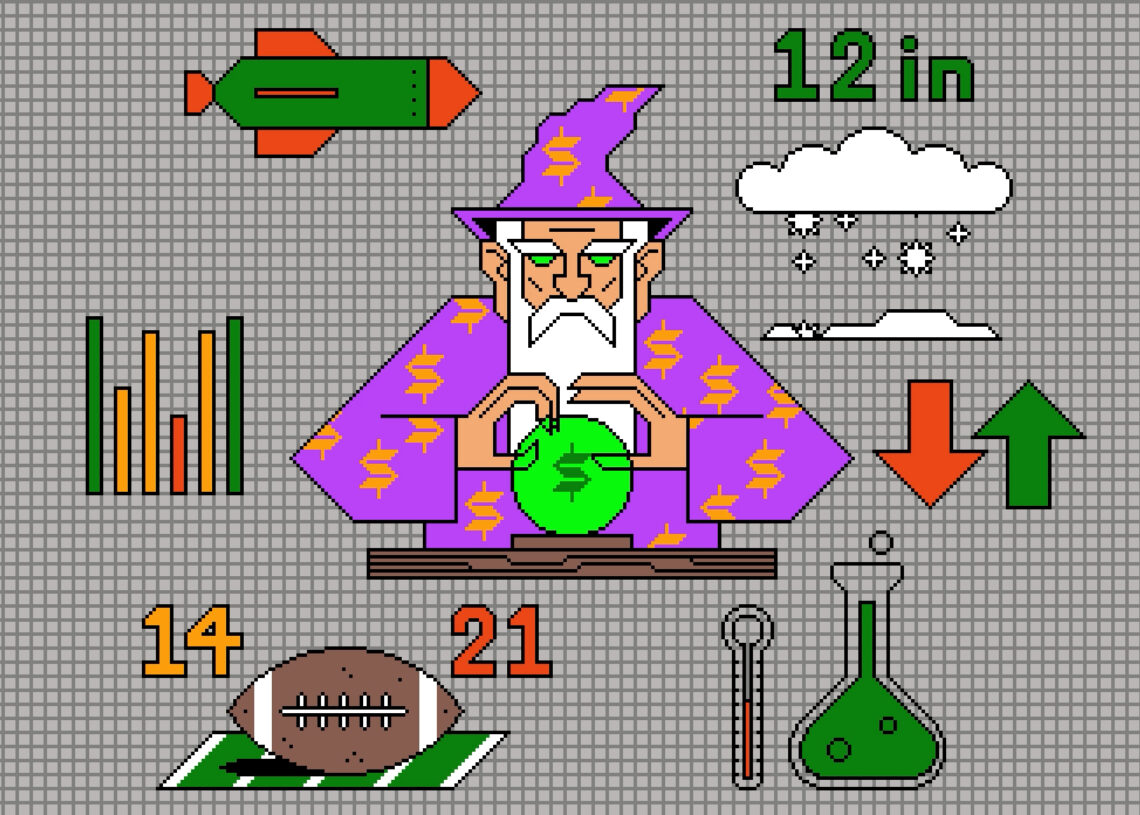
Fly-on-the-wall contracts are information markets that ask questions whose answers are not controlled by any one person or small group. How many inches of snow will fall in New York in January? How many cases of bird flu will be reported? For these, the alleged “insider” is just an analyst with better data, a farmer with local knowledge, or a researcher who discovers something before it goes mainstream. There is little risk of corruption because nobody can decide to make it snow or cause the flu. We don’t need regulation here.
Skin-in-the-game contracts are where a participant can influence the outcome. How often will a particular NBA player score 20 points? Will Iran strike Qatar? If you can make an event happen (or not), you’ve turned the market into a rigged game.
These contracts also invite dangerous behavior. If money can be made from a harmful event occurring — an assassination or terrorist attack — the market has created a strong incentive to make those events happen.
But even here, the case for regulation is weaker than it sounds. With respect to rigged markets, contracts subject to manipulation are self-defeating because markets that feel rigged don’t scale. The parties that suffer collateral damage — from sports leagues to governments — have powerful incentives to police corruption. Prediction platforms, too, have every reason to avoid the easy-to-cheat contracts. If users believe contracts are routinely manipulated, they may stop trading (or sue, as in the case of the recent Iran contracts). That’s why many of these companies have adopted rules against insider bets.
While it is easy to focus on the downside of skin-in-the-game contracts, they have huge untapped potential. Imagine a government agency, company or foundation trying to solve a hard problem: locate a missing person, put an astronaut on Mars or cure muscular dystrophy. Today’s standard policy tool is money through a grant or prize.
Prediction markets can do better. Create a market like “Will Duchenne muscular dystrophy be cured by the year 2030?” Seed the “No” side with funding. Through trading, the market amplifies the reward for success and generates a live estimate of how achievable the mission is — the more the goal resembles a moon shot, the greater the reward for scientists or entrepreneurs who think they may be successful.
This looks less like gambling and more like stock options: a structured incentive for socially productive effort. And it has an old American lineage. The Constitution gives Congress the power to grant letters of marque and reprisal, which are incentives for private actors in service of public aims (like seizing or destroying British ships during the War of 1812). A well-regulated 21st-century version of this might look like President George W. Bush issuing a letter for the capture or killing of Osama bin Laden. The founders understood something modern regulators often forget: Private incentives can serve public goals.
There are risks. No one wants policymakers going to war to cash in on bets or Elon Musk sabotaging his journey to Mars because he put a massive short against himself. But this is an argument for contract design and targeted restrictions, not blanket bans.
Risks exist in today’s stock market. A hijacker has an incentive to short the airline companies and make a boatload of money (similar to a plotline in a 2006 James Bond movie). But existing laws combat this behavior. Society relies on the fact that while making money is often an incentive to do great things, making money is generally not a motivator for people to do horrific things — while the businesslike mafia certainly exists, the crazed violence of terrorists and school shooters is usually not motivated by money and is not deterred by insider trading laws.
In the realm of the possible (a chief executive betting against himself), we already manage similar conflicts in corporate America — fiduciary rules, disclosure rules, monitoring, trading windows, position limits and civil enforcement.
The Commodity Futures Trading Commission published a notice on March 12 seeking public comment on amending or issuing rules for this growing industry. The CFTC’s chairman, Michael Selig, told us he’s not reflexively opposed to this sort of investing. “Prediction markets are one of the most exciting innovations in financial markets, and it’s past time that the agency sets clear rules of the road for these products so they can flourish,” he said.
The public has an interest in truth, and prediction markets at their best are engines for discovering it. “Prediction markets have come far since I first argued for them in 1988, but they could go much further,” said economist Robin Hanson, one of the early pioneers of the markets. “They might tell voters which candidates cut unemployment, tell firms which projects lead to profits.”
If the government regulates these markets like mutual funds and retirement accounts, the result will be fewer markets, less information and the same desire to gamble. It will just be pushed back into the shadows, where corruption is harder to police, and the future is harder to predict. Societies that suppress information still make decisions — they just make them in the dark.
The post Both parties fear this betting craze. Blinding the public won’t help. appeared first on Washington Post.