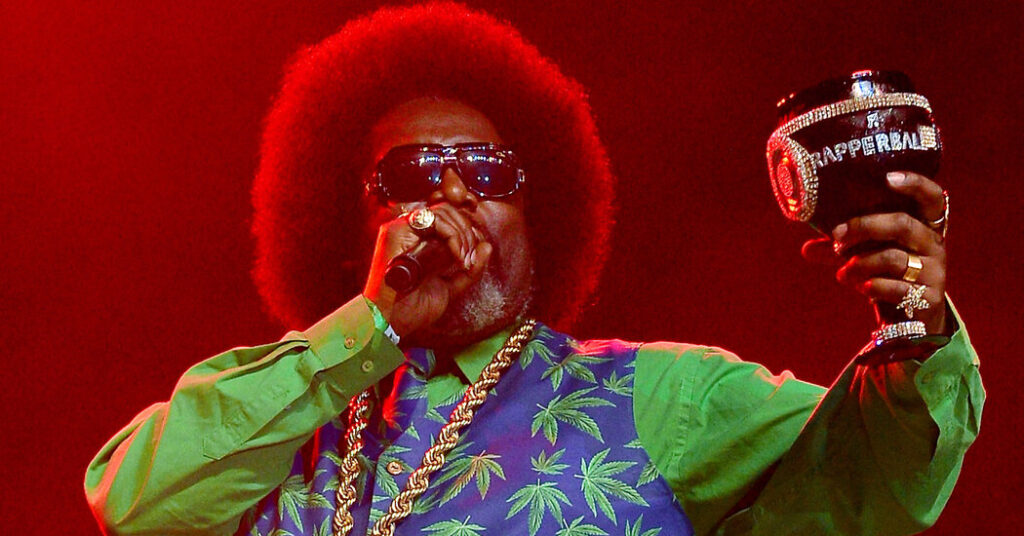
An Ohio jury on Wednesday ruled in favor of the rapper Afroman after a civil trial in which law enforcement officers accused him of causing them mental distress by using footage from their 2022 raid on his home in a pair of music videos.
The rapper, whose real name is Joseph E. Foreman, was sued in 2023 by seven officers with the Adams County Sheriff’s Office in southern Ohio. They said in a complaint that Mr. Foreman’s use of their images in two music videos had caused them to suffer “humiliation, ridicule, mental distress, embarrassment and loss of reputation.”
The jury delivered its verdict after a three-day trial that raised questions of policing, free-speech protections and artistic freedom.
Mr. Foreman, who is best known for the 2000 song “Because I Got High,” celebrated the verdict in a video posted to social media on Wednesday afternoon.
“We did it America! Yeah! We did it — freedom of speech!” Mr. Foreman, 51, said in the video. “Power to the people!” he added.
The Adams County Sheriff’s Office did not immediately respond to a request for comment on Wednesday evening.
According to the complaint, the officers — four deputies, two sergeants and a detective — were acting on a search warrant when they raided Mr. Forman’s residence in Winchester, Ohio, in August 2022. The warrant cited kidnapping and drug trafficking as reasons for the search, Anna Castellini, Mr. Foreman’s lawyer told The New York Times in 2023. No charges resulted from the raid.
Mr. Foreman was not at home during the 2002 police raid, but a security camera system and his wife, using her cellphone, recorded the “faces and bodies” of the officers while they were on the property, according to the lawsuit.
Mr. Foreman used the footage in music videos, in promotional material for his tours and on merchandise, including T-shirts that depicted the faces of some of the officers, the lawsuit said.
In one of the music videos, “Will You Help Me Repair My Door,” surveillance footage shows officers swinging open a gate, kicking down a door, and roaming armed around a living room and a kitchen.
The other, “Lemon Pound Cake,” shows one of the officers, gun in hand, pausing briefly in Mr. Foreman’s kitchen by a cake inside a glass cloche. “It made the sheriff want to put down his gun and cut him a slice,” Mr. Foreman sings in the song.
In a social media post the month after the raid, Mr. Foreman, wearing one of the promotional T-shirts, thanked one of the officers for helping him get 5.4 million views on TikTok. “Congratulations again you’re famous for all the wrong reasons,” he wrote.
On Tuesday, Mr. Foreman — wearing a suit, tie and sunglasses all depicting elements of the U.S. flag — testified that he felt he had the right to post the videos after the officers broke his door and raided his home.
“All of this is their fault — if they hadn’t wrongly raided my house, there would be no lawsuit,” Mr. Foreman said.
He said he had been exercising his freedom of speech by posting the videos as a way to try to recuperate some of the damage.
Livia Albeck-Ripka is a Times reporter based in Los Angeles, covering breaking news, California and other subjects.
The post Afroman Wins Civil Trial Over Use of Police Raid Footage in His Music Videos appeared first on New York Times.