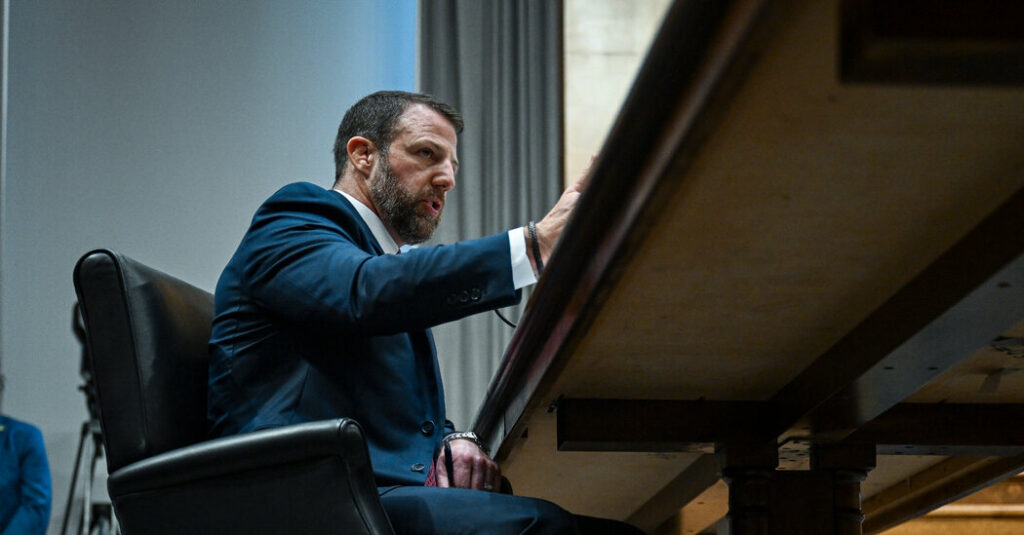
Senator Markwayne Mullin, the pugilistic Oklahoma Republican whom President Trump nominated as his next homeland security secretary, is a former mixed martial arts fighter known for once challenging a witness at a congressional hearing to a brawl.
But at his own confirmation hearing on Wednesday, he brought a warmer and fuzzier persona, with language and policy positions to match, as he fielded questions on some of the most divisive immigration enforcement issues he would face as secretary — a contrast to the president’s hard-line, aggressive approach.
After months in which the Trump administration vocally defended the use of administrative warrants to enter homes to arrest undocumented immigrants, Mr. Mullin signaled that he would be willing, in most cases, to require officers to obtain such permission from judges.
He committed to collaborating with senators in both parties to address their concerns over immigration policy, telling them, “If you call me, you’re going to get a response; if you text me, you’re going to get a response.”
And when Mr. Mullin was asked how he would confront the leaders of so-called sanctuary cities, which limit cooperation with federal immigration officials, the senator, once a vocal critic of those jurisdictions, suggested he would approach the issue as he would a dispute born of innocent confusion between two loving spouses.
“These law enforcement, and I would even say these mayors — they still love their communities” Mr. Mullin said. “They still love their cities, they still love this country. So maybe it is a misunderstanding we can work by, and I’m going to start with that. That’s what I’m going to start with.”
Mr. Mullin’s comments suggested a sharp break with Mr. Trump, who has vilified such leaders and tried to withhold federal funding from states and cities that blocked his immigration crackdown. Mr. Mullin had in the past defended the president’s actions and said he believed such jurisdictions were violating federal laws.
At the hearing, Mr. Mullin also said he regretted calling Alex Pretti a “deranged individual that came in to cause max damage” after Mr. Pretti, an American citizen, was fatally shot by federal immigration officers, acknowledging that he had rushed to judgment without knowing the facts.
As he worked to win confirmation, Mr. Mullin’s attitude toward his fellow senators appeared aimed at setting him apart from the combativeness of Kristi Noem, the homeland security secretary he would replace. Her appearances on Capitol Hill were marked by sparring with lawmakers as she defended her militant approach to immigration enforcement, and recently refused to apologize for her characterization of Mr. Pretti as a domestic terrorist.
Mr. Mullin’s softer tone was also in line with a broader shift underway among Republicans in how they talk about immigration enforcement. Some have acknowledged that Mr. Trump’s aggressive language and tactics on immigration, which they have backed almost without qualification, have cost their party support with voters, imperiling their already dim prospects for keeping control of Congress in November’s midterm elections.
Last week, Speaker Mike Johnson acknowledged that Republicans were recalibrating after the Trump’s immigration crackdown had alienated Hispanic voters in particular, and pointed to Mr. Mullin as the solution. “We’re in a course correction mode right now,” he said. “We’re going to have a new secretary of homeland security.”
It is unclear whether Mr. Mullin’s gentler posture will hold if he is confirmed. Many cabinet officials have backtracked on commitments they made to senators during their confirmation hearings once they take up their positions and are more focused on keeping Mr. Trump happy.
On Wednesday, while Mr. Mullin faced some sharp questioning, he and senators in both parties played up their warm personal ties. Before launching into some probing questions, Senator Ruben Gallego, Democrat of Arizona, greeted the Oklahoman as his “neighbor.”
“Hey brother,” Mr. Mullin responded. “Good to see ya.”
Michael Gold covers Congress for The Times, with a focus on immigration policy and congressional oversight.
The post Mullin’s Softer Tone at Hearing Underscores G.O.P. Shift on Immigration appeared first on New York Times.