The war in Iran represents the biggest energy supply shock in history with the Strait of Hormuz choke point effectively off limits to the 20% of global oil and liquefied natural gas that flows through it each day.
While the U.S. benchmark for oil continues to rise to near $100 per barrel—up 70% since the beginning of the year—the extent of the disruption should theoretically justify global oil prices of record highs at $150 per barrel or more. This is especially true as Israel and Iran have begun to target gas fields and infrastructure that could lead to much more long-lasting damage throughout the Gulf region.
So why hasn’t that occurred yet?
Energy analysts point to a few main reasons:
- A lot of the world, including the U.S. and much of Europe, is the least reliant it’s been in decades on Middle Eastern oil because of greater domestic production and/or rising reliance on renewable energy.
- There are greater emergency oil supplies across the globe—from the U.S. to China—relative to, say, the Arab oil embargo in the 1970s, which was the trigger for the U.S. creating its Strategic Petroleum Reserve.
- Oil traders remain optimistic that this war will prove short lived—although that optimism wanes or waxes a bit each day—and that Saudi Arabia, Iraq, and the United Arab Emirates will continue to successfully reroute portions of their exports to provide temporary buffers until the strait is reopened. Also, Iran continues to export some of its oil while allowing a select few tankers to pass through, such as to India.
Lastly, and most cynically, this war is most dramatically affecting the supplies thus far of Pakistan, Bangladesh and southeastern Asian countries that depend the most on Middle Eastern supplies for their oil and gas.
“Southeast Asia is getting nailed by this, but the reality is, in our part of the world, nobody even knows where Indonesia is,” said Jim Wicklund, veteran oil analyst and managing director for PPHB energy investment firm.
“As consumers in the U.S., we’re horribly spoiled,” Wicklund said. “There’s no panic anywhere. Yeah, my gasoline prices are $1 higher, which is still [nearly] $4 cheaper than Europe.”
As of March 18, the average U.S. price for a gallon of regular unleaded was $3.86, up $1.13—more than 40%—from the January low.
The tide could still turn
In the U.S., only about 3% of oil consumption comes from the Middle East—the lowest since the Arab oil embargo of the 1970s. The large majority of U.S. consumption is world-leading domestic production, while Canada provides most of the U.S. imports. Mexico is next.
“The U.S. is enjoying the benefit of being somewhat insulated from the physical market tightness right now,” said oil forecaster Dan Pickering, founder of the Pickering Energy Partners consulting and research firm.
Still, there’s a reason the U.S. decided to release 172 million barrels of oil from its strategic reserves beginning in late March and lasting over a few months. The world is connected.
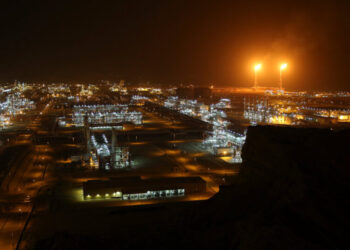
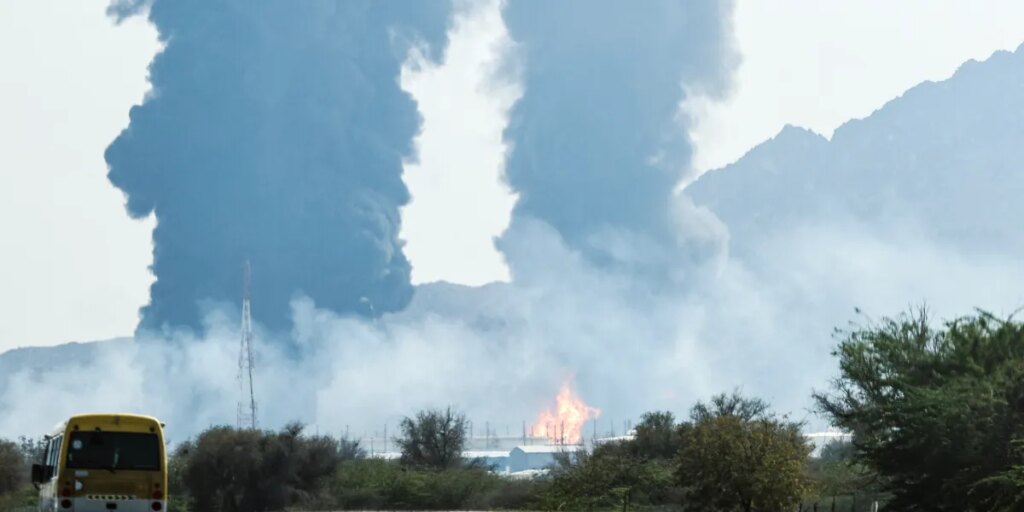
Israel has attacked Iran’s South Pars gas field, which prompted Iran to say it will attack the refineries and gas fields of its neighbors. Already, the United Arab Emirates has halted its Shah gas field after Iranian drone attacks. The UAE’s alternative route, the Fujairah oil port, also was attacked.
If Iran successfully attacks major oilfields of its neighbors, then the “higher for longer” mentality of oil prices will start to set in, Pickering said, because of long-term infrastructure damage. And the stock market will react in real time.
“If the market gets ahold of that thematic, it’ll play out quickly,” Pickering warned. That could push the U.S. oil benchmark to $130 per barrel in a couple of weeks or so, he said.
Derek Bunn, energy economist at the London Business School, agreed.
“If things do not get resolved politically fairly soon, then these longer-term effects will start to bite,” Bunn said. “And it may not be that long.”
“I think it’s a matter of weeks before people take a longer-term fundamental view,” he added.
While the global U.S. and European oil benchmarks are trading closer to $100, make no mistake, the prices for Middle Eastern barrels escaping the Persian Gulf are closer to $150 per barrel already, noted Andrew Harbourne, senior oil analyst for the Wood Mackenzie research firm.
If the Strait of Hormuz remains largely blocked for longer, Harbourne said, “the global market and pricing would converge at the higher levels observed to date and perhaps beyond $200 per barrel as a function of duration.”
However, Wicklund sees the war as a matter of “politics and logistics” that must get worked out sooner than later, especially because President Donald Trump doesn’t want $100 per barrel oil or higher with the midterm elections coming up in November.
“Everybody knows this can’t continue. Nobody knows how it ends. This is interrupting economic commerce for everyone in the world to the tune of billions of dollars a day,” Wicklund said.
After all, this war has a compounding effect on much more than just gasoline, diesel, jet fuel, and natural gas. Prices are skyrocketing for aluminum, fertilizer, cooking oil, grains, sugar, petrochemicals, helium, and more. The costs quickly trickle down into inflation on food, electronics, pharmaceuticals, and most consumer goods.
“But that’s the whole attitude of the market these days: ‘We’ll see. I hope it doesn’t take too long,’” Wicklund said.
The post It’s almost inexplicable why oil prices aren’t much higher. But here’s why markets are ‘resilient’ so far despite the biggest energy supply shock ever appeared first on Fortune.