The ongoing debate about whether the Iran war will become a quagmire misses the point. President Trump and America are already in one.
Yes, Trump can stop bombing Iran, but Iran might continue to block oil from passing through the Strait of Hormuz (even as its own oil tankers pass unobstructed). Oil prices would continue to soar, while fertilizer, generic drugs, helium and other products dependent on the strait would grow scarce, squeezing the American economy and world economy alike.
“The only way to end this war,” insists President Masoud Pezeshkian of Iran, is for America to make three huge concessions: recognize “Iran’s legitimate rights,” presumably to enrich uranium; pay war reparations to Iran; and provide international guarantees “against future aggression” against Iran.
I suspect the terms are negotiable. But Iranian officials are adamant that the war will continue until they are confident that they will not face attacks in the future. “The end of the war is in our hands,” said a senior Iranian military figure, saying this would come only if U.S. forces left the Persian Gulf.
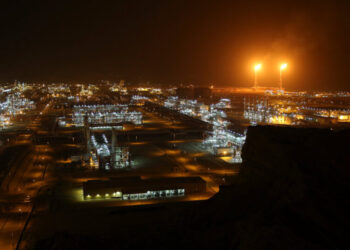
This is not encouraging, and I fear that Trump will try to extricate himself by escalating. He has ordered the 31st Marine Expeditionary Unit to move to the area from the Indo-Pacific, and one plausible use of those roughly 2,500 Marines would be to seize Kharg Island, the base of much of Iran’s oil industry. Back in 1988, Trump told The Guardian that the United States was too weak and that if he had been in charge, “I’d do a number on Kharg Island. I’d go in and take it.”
A few days ago, Senator Lindsey Graham, a hawkish adviser to the White House, urged Trump to move on Kharg. “If Iran loses control or the ability to operate its oil infrastructure from Kharg Island, its economy is annihilated,” Graham posted. “He who controls Kharg Island, controls the destiny of this war.”
Another option would be for the Marines to seize several Iranian-occupied islands in the Strait of Hormuz in an effort to keep the strait open. But while the Marines might be able to seize Iranian territory, what then?
If Iran did not cave, would the Marines continue to occupy Iranian territory month after month as they took losses from Iranian missiles and drones? All the while, Iran might be able to continue to block oil from moving through the strait by intimidating shipowners with drone and missile strikes or mines laid by small boats or even traditional dhows.
Iran could escalate by calling on Yemen’s Houthis to block traffic through the Red Sea — further gumming up oil exports and international trade — and by striking other oil infrastructure in the region. We haven’t yet seen much in the way of cyber- or terrorist attacks by Iran, but I suspect we will.
Trump also seems to be considering inserting ground troops at Isfahan to try to recover highly enriched uranium stored there. That also would be extraordinarily risky, for it’s not even clear that the uranium is accessible (and in any case, only some of the uranium is believed to be in Isfahan).
Could Trump’s war still turn out all right? Of course. None of us can be sure what will happen. Iran could run out of drones and missiles, or our interventions could work perfectly, or there could be a coup tomorrow by moderate Iranian military officers seeking a deal with America.
But for now, Trump appears to have put America in a terrible situation, perhaps increasing the nuclear threat from Iran. The previous supreme leader made the mistake of enriching uranium but never building a nuclear weapon; in effect, his nuclear program went far enough to provoke the West into sanctions and military strikes but not far enough to provide protection. The new leadership may try to remedy that by rushing toward a nuclear weapon so as to actually provide deterrence.
The threat is real, but doubling down on this failed war may just carry us deeper into this quagmire. This feels like 1965, as Lyndon Johnson made the fateful decision that the U.S. intervention in Vietnam was such a mess that the only way to recover our honor was to plunge further into distant lands.
The United States and Israel have enjoyed repeated tactical successes in Iran so far that are untethered to any coherent strategy. They killed the supreme leader, Ayatollah Ali Khamenei, and got as his successor his harder-line son. Israel killed Ali Larijani, a top regime figure, and now we may lack a strong counterpart with whom to negotiate peace. With each success, we are mired further.
This is not the first time the United States has taken careful aim in Iran and shot its own feet. In the 1960s the United States negotiated a tough status of forces agreement with Iran to protect American military interests. But a Shiite cleric named Ruhollah Khomeini denounced the unequal pact, saying that an American dog in Iran was treated as more valuable than an Iranian citizen — and his criticism helped propel him to leadership of the opposition and ultimately to the Islamic Revolution.
Then in the 1990s, the United States negotiated installing military bases in Saudi Arabia and thought this would advance its security interests. The bases outraged Osama bin Laden and contributed to all those years of terrorist attacks against Americans.
These are hard issues to manage, but the lesson is to always employ tactics that advance strategic goals — and doubling down in Iran would not do that.
“I cannot support sending the next generation off to fight and die in a war that serves no benefit to the American people,” Joseph Kent, the director of Trump’s National Counterterrorism Center, said this week as he resigned in protest of the war.
So what on earth should Trump do?
His least-bad option, I believe, is to do roughly what he did when he bungled policy toward China and Yemen last year. In each case he boldly declared victory and then frantically negotiated. The United States ended up the loser, particularly vis-à-vis China, but at least the storms calmed.
Trump should declare that his war goals in Iran have been achieved, making him the greatest wartime leader since Churchill. Then he should lean on Prime Minister Benjamin Netanyahu of Israel to also end hostilities, against Hezbollah as well as against Iran. The White House would then plead with Oman to get Iran to return to the negotiating table for secret talks.
I don’t know if a deal is possible, and it would require immense finesse. But Iran does need revenue and investment, and a reduction in sanctions would be very appealing; for that reason, Iran offered what seemed a very good deal on the nuclear program right before Trump rejected it and attacked.
We probably couldn’t get as good a deal today, but maybe some kind of prolonged pause in enrichment is possible with renewed inspections. If a new deal is possible, it would also reduce the likelihood of cyber- or terrorist attacks against Americans in retaliation for the killing of the supreme leader.
So I’m hoping that Trump, Iran’s leaders and Persian Gulf Arabs are all so exhausted by the killing and destruction that some kind of disingenuous arrangement could be reached, perhaps with documents in multiple languages all saying slightly different things so that everyone can claim victory. The alternative of intensifying and lengthening this war would leave everyone a loser.
The Times is committed to publishing a diversity of letters to the editor. We’d like to hear what you think about this or any of our articles. Here are some tips. And here’s our email: [email protected].
Follow the New York Times Opinion section on Facebook, Instagram, TikTok, Bluesky, WhatsApp and Threads.
The post How Trump Should Extricate Himself From His Iran Quagmire appeared first on New York Times.