After the United States and Israel went to war against Iran on Feb. 28, the U.S. military began issuing a bulletin every few days listing the number of targets hit. By Wednesday it was more than 7,800 in total, up from over 1,000 on the first day of the war, while a similar Israeli count of strikes stood at 7,600 late last week.
It is, by any measure, a bombing campaign of historic proportions, and senior U.S. officials have lauded it repeatedly as a crushing blow to the Iranian armed forces. “Never before has a modern, capable military, which Iran used to have, been so quickly destroyed and made combat ineffective, devastated,” Pete Hegseth, the secretary of defense, said at a news conference last week.
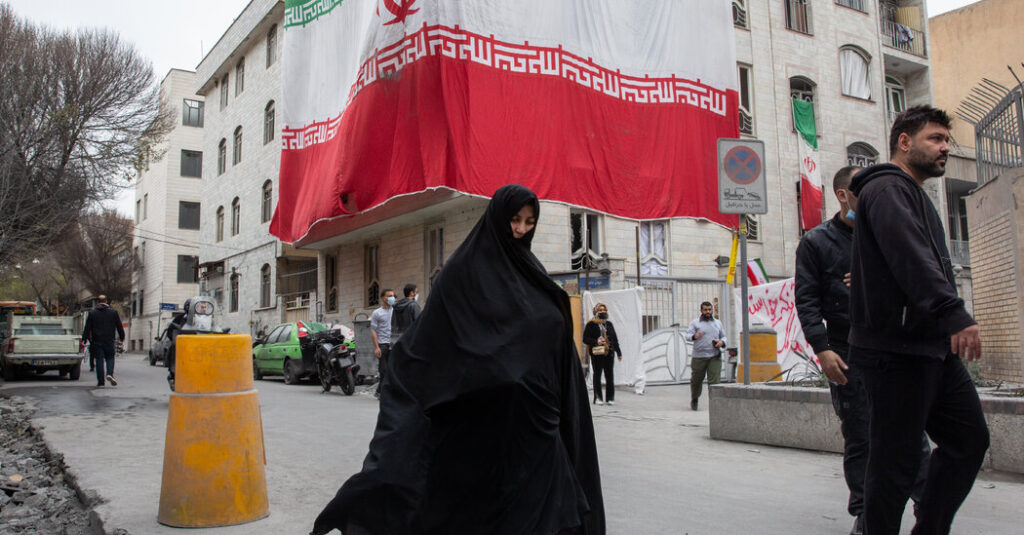
And yet, Iran is not entirely crippled militarily. It continues to retaliate, often in unconventional ways. Its resistance, along with the political defiance of its new leaders, evokes a decades-old pattern of unrealized expectations for American interventions in the region.
Global oil prices have inched upward as Iranian attacks have curtailed exports through the narrow, perilous Strait of Hormuz, including hitting a tanker on Tuesday near the waterway. Virtually every night, a barrage of Iranian missiles hits Israel and Persian Gulf nations allied with the United States, unsettling the population. Most cause little damage, but overall the fighting has killed more than 2,300 people in Iran, Lebanon, Israel and across the region.
Iranian proxy militias in both Lebanon and Iraq have joined the fray, firing rockets into northern Israel and hitting the sprawling U.S. Embassy compound in Baghdad.
Despite the overwhelming force brought to bear against Iran, and the serial killings of its leaders, the regime has not toppled. Analysts are now weighing to what extent the promises of a “New Middle East” emerging from the conflict could prove as illusory as the ones from previous wars that embroiled Gaza, Lebanon and Iraq.
The United States has a tendency to overestimate what political outcomes can be engineered using overwhelming military power while underestimating the fallout, said Caitlin Talmadge, a professor at the Massachusetts Institute of Technology who specializes in Gulf security issues. “Air power is the U.S. drug of choice — we love to believe that it can achieve big political effects and also big military effects, yet the historical record doesn’t support that.”
While President Trump and other top U.S. officials repeatedly boast that Iran’s air force is extinct and its navy sits at the bottom of the sea, analysts noted that the country was never expected to take on the United States in a direct confrontation using a conventional military.
Instead, it relies on asymmetrical warfare, tactics designed to extend the war indefinitely until, it hopes, the cost saps the will of the Trump administration and Israel.
In the Gulf, for example, the naval wing of the Islamic Revolutionary Guards Corps has long used smaller craft to lay mines and deploys speedboats to mount lightning attacks. On land, Iran dispersed its forces to avoid their being vanquished in one fell swoop, and Ayatollah Ali Khamenei, before he was killed in an Israeli airstrike on the war’s first day, was said to have ordered a succession plan four layers deep for every central military and government post.
Externally, drone and missile attacks strike targets that include military bases, oil infrastructure and airports in nearby Gulf countries not directly involved — all meant to stretch the battlefield as far as possible. “The main idea of their response is to expand the pain and inconvenience of this war for as many countries in the world as possible,” said Afshon Ostovar, the author of “Wars of Ambition: The United States, Iran and the Struggle for the Middle East.”
From the regime’s perspective, he added, the stakes could not be higher, with Iran’s very survival at stake. “They are fighting for their positions and their lives,” he said.
That pushed the often fractious leadership to set aside its differences, analysts said. The population is paying a huge price, with more than 1,300 people dead and urban residents either fleeing or living in fear as explosions erupt around them.
The regime has long put its own welfare above that of the population, analysts noted. “If it survives, it can claim victory, no matter how much destruction the country suffers,” Saeid Golkar, a military expert and a political science professor at the University of Tennessee at Chattanooga, wrote in an online essay.
Analysts also noted a rough equation in terms of the length of the fighting, and the balance Iran must strike between hitting back and degrading its military capabilities too quickly. If the war lasts too long, it could peel away too many leadership layers, leaving a vacuum, or weaken the infrastructure needed to replace its dwindling arsenal. “They seem to have slowed their tempo for firing missiles and drones to what I imagine they would see is a manageable pace,” Mr. Ostovar said.
At the start of the war, both Mr. Trump and Prime Minister Benjamin Netanyahu of Israel called on Iranians to resume the protests that stalled in January after security forces gunned down thousands of participants. With such forces now threatening to shoot protesters as traitors, not to mention the bombs raining down, Mr. Trump has acknowledged that the moment might not be ideal. However, Mr. Netanyahu continues to stress that Israel is trying to spur the conditions for an uprising, with its military targeting the domestic security forces across Iran.
Tzachi Hanegbi, a former national security adviser to Mr. Netanyahu, wrote in the Israeli newspaper Yedioth Ahronoth on Sunday that given their control of the skies, Israeli and American warplanes could provide close air support for protesters, acknowledging that it would be unprecedented.
Wars intended to reshape the Middle East in recent history have instead taken ever more violent detours.
In August 1982, after Israel invaded Lebanon, Ariel Sharon, the Israeli minister of defense, predicted that by driving out the Palestine Liberation Organization, “the whole infrastructure of violence and revolution has been broken.”
Within months, a nascent Hezbollah dispatched suicide bombers against Israeli troops with devastating effect. Israeli forces have returned to Lebanon repeatedly in a conflict that ebbs and flows but never really ended. The latest incursion came this month after Hezbollah opened a second front in the war in support of Iran.
The U.S. invasion of Iraq in 2003 similarly produced bloody, unforeseen consequences. The year before, Mr. Netanyahu told the U.S. Congress that “if you take out Saddam — Saddam’s regime — I guarantee it will have an enormous positive reverberations on the region.”
Almost 4,500 American soldiers died in the conflict, along with tens of thousands of Iraqi civilians. The war gave rise to the Islamic State, a force still destabilizing the Middle East, and spurred Iran to build an alliance of regional militias.
Some Israeli political commentators have likened the lack of an Iran strategy to Israel’s failure to dismantle the domination of both Hamas in Gaza and Hezbollah in Lebanon.
“Within this framework, an exaggerated picture has been conveyed to the public,” Michael Milstein, an Israeli analyst and former intelligence officer, wrote in Yedioth Ahronot last weekend. “According to which Hezbollah was almost ‘evaporated,’ the Iranian threat has been removed, Hamas is expected to dissipate and the Arab world is preparing to form a strategic alliance with Israel.”
Instead of conveying reality, Mr. Milstein said in an interview, Israel leaned toward “fantasy,” especially since the bloody attacks on Oct. 7, 2023, did not lead to any official inquiry into what mistakes had allowed Hamas to kill more than 1,200 Israelis near Gaza. The subsequent war left more than 70,000 Gazans dead, according to the Hamas-run Health Ministry, and the entire enclave largely rubble.
Yet Hamas has not been dislodged, Mr. Milstein noted. “I really don’t like all these engineering ideas that we will redesign the Middle East and will change the hearts and minds of the people,” he said. “We really decided to learn nothing from history.”
Lia Lapidot, John Ismay and Johnatan Reiss contributed reporting.
Neil MacFarquhar has been a Times reporter since 1995, writing about a range of topics from war to politics to the arts, both internationally and in the United States.
The post For U.S., Unmet Expectations in Iran Fit a Familiar Pattern in the Region appeared first on New York Times.