A court in Poland on Wednesday ruled in favor of the extradition of a Russian antiquities scholar wanted in Ukraine on charges relating to his work in Crimea, which has been under Russian occupation since 2014.
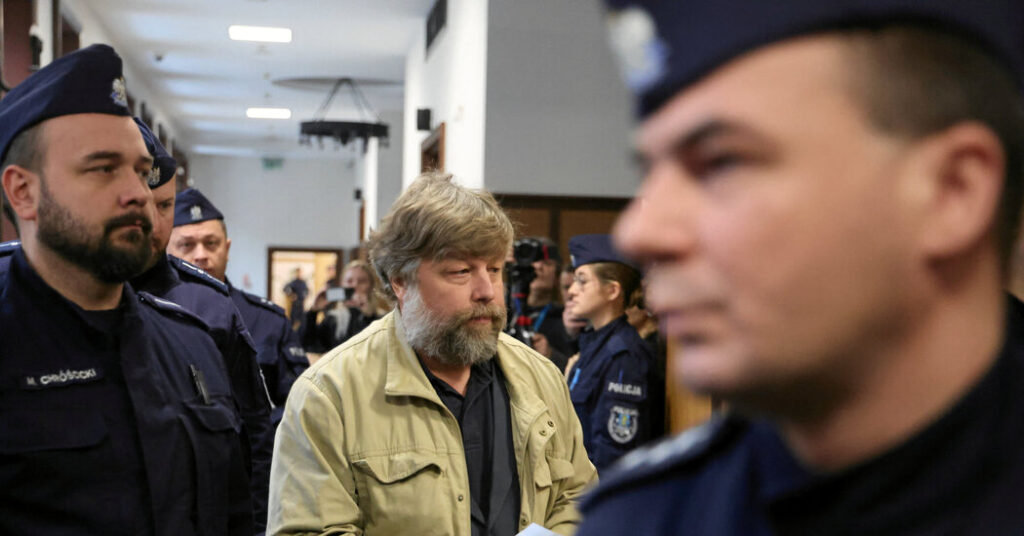
The scholar, Alexander Butyagin, 52, who works at the Hermitage Museum in St. Petersburg, Russia, was detained in Poland on a Ukrainian arrest warrant in December while traveling around Europe to lecture about ancient Pompeii.
Ukraine has accused Mr. Butyagin of “deliberate and illegal destruction and damage of cultural heritage,” citing his excavations in Crimea of an ancient Greek colony, Myrmekion, after Russia seized the Black Sea peninsula. He denies the charges.
His detention came as Ukraine, which still claims sovereignty over Crimea, has been targeting Russian nationals operating there. The Ukrainian intelligence agency issued the charges against Mr. Butyagin in 2024. Kyiv sees the recent excavations, which were done without government approval, as illegal and considers any antiquities taken from the territory to be stolen.
Maria V. Zakharova, a spokeswoman for the Russian Foreign Ministry, said on Wednesday that the Polish court’s decision was part of a “political trial that has no legal grounds whatsoever.”
“We will be working to bring Alexander Butyagin back home as soon as possible,” she added in a televised news briefing.
The extradition ruling by the Polish court means that Mr. Butyagin could face trial in Ukraine and, if convicted, up to five years in prison, his lawyer and supporters said.
As Mr. Butyagin walked out of the courtroom in Warsaw, he told reporters that the ruling was “absolutely to be expected.” His lawyer, Adam Domanski, said that his client would appeal.
Mr. Butyagin’s family and his supporters, including friends and colleagues, wrote in a social media post after the decision that the extradition request had sought to portray him as a common looter. A renowned expert in antiquities, Mr. Butyagin is head of the classical archaeology sector for the northern Black Sea region at the Hermitage Museum.
Until the 2014 annexation of Crimea, Mr. Butyagin and other Russian archaeologists had been able to obtain permits to work on the peninsula.
After he was charged in Ukraine in absentia in 2024, Mr. Butyagin said in an interview with Russian state media that the charges were a “waste of time,” and described the excavations in Crimea as a life calling. He had been working on the Myrmekion site, near present-day Kerch, since 1999, according to his official biography.
His arrest last year drew condemnation from top Russian officials and cultural figures. The Kremlin spokesman Dmitry Peskov called the detention “absolute legal tyranny,” and Mikhail Piotrovsky, director of the Hermitage Museum, petitioned the Polish justice minister on Mr. Butyagin’s behalf.
Since the annexation of Crimea, Ukraine and Russia have been locked in several arguments over heritage sites. Those culture battles expanded and deepened after Moscow’s full-scale invasion in 2022.
It took Kyiv almost nine years to secure a court ruling in the Netherlands to repatriate to Ukraine a collection of Scythian gold artifacts from Crimea that had been on loan to an Amsterdam museum when Russia seized the peninsula.
Russia’s top investigative body said last week that it had brought charges against a number of Ukrainian and Dutch officials in that case, accusing them of “stealing” the artifacts, which were sent back to Ukraine in 2023.
The post Despite Moscow’s Threats, Poland Rules to Extradite Archaeologist to Ukraine appeared first on New York Times.