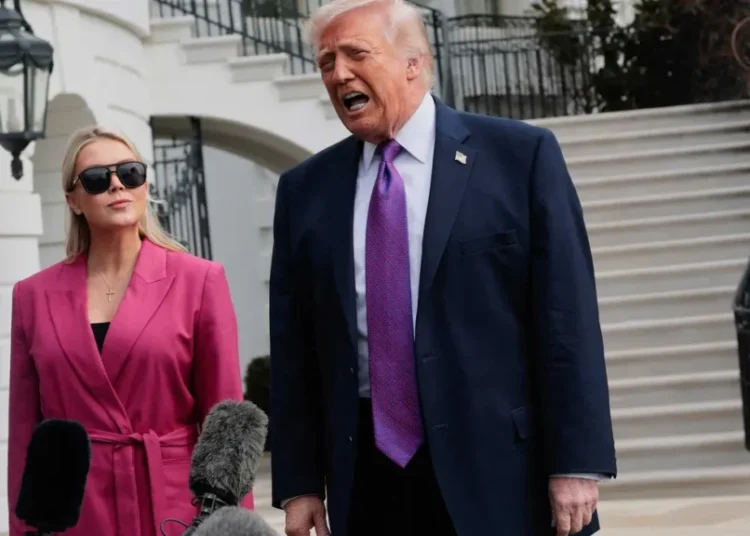
Donald Trump is the 13th consecutive U.S. president who has sought some kind of political victory in Cuba. He appears to believe that goal is within reach: “I do believe I will be having the honor of taking Cuba,” he said on Monday.
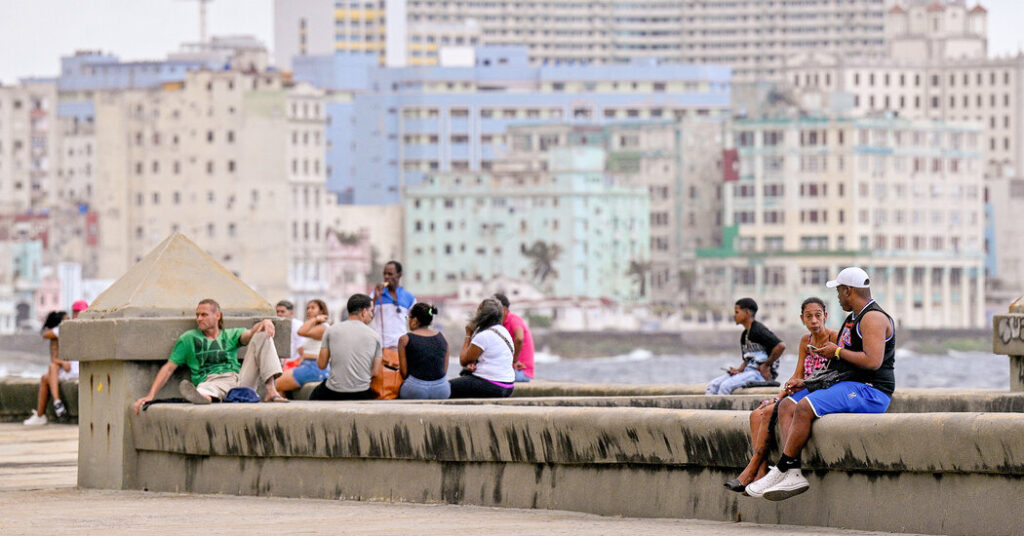
Cuba is near economic collapse and is experiencing the greatest mass exodus in its history and the gravest lack of confidence in the government in decades, prompting unusual shows of protest and defiance. As the country’s oil reserves have dwindled, a process accelerated by the de facto U.S. oil blockade, Cuba has descended into periodic darkness, and the Castro family, still very much in power, has rushed to the bargaining table with the Trump administration.
Despite Cuba’s weak position, the White House has, at least publicly, dropped meaningful political change as an objective. In fact, President Trump’s strategy seemingly hinges on the regime effectively remaining in place, at least for now. Recent reports indicate that the Trump administration is seeking the removal of President Miguel Díaz-Canel, an unpopular figurehead, as a condition for progress on economic negotiations.
Such a deal would not amount to a substantive political opening. Instead, it would likely allow the Castro family and Cuba’s military to consolidate their power in return for their compliance, echoing what has taken place in Venezuela since the U.S. capture of Nicolás Maduro. It would also crush the aspirations of Cubans both on the island and in exile who have fought to establish democratic rights in their homeland — the supposed raison d’être of the 1959 revolution in the first place.
Democracy has long proven elusive for Cuba. The history of the past two centuries — throughout which the island has endured Spanish colonialism, U.S. occupation, a U.S.-backed dictatorship and a regime propped up by the Soviet Union — are in many ways a story of Cuba’s frequent subordination to the economic and political interests of foreign powers.
That has not prevented Cubans at home and abroad from fighting for democracy. My family history traces that struggle: My great-grandfather fought to liberate the land of his birth from Spain in the 1890s; for years, a plaza in central Cuban town of Santa Clara bore a small metal plaque with his name, Aurelio Vigil. His son, my grandfather, worked to bring down the dictator Gerardo Machado in the 1930s. My parents, seduced by Fidel Castro’s promises of democracy, elections and the restoration of the progressive 1940 Constitution, supported the revolutionary struggle against the military dictatorship of Fulgencio Batista by hiding rebels and guns in our home.
But Mr. Castro failed to deliver on these promises. Instead, he militarized every aspect of Cuban society, using firing squads as a way to eliminate dissent. Many thousands, including my parents, became disillusioned with the revolution and fled, often through circuitous routes: by plane, by boat, on foot across the U.S.-Mexican border, on waived or expired visas. Our exile was supposed to be temporary. After all, we’d turn back once the mighty United States had toppled Mr. Castro. But like the elections he had once promised, that day never came.
Since then, Cubans have fought and fled repression as the economy has spiraled downward and the regime has tightened its grip. The military has expanded its control over the economy, managing enterprises involving foreign investments, tourism, retail and the export of military and medical and other professional services.
The government has been creative in its quest for other sources of cash. In the 1970s, as the Soviet Union grew weary of footing Cuba’s bill, Havana sought to smooth relations with the Carter administration, and looked toward the very people it had cast as enemies of the revolution: “los gusanos,” or those who had fled to the United States.
The subsequent dialogues with a group of Cuban exiles, in which I took part, led the government to release approximately 3,600 political prisoners and allow them, their families and thousands of other former political prisoners to leave the country. Members of the Cuban diaspora were newly allowed to visit their families on the island. While only partial and imperfect, this kind of negotiation offered a vision of what a real opening could look like down the line.
That is not what is on offer today. Cuban officials are not being asked to make meaningful concessions. In exchange for an economic opening that may prove most lucrative for the armed forces, the government would perhaps have to undergo a modest political reshuffling. But its stated willingness to allow investment from the United States and members of the Cuban diaspora and its release of several political prisoners should not be mistaken for genuine compromises; they are superficial and pre-emptive gestures made by a government that has no intention of relinquishing power. If negotiations continue on the current trajectory, the regime would ultimately be the same one that, in the summer of 2021, brutalized and detained thousands of protesters for calling for freedom of speech. This is not a government that should be trusted with Cuba’s future, much less empowered by the Trump administration.
The White House should condition U.S. investment on verifiable political reforms, including stripping the military from the country’s economic management. Mr. Trump should also be negotiating safeguards for American investors that are based on transparent business practices so that U.S. dollars don’t flow directly into the military’s pockets. Cuba’s regime should not be given an economic lifeline if political prisoners remain in jails or freedom of speech stays restricted.
Cuba’s government is weak and desperate; President Trump does not need to concede the country’s political future for the brief triumph of a deal struck. Negotiation with the Cuban government should be based not only on economic pragmatism but also on policies that lead toward the democratization and demilitarization of the island.
To accept anything less is to signal to Cuban Americans that their political support does not matter, and to Cubans on the island that their aspirations for freedom can be traded away. If there’s one thing Cubans everywhere can probably agree on, it’s that we deserve a better deal than the one we’re apparently heading towards.
Maria de los Angeles Torres is a professor of Latin American and Latino studies at the University of Illinois, Chicago.
The Times is committed to publishing a diversity of letters to the editor. We’d like to hear what you think about this or any of our articles. Here are some tips. And here’s our email: [email protected].
Follow the New York Times Opinion section on Facebook, Instagram, TikTok, Bluesky, WhatsApp and Threads.
The post Cubans Want a Deal. Just Not This One. appeared first on New York Times.