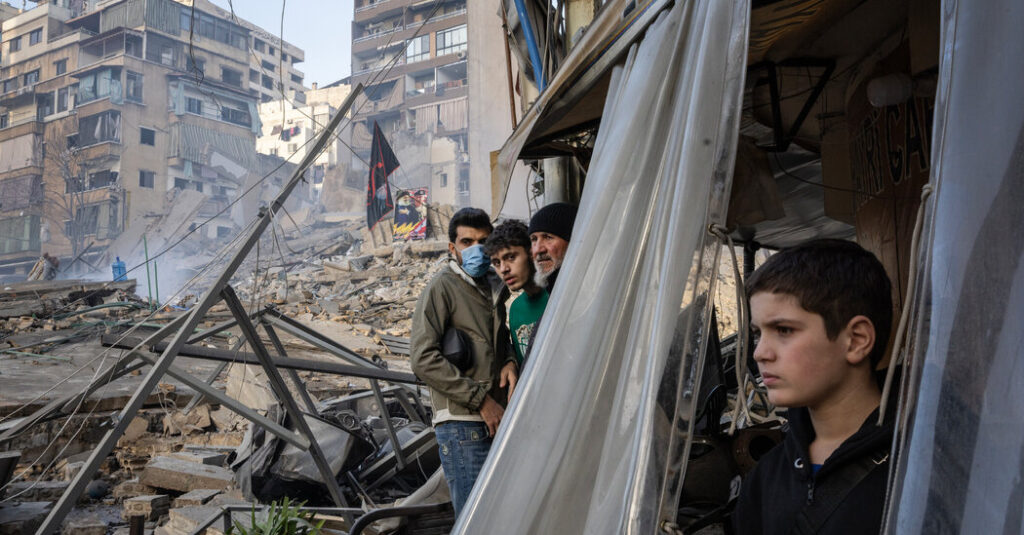
A Cafe on the Edge of Destruction
Israel’s strikes in Lebanon, one front in its widening war with Iran, were initially focused on the Dahiya, an area on Beirut’s southern outskirts that is seen as a Hezbollah stronghold.
But Israel has broadened its geographic range of targets. Early on Wednesday, it struck more central neighborhoods in the Beirut, the capital, that had been considered safe, including Bechoura, where this building was destroyed.
At the Zahyre Cafe, a 24-hour spot where people gather for coffee and shisha, Israel’s warning of its impending strike arrived around 4 a.m. Several customers fled; they were having breakfast before starting the day’s Ramadan fast.
Hezbollah, whose previous conflict with Israel ended in a cease-fire more than a year ago, routinely places pictures of Hassan Nasrallah, its slain leader, at sites that Israel has struck. One of the images in this scene reflects the unusual political situation the militants were facing in Lebanon even before the fighting resumed.
The large poster in the rubble features Mr. Nasrallah alongside Gen. Rodolphe Haykal, the commander of the Lebanese military. General Haykal has been given the task of reining in Hezbollah’s forces. Yet, he is widely seen as having acted cautiously on that order for fear of igniting civil strife, and because of that, many Hezbollah supporters have embraced him.
The black flag features Mr. Nasrallah’s image alongside a slogan that refers to a seventh-century imam who is remembered as a symbol of Shiite self-sacrifice: “Hussein, the victory of blood over the sword.”
The Lebanese health ministry said at least 10 people had been killed and 27 others injured in the overnight strikes in Beirut.
In the morning light in Bechoura, a bulldozer was already clearing away debris.
Christina Goldbaum, Peter Robins and Hwaida Saad contributed reporting.
The post A Cafe on the Edge of Destruction appeared first on New York Times.