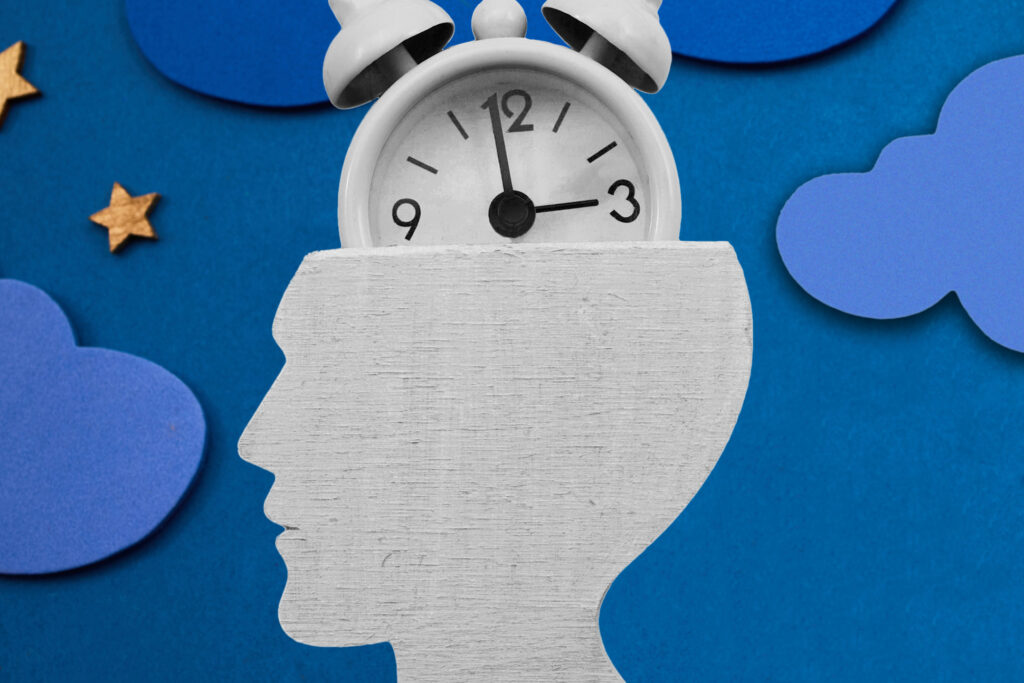
Do you ever find yourself lying in bed wide awake at 3 a.m., tossing and turning, unable to get back to sleep?
Tens of millions of adults experience insomnia, which can manifest in a variety of ways. But middle-of-the-night awakenings — where you wake up and have difficulty falling asleep again — are the most common symptoms of insomnia. Studies have found that as many as 1 in 5 adults in the United States and Europe experience this form of insomnia.
These dreaded awakenings afflict people of all demographics. Studies suggest that middle-of-the-night insomnia is especially prevalent among women, and that it becomes more common as people age, affecting about 1 in 4 people 65 years and older. But it occurs among everyone from teenagers to 90-year-olds, said Michael Breus, a sleep doctor and clinical psychologist who wrote the book “Sleep Drink Breathe.”
“It’s the number one thing I get asked about, and it has been for the last 20 years,” he added.
I know this form of insomnia all too well. Most nights, I have no trouble falling asleep. I yawn, close my eyes, get comfortable and within 15 minutes or so I’m fast asleep. The hours pass by. And then, like clockwork, I open my eyes, look at my watch and see that it’s 3 a.m. I close my eyes. I roll over and patiently wait for my brain to fall asleep again.
But far too often, I have ended up lying awake as my mind jumps from one anxious thought to another. It can take an hour or two to fall back to sleep. There have been nights when I couldn’t get back to sleep at all, and I ended up going about the next day feeling exhausted and sleep deprived.
The 4-7-8 breathing method
I have tried many things to conquer my 3 a.m. awakenings. I’ve counted sheep, distracted my busy mind with psychological tricks and tried reading boring books or listening to soothing meditation podcasts. But nothing worked until I tried a special breathing exercise recommended by Breus, the sleep expert.
The technique, called the 4-7-8 breathing method, is deceptively simple. First, you inhale through your nose for four seconds. Then you hold your breath for seven seconds. Finally, you exhale through your mouth for eight seconds and repeat the steps as many times as needed.
The first time I tried it, I honestly expected it to fail. I was lying in bed wide awake at 3 a.m., and figured why not try it? As I did the breathing exercise, I didn’t feel myself getting sleepy, but I did feel calmer. Eventually, I opened my eyes and saw that it was 6:30 a.m. The sleep-tracking function on my Apple watch indicated that I had been asleep for several hours.
I’ve now been using this breathing exercise on an almost nightly basis for over a month, and it works like a charm. When I do wake up at 3 a.m., I no longer get anxious because I know that I can get myself back to sleep without much difficulty.
Why we all wake up in the middle of the night
It turns out that there’s nothing unusual about waking up at 3 a.m.
“Every person on earth wakes up between 1 and 3 o’clock in the morning,” Breus said. “For most people, it doesn’t bother them. They burp, they fart, they roll over, and they just go back to sleep.”
This is because of our biology. Our body temperatures follow a daily circadian rhythm, rising throughout the day and then falling at night. For most people, body temperature peaks and then begins to decline around 10 p.m. This shift in temperature is a signal to your brain to release the hormone melatonin, which tells your body that it’s time to sleep, Breus said.
Your body temperature continues falling gradually throughout the night and begins to rise again between 1 and 3 a.m. During this time, your body moves into a lighter stage of sleep, causing us to wake up. But while most people fall back to sleep without even realizing it, about 10 or 15 percent of people do not, Breus said.
Instead, they look at the time, their minds begin to wander, and they get anxious. They may even pick up their phones and start scrolling social media or get out of bed and use the bathroom.
All of this can cause your heart rate to rise and activate your sympathetic nervous system, which controls your fight-or-flight response.
To get back to sleep, you need to activate your parasympathetic nervous system — the “rest-and-digest system” — which relaxes your muscles and slows your heart rate, Breus said.
This is where the 4-7-8 breathing exercise helps. Based on an ancient yogic technique called pranayama, it was popularized by Andrew Weil, a doctor and author who founded an integrative medicine center at the University of Arizona.
Studies suggest that the 4-7-8 technique and other breathing exercises facilitate sleep because they slow your heart rate, lower your blood pressure and reduce anxiety. A study published in the journal Frontiers in Sleep last year reviewed six trials and found that breathing exercises improved sleep quality in people with insomnia and other sleep difficulties.
“There’s been generally good evidence from randomized controlled trials showing that breathwork helps with insomnia,” said Melissa Young, a clinical assistant professor at the Cleveland Clinic and a staff physician at the clinic’s Center for Functional Medicine who was not involved in the study. “The 4-7-8 breath technique is both personally and professionally one of my favorites.”
What to do at 3 a.m.
If you find yourself wide awake in the middle of the night, don’t panic. You need to keep your heart rate low to fall asleep again. “Don’t look at the clock, and don’t elevate your heart rate unless you need to,” Breus said. Here’s what to do:
- Don’t look at your smartphone. The blue light it emits can trick your brain into thinking that it’s time to get up and start your day. If you absolutely have to keep your phone in your bedroom, then at the very least don’t keep it near your bed. “I plug my phone in across the room,” Breus said. You should also avoid looking at your smartphone in the hour or so before you first get into bed, according to Young at the Cleveland Clinic. That will help ensure a better night of sleep. “The blue light that your phone emits suppresses your melatonin production,” she said.
- You might be tempted to get out of bed and go to the bathroom. But try not to, as this will raise your heart rate, making it harder to get back to sleep, Breus said. “In most cases, people don’t really need to go to the bathroom,” he added. “About 70 percent of people are side sleepers, and that puts pressure on your bladder, which makes you think you have to pee.” Instead, Breus said, try rolling onto your back and counting to 30. If after 30 seconds you find that you really do need to use the bathroom, then by all means do it. But if you don’t, then it’s best to stay in bed.
- As you’re lying there, start doing the 4-7-8 breathing exercise. Try not to breathe in or out too forcefully. Instead, breathe in and out gently. Breus recommends doing 20 rounds of 4-7-8 breathing. You can keep count by lightly balling your hand into a fist and sticking out a finger after each round.
- Another thing you can do at the same time as the 4-7-8 breathing exercise is progressive muscle relaxation. Tense a part of your body for five seconds — like your calves, feet, arms or shoulders — and then release the tension and move on to another body part. This reduces stress and anxiety, which can help alleviate insomnia, Breus said.
- Something else that helps with insomnia is cognitive shuffling. This mental exercise helps you generate random thought patterns to distract you from anxious thoughts that interfere with sleep. You can learn more about it by reading our recent story on cognitive shuffling.
If you try these things and find that you still aren’t able to fall asleep, don’t worry. One night of bad sleep isn’t going to ruin your life. And Breus points out that you can still benefit from what’s known as non-sleep deep rest — the act of quietly lying in bed at night. It’s not the same as sleep, but it can still rejuvenate you, he added.
Occasional bouts of insomnia are normal. But if you find that you’re consistently having difficulty falling asleep or staying asleep — and that nothing seems to help — consider seeing a doctor or sleep specialist. You could have an underlying problem or medical condition, such as obstructive sleep apnea.
Do you have a question about healthy eating? Email [email protected] and we may answer your question in a future column.
The post 5 tips for when you’re wide awake at 3 a.m. appeared first on Washington Post.