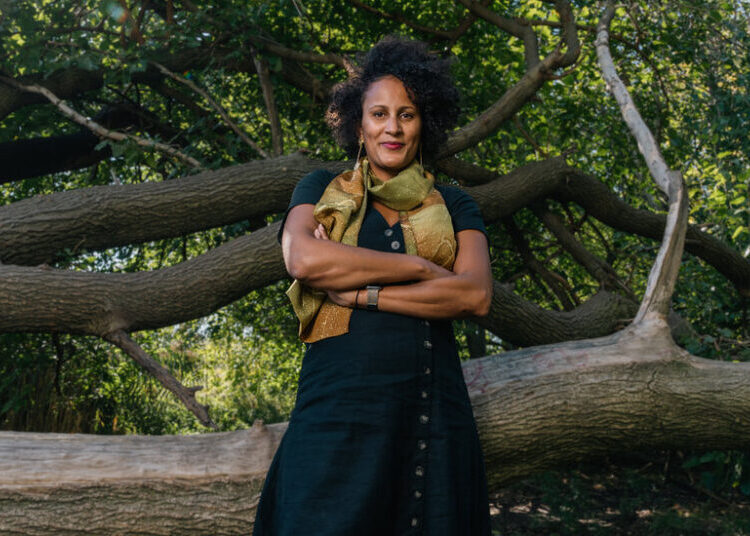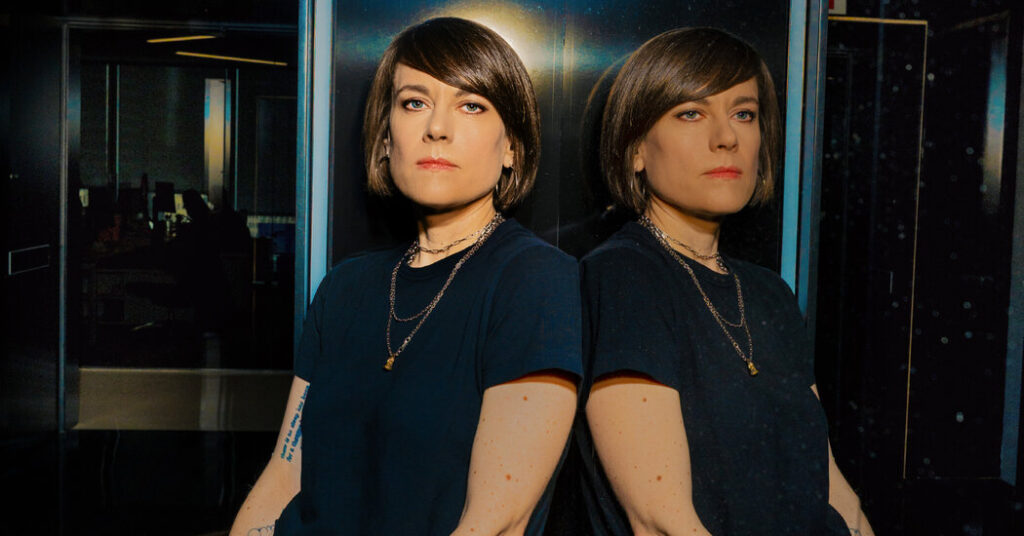
Katie Drummond is sick of being told what Wired magazine should not cover.
Ms. Drummond, Wired’s top editor, hears all the time from outside critics who say the publication, which started in 1993 covering the nascent digital revolution, has strayed too far from its techno-optimism roots with its hard-hitting coverage of the Trump administration and skeptical eye on billionaire tech bros.
And she could not disagree more.
“If you still don’t understand why Wired covers politics,” she said in an interview, “you are either willfully ignorant or a complete idiot.”
In less than three years, Ms. Drummond, 40, has transformed Wired from a fading magazine and website into a buzzy brand that has become a bright spot for Condé Nast, the publishing giant better known as the home of Vogue, Vanity Fair and The New Yorker.
She started its about-face by creating a politics team that landed major scoops about Elon Musk’s Department of Government Efficiency, including uncovering the young engineers given key roles in the project and revealing that members of DOGE’s staff had direct access to U.S. Treasury payment systems. The publication has recently been focusing on artificial intelligence, the war in Iran and the ties between technology companies and Immigration and Customs Enforcement.
The edgier coverage has generated grumbles from parts of the tech community, including in recent weeks. Wired’s February print cover, for a feature titled “Inside the Gay Tech Mafia,” drew outrage online for its suggestive visual of two men shaking hands at crotch level through the flies of their pants. Trae Stephens, a prominent venture capitalist, argued on social media that Wired was “irreparably broken in its current form” and floated the possibility of buying it.
But Ms. Drummond’s approach appears to be working. Condé Nast does not disclose profits or losses for its publications, but Ms. Drummond said Wired had added more than 200,000 new paying subscribers in the past year, and subscription revenue increased 24 percent last year in the United States. Wired currently has more than 500,000 paid subscribers. It has a newsroom of around 80 people with plans to hire up to a dozen more this year, and was recently named a finalist for general excellence in the National Magazine Awards.
“We cover technology with a great deal of curiosity,” Ms. Drummond said, “with a great deal of skepticism as I think behooves any smart journalist, with an eye toward accountability, which I believe is of paramount importance in this moment.”
She said that the February issue had prompted “a wide range of responses” and that “we take the feedback seriously.”
Roger Lynch, the chief executive of Condé Nast, said in a statement that Wired had become “one of the strongest subscription growth stories in the company, demonstrating that when the journalism leads, readers respond and support it.”
Ms. Drummond was born and raised in Calgary, Alberta, and decided to become a writer at 18 after the death of her mother, a poet. She joined Wired as an intern in 2009.
She then climbed the ranks at New York-based publications including The Verge, Bloomberg, Gizmodo, The Outline and Medium before landing at Vice Media as a senior executive, overseeing all of the digital brands. After Vice filed for bankruptcy in May 2023, Ms. Drummond noticed that Wired’s former editor had departed and reached out to Anna Wintour, Condé Nast’s chief content officer, after guessing her email address.
“I felt that one of the only ways to break through in media in this era was to break so much news that you become indispensable to an audience,” Ms. Drummond said of her pitch to Ms. Wintour for a Wired made newly relevant.
“I worked at so many start-ups that don’t exist anymore,” she added. “I wake up every day really obsessively chasing this goal of being able to do journalism with integrity, to publish news and to do it in a way that’s sustainable.”
Condé Nast named Ms. Drummond as Wired’s global editorial director in August 2023, the second woman to assume the top role, and she immediately focused on getting scoops and speeding up the pace of publishing. On her second day, she decided she needed a politics team. She rehired a former executive editor, Brian Barrett, to run day-to-day operations and built up a social video team to increase the number of vertical videos shared on social media. She shook up the staff and made hires; revamped newsletters, launching five new ones for paying subscribers; and started podcasts that placed a greater spotlight on Wired’s journalists and their work. Wired will also introduce an app this year.
With an eye to building community and adding subscribers, Ms. Drummond has now prioritized retooling Wired’s events business. This year, it is planning the first Wired World Fair, which she said would be “a futuristic carnival that is essentially a living edition of the magazine.”
Ms. Drummond’s role also gives her oversight of Wired’s global editions, which she has worked to integrate. Articles are now syndicated across markets. Wired still publishes four print editions, in the United States, Italy, Japan and the Czech Republic, and recently brought Wired Middle East, a licensee, under its portfolio. Wired Middle East’s print magazine will launch in May.
Ms. Drummond wasn’t sure what she would encounter when she joined Condé Nast, she said, but has been pleasantly surprised at the level of support. She asked for “a six-figure sum of money” in September to promote Wired’s politics issue, which featured President Trump, Mr. Musk, Jeff Bezos and other titans as gambling dogs on its cover, in the vein of Cassius Marcellus Coolidge’s “Dogs Playing Poker” artworks. Her request was immediately approved, and the cover went up on billboards around New York, San Francisco, Los Angeles, Washington and Austin, Texas.
“I’ve never worked at a company that’s more supportive of provocative high-risk journalism than this company,” she said. “That is not true of so many media companies right now.”
Nicholas Thompson, chief executive of The Atlantic and a former editor in chief of Wired, said the job of Wired’s editor was to turn the publication into something new.
“Katie’s done that wonderfully. She’s increased the energy, the spunk and the skepticism,” he said. “She’s gone after stories the publication has normally avoided and avoided ones the publication has normally gone for. Wired is never boring to read.”
Some are not eager to go along for the ride. Among the current batch of Wired critics are people who worked there during its different iterations.
Keith A. Grossman, an associate publisher of Wired until 2014 and now president of the crypto start-up MoonPay, said on X that Wired had “chosen to focus on politics & framing everything with such negativity.”
“We are living through one of the most consequential periods in technology’s history,” Mr. Grossman told The New York Times in an email. “It should be an incredibly exciting moment for any brand that explores innovation, its promise and its responsibility.”
Chris Anderson, the editor in chief of Wired from 2001 to 2012, criticized the “gay tech mafia” article on social media as “embarrassing,” and said in another post that a shift in tone toward the tech industry happened when the editors in chief “started living in Brooklyn, not SF.”
Ms. Drummond, though, is only looking forward. She sees it as her mandate to ensure Wired is around for decades to come. And she has her share of supporters, too.
Noah Shachtman, a former editor in chief of Rolling Stone and The Daily Beast who is now a contributing editor at Wired and occasionally writes for The Times, said that when Ms. Drummond took over in 2023, “there were a lot of people who thought it was basically mission impossible.”
“Ironically for a tech magazine, it was thought of as yesterday’s brand,” he continued. But, he added, “she’s managed to make the place punk rock again.”
Katie Robertson covers the media industry for The Times. Email: [email protected]
The post Wired’s New Editor Doesn’t Care if the Tech Bros Are Mad appeared first on New York Times.