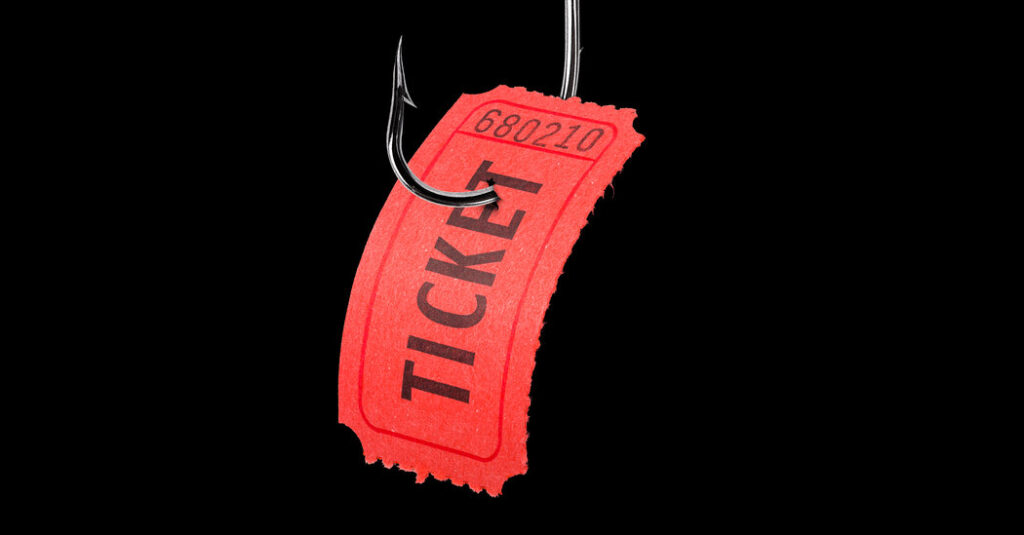
For a hot second there, it looked as if the government might pry loose Live Nation’s chokehold on the American concert business. Live Nation Entertainment is the company that brought you $5,000 Springsteen tickets and V.I.P. packages at Beyoncé concerts with $550 in fees alone, and it did it by controlling every aspect of live music, from the tickets sold, to the artists promoted, to venues themselves — an over-$20 billion-per-year global empire spanning 54,000 events a year and 394 halls as of late 2024.
Music fans often have no alternatives, a fact that some company representatives seem to revel in. “I almost feel bad taking advantage of them,” one Live Nation ticketing director wrote over Slack as a colleague discussed charging $250 for V.I.P. parking at a Kid Rock show.
It was the kind of attitude that drove many voters to support Donald Trump, with his promise to stand up for ordinary Americans and to lower out-of-control prices. In office, President Trump signed an executive order to crack down on price-gouging by ticket resellers, and looked on as Kid Rock said that Ticketmaster, Live Nation’s selling platform, was “going to lose some money.” Most important, the Trump Justice Department pushed ahead with a landmark antitrust lawsuit against Live Nation that had been filed in 2024 by the Biden administration and ultimately joined by 39 states and the District of Columbia.
Which is why it came as such a shock last week when, just a week after the case went to trial, the Justice Department announced it was all but surrendering, folding its case with a settlement tilted far in Live Nation’s favor. Negotiations between the two sides had been underway for weeks, but the outcome was so abrupt that the state attorneys general who had brought the suit were taken by surprise; so, too, apparently was the lead lawyer arguing the case for the Department of Justice.
Judge Arun Subramanian, who had dealt the government a blow some weeks prior when he limited the scope of its case, was flabbergasted. When he found out that the Justice Department had ambushed its own side, he expressed disbelief that the man arguing the government’s case was out of the loop: “You are the lead counsel for the United States,” he said to the lawyer. “You didn’t receive this term sheet until I asked for it at 6:30 in the morning?”
Kid Rock was shocked, too. “I don’t understand why they would negotiate a settlement,” he told me. “Why not just let it see its course? Let’s see what 12 people decide.”
Most of the state attorneys general refused to go along. The judge ruled on Friday that the trial would continue without the Department of Justice.
Judge Subramanian called the department’s actions “mind-boggling.” In many ways they were: If a deal’s on the level, you don’t need to cut out the lead players on your own side, as the Justice Department did with its lead lawyer and the states’ attorneys general. But it was just the latest example of the Trump administration granting special favors to corporations that work their way into the president’s good graces.
Having previously attempted to shut down TikTok in the United States, Mr. Trump instead engineered the sale of TikTok’s U.S. operations to an investor group including one of the world’s wealthiest men, Larry Ellison, a deal that came with a $10 billion bonus for the administration. Mr. Trump blessed the merger of Skydance, a Hollywood production company run by Mr. Ellison’s son David, with Paramount studio. When Paramount Skydance sought to buy Warner Bros. Discovery, a rival company, Mr. Trump at one point strongly implied there might be consequences if Warner Bros. chose another suitor.
Corporate consolidation can limit competition and hurt consumers, which is why the Justice Department’s antitrust division is supposed to police it. But the Trump administration fired two of that division’s top deputies, and reportedly sidelined its director, Gail Slater, during negotiations with Live Nation. Ms. Slater announced her resignation last month.
One of the people expected to testify against Live Nation was Tim Leiweke, the former chief executive of a company that Live Nation initially viewed as a rival but that, according to the antitrust suit, described itself as a “pimp” for the concert giant. Mr. Leiweke was facing his own criminal indictment in a separate matter, a fact that gave him an incentive to cooperate in the Live Nation case — until Mr. Trump pardoned him, after Trey Gowdy, a former Republican congressman and Fox News personality, put in a good word following a round of golf with the president.
It also couldn’t have hurt Live Nation’s prospects that the company had added Richard Grenell, a former acting member of Mr. Trump’s cabinet, to its board of trustees. Nor that the company brought on Kellyanne Conway, Mr. Trump’s longtime adviser, to meet with top officials in the Justice Department. According to reporting by Bloomberg, Ms. Conway was involved in discussions surrounding the settlement, and the White House was kept in the loop. (Kid Rock said that he, too, has, at times, “been in the middle of this, talking to both the D.O.J. and Live Nation,” but wasn’t involved in settlement talks.)
It’s hard to overstate how thoroughly Live Nation controls the live music business, and how directly that control hurts fans. Let’s say you were one of the thousands of people who went to see Megan Thee Stallion’s most recent show in Charlotte, N.C. Some fees went to Ticketmaster, which Live Nation owns. Some of the purchase price went to the venue, then called the PNC Music Pavilion, which is operated by Live Nation. Some went to the tour’s promoter: Live Nation again. Another slice went to Megan and her team, which includes her managers, who work at a firm co-owned by, you guessed it, Live Nation.
Competitors charge high fees, too, but Live Nation is different because of its vertical integration. The company “offers every service in the chain,” Judge Subramanian noted, “save — for now, perhaps — the job of the artists themselves.”
According to the antitrust case, Live Nation used its market dominance to prevent potentially less expensive or more innovative ticketers or promoters or venue operators from competing. Witnesses testified that when venues even considered using another ticketing service, Live Nation’s executives threatened to retaliate by pulling concerts. “Losing those shows would be almost catastrophic to our organization,” one executive who works with the Grand Casino Arena in St. Paul told the jury. The Arena still works with Ticketmaster today, and Lady Gaga’s tour — promoted by Live Nation — comes through next month.
So what correctives did the Justice Department demand from Live Nation in exchange for settling the case? Live Nation would cap service fees at 15 percent of the ticket price at just a handful of venues and “divest” from a few others; it would let competitors have access to its back-end ticketing technology, though John Kwoka, a leading antitrust economist, told me that’s like competing against Amazon products on Amazon.com; and it would distance itself a little from the Oak View Group, the pseudo-rival company that Mr. Leiweke used to lead. Live Nation would also create a settlement fund amounting to approximately 1 percent of one year of the company’s revenue, but to get access to it, states would have to agree to void “all claims” against Live Nation by angry customers in their states — which means it might effectively come out ahead.
“You really couldn’t send a clearer message that antitrust is dead at the federal level than settling this particular case,” John Newman, a former Justice Department and Federal Trade Commission official, told NBC News.
Mr. Trump and his aides position themselves as the toughest of negotiators, able to browbeat and bulldoze top law firms and universities and foreign governments alike into obeying their commands. But Mr. Trump’s promise to rein in price-gouging in the live entertainment business, like so many of the other ways he promised to watch out for working Americans, went in the opposite direction.
He cut government support for the people who needed it most while cutting taxes for those who needed it least. He took an ax to the federal agencies that were supposed to be keeping corporations from messing with us — the teams that supported food inspectors, the financial watchdogs, the folks who check to see if your kid’s toys are safe — while moving to allow corporations to put more carcinogens in the air and perhaps more neurotoxins in the ground.
Now there’s this settlement, which offers so little to fans, it calls to mind those internal Live Nation messages. “Robbing them blind,” one of the company’s directors told another. “That’s how we do.”
Noah Shachtman, a contributing Opinion writer, is a former editor in chief of Rolling Stone.
Source photographs by Michael Burrell and Yevgen Romanenko/Getty Images.
The Times is committed to publishing a diversity of letters to the editor. We’d like to hear what you think about this or any of our articles. Here are some tips. And here’s our email: [email protected].
Follow the New York Times Opinion section on Facebook, Instagram, TikTok, Bluesky, WhatsApp and Threads.
The post Trump Administration to Music Fans: Just Kidding About Coming to Save You appeared first on New York Times.