In January, Doug Fulop was riding home from a night out in San Francisco when a man crossed the street in front of his car, doubled back and began screaming at him. The man punched the car’s windows and tried lifting up the vehicle. He then yelled that he wanted to kill Mr. Fulop and the other two passengers for giving money to a robot.
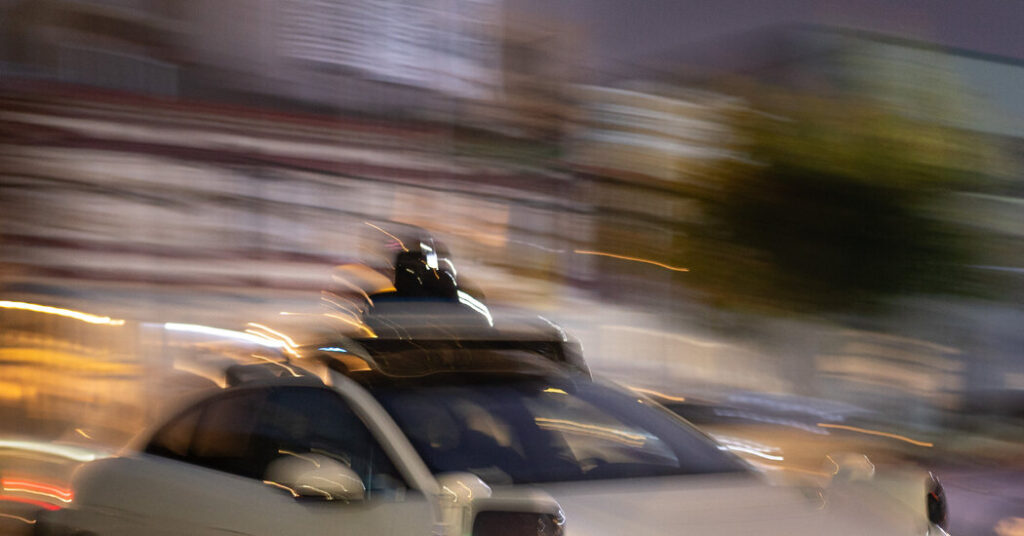
A taxi driver would have simply driven away. But Mr. Fulop’s vehicle had no driver — it was a self-driving Waymo.
“We felt helpless,” said Mr. Fulop, 37, who works in the tech industry.
Since autonomous cars started roaming San Francisco streets almost four years ago, they have elicited an array of unexpected behaviors from humans, including angry protests against the vehicles. That has created an unexpected hazard for passengers of self-driving cars all around the city: being stuck inside the vehicle during an anti-robot rant.
Self-driving cars are designed to stop moving if a person is nearby. People can take advantage of that function to harass and threaten their passengers. In 2024, a San Francisco man tried covering the sensors of a self-driving car that had stopped, effectively disabling it, while passengers were inside. Another video from that year showed three women screaming as a group of vandals tagged their autonomous taxi with spray paint.
It was unsettling to be trapped inside a Waymo during an attack, Mr. Fulop said. “If he had kept hammering on one window instead of alternating, I’m sure he would have eventually broken through,” he said.
The attacker did not appear to be on drugs or otherwise impaired, but seemed to be overtaken by extreme anger at the self-driving car, Mr. Fulop said. It did not seem safe to get out and run, he added, since the man was trying to open the locked doors and said he wanted to kill the passengers.
They called 911 and Waymo’s support line, Mr. Fulop said. Waymo told them that it would not manually direct the car away if someone was standing nearby, and that the passengers would be OK with the doors locked. The car’s software does not allow riders to jump into the driver’s seat and take over during an incident.
The attack lasted around six minutes. By then, bystanders had begun cheering on the man, Mr. Fulop said. That distracted the man, who moved far enough away from the car that it could finally drive away.
San Francisco police officers showed up shortly after. A police report reviewed by The New York Times supported Mr. Fulop’s account.
The San Francisco Police Department did not respond to a request for comment.
Katherine Barna, a Waymo spokeswoman, said the company’s support team had remained on the phone with the riders during the incident, which she noted was very unfortunate but a “rare occurrence.”
“We believe our technology can fundamentally improve road safety, provide a safer ride and empower people by providing a more accessible transportation option,” she said.
Handing the keys to a robot has added bizarre and, at times, worrisome new quirks to car travel. Passengers have shared videos of their autonomous cars getting stuck driving in circles or becoming lost in a parking garage. Last week, a video showed a Waymo in Austin, Texas, that had stopped under a railroad crossing gate just short of the tracks before a train sped past. It’s unclear whether someone was in the vehicle.
For some, riding in a taxi with no driver feels safer than being alone with a driver. In 2024, Amina Green, a San Francisco technologist and writer, filmed two men standing in front of her Waymo and harassing her while the car idled, waiting for them to move.
“I felt like a sitting duck,” she later said in Business Insider. But Ms. Green concluded that Waymo still felt safer than a ride-hailing service, where she has had drivers who watched YouTube videos while driving or otherwise made her uncomfortable.
Anders Sorman-Nilsson, a technology author and speaker, had a similar experience in Los Angeles in May when, he said, five men on e-bikes surrounded his Waymo, forcing it to stop. The vehicle sat frozen as the men banged on the windows and demanded he open up.
Mr. Sorman-Nilsson said he had felt safe inside the vehicle. A driver could have panicked and escalated the situation or made him hand over his wallet to the thieves, he said. He felt reassured knowing that Waymo’s many exterior cameras were recording the men. After around five minutes, he said, they gave up and rode away.
Waymo frequently emphasizes its safety compared with human drivers. Its data has shown a 90 percent decrease in “serious injury or worse crashes” for its cars compared with the average human driver over the same distance in cities where it operates. (A different 2023 study showed that self-driving cars were twice as likely as human drivers to be involved in rear-end collisions.)
Waymo has expanded from a sci-fi novelty for San Francisco tourists to a sizable and thriving business. Last year, it tripled its annual trips taken to 15 million. The company plans to launch in 20 cities this year.
Continued growth will require maintaining the public’s trust. Mr. Fulop said he had stopped using Waymo for a time after the January attack and would avoid the service at night unless the company changed its policy of not intervening when a hostile person threatened riders.
“As passengers, we deserve more safety than that if someone is trying to attack us,” he said. “This can’t be the policy to be trapped there.”
Erin Griffith covers tech companies, start-ups and the culture of Silicon Valley from San Francisco.
The post Trapped! Inside a Self-Driving Car During an Anti-Robot Attack. appeared first on New York Times.