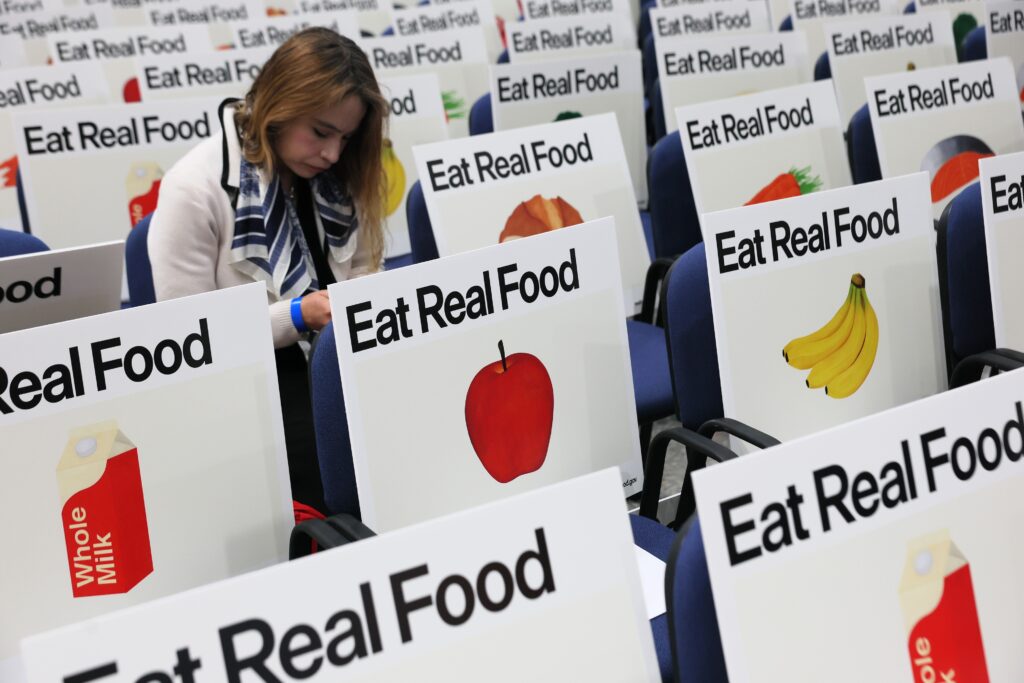
Health Secretary Robert F. Kennedy Jr.’s latest supposed victory is persuading medical schools to teach more about food. Last week, 53 of the nation’s roughly 160 medical schools announced they would revise their curriculums to support his push for at least 40 hours of nutrition education during medical training.
On its face, the idea is hard to oppose, even if Kennedy’s tactics used to secure it — namely threats to withdraw federal funding — are far from ideal. The relationship between diet and health is beyond dispute. Poor nutrition contributes to conditions such as diabetes, obesity and heart disease, while healthier eating patterns are associated with lower risks of cancer, dementia and premature death.
But perhaps Kennedy should have asked why nutrition has not already been a central part of medical education. It is not because physicians don’t want to learn about healthy food; rather, it is because knowing the science is only the beginning. The much harder task is helping patients act on that advice and overcome the practical barriers to healthy eating.
When I was a medical student in the early 2000s, I remember learning about diet. Lectures about the cardiovascular system, for instance, stressed the basics of heart-healthy eating and the importance of reducing sodium intake. But the obvious follow-up questions were rarely addressed: What comes next? What do you tell a patient who lives in a neighborhood without a grocery store that sells fresh produce? Or someone who cannot afford fruits and vegetables and therefore relies on cheaper ultra-processed products?
Doctors also lack both the training and the time to help patients translate general recommendations into actual meal plans. Physicians might suggest that patients see a dietitian, but availability for such specialists is limited and securing an appointment is often difficult.
Kennedy’s curriculum, which includes list of 71 “core nutrition competencies,” does not address these problems. To be fair, it proposes many mainstream topics that medical students should learn, such as recognizing nutrient deficiencies and managing food allergies. Other elements are more questionable, including recommending use of unproven dietary supplements and continuous glucose monitors, a technology favored by surgeon general nominee Casey Means, who co-founded a company promoting their use.
But diagnosis alone is not enough if there is no practical way to offer treatment, especially if it includes expensive, newfangled technologies. Without addressing that hole, clinicians will be left feeling helpless, and patients might start thinking that medical advice is detached from the realities of their lives.
Fortunately, some strategies already exist. A few hospitals run food pantry programs that provide groceries to patients and their families. Municipalities and community organizations combat food deserts by delivering fresh foods to senior centers, libraries and schools. Medical schools should train future physicians to connect patients with these resources and work with public health departments to develop local guides so that clinicians know where to direct patients who need help accessing healthy food.
Medical training should also emphasize screening for food insecurity. Social determinants of health are an integral part of a patient’s medical history, and students can be taught how to ask these questions and what to do with the answers. Ideally, clinics would have clear protocols to ensure that when patients screen positive, help is available right away. In the best systems, that support would be accessible in the same clinic, allowing a patient to meet with a social worker or another staff member who can connect them with food resources during the visit.
Meanwhile, medical schools should teach future physicians how to work effectively with dietitians. Registered dietitians receive specialized graduate-level training and at least 1,000 hours of supervised clinical experience. Medical education should emphasize team-based practice and show physicians how to collaborate with dietitians to help patients develop healthy, realistic and sustainable eating plans.
Finally, if the Trump administration truly wants to prioritize healthy eating, it should reconsider policies that make it harder for people to afford food. Its dramatic cuts to the Supplemental Nutrition Assistance Program, which helps low-income families pay for groceries, will leave more families struggling to put food on the table. At the same time, halting the government’s annual survey on food insecurity only makes the problem harder to see and address. When people are hungry, even the best nutrition education in the world will not help them become healthier.
The post The glaring problem with RFK Jr.’s push for more nutrition education appeared first on Washington Post.