Ben Judah was a special adviser to U.K. Deputy Prime Minister David Lammy from 2024 to 2026. He is the author, most recently, of “This Is Europe.”
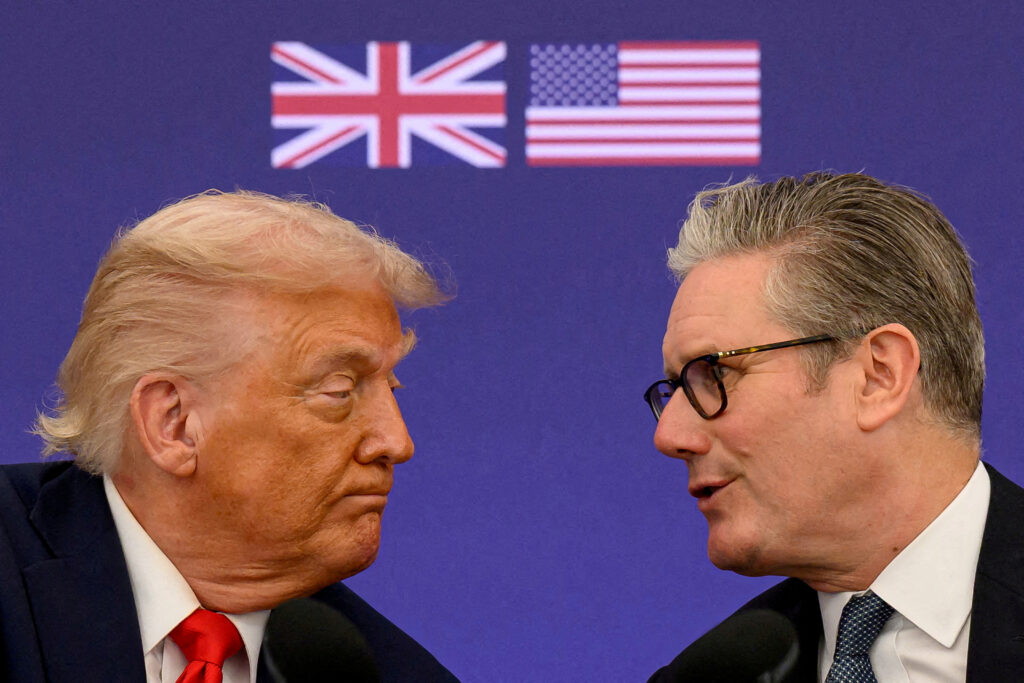
It’s not often someone says “No” to Donald Trump. And to receive a polite but firm “No” from Britain’s most courteous of prime ministers, Keir Starmer, when it comes to using the United Kingdom’s bases for his Iran offensive, appears to have particularly shocked the American president.
But it really shouldn’t have. Because with gentlemanly discretion, Britain, which once prided itself on being America’s “day one, night one partner” for interventions, has moved on from simple followership.
London was shaken from decades of deferential Atlanticism by two sharp jolts: Vladimir Putin’s war in Ukraine, followed by Trump’s manic return to power. Both Britain and Europe more broadly now admit they’ve got an America problem. The superpower around which the continent built its entire security architecture has become profoundly erratic, emotional and unpredictable. Ignore the obsequious Oval Office performances by European leaders attempting to paper over differences. America’s unquestioned leadership of the West’s entire postwar alliance system is dissolving.
I had a ringside seat to this historic shift as the special adviser to David Lammy, now Britain’s Deputy Prime Minister, when he was foreign secretary. In the Biden administration’s twilight, I watched the old hub-and-spokes system in operation from the Foreign Office, with British allies treating their ties with London as a small part of their relationship with Washington. But by the time I left the government, I witnessed dozens of relationships with swing states and middle powers — from Canada and Australia to Jordan and Qatar — spring to life, with these countries now seeing the U.K. as a key partner in the complex new world of counterbalancing and hedging.
By abdicating much of America’s role, Trump has rendered obsolete Secretary of State Dean Acheson’s famous barb about Britain “having lost an empire and not yet found a role.” London has finally found its role — in rebuilding European security. Nowhere is this truer than Britain’s genuinely history-making new special relationship — with Ukraine, which is far more intimate than most can imagine. As I watched President Volodymyr Zelensky repeatedly meeting with Lammy and Starmer in Downing Street, strategizing together their next steps toward both Russians and Americans, it became clear why Kremlin propaganda vilifies Britain so much.
All this had been building well before Trump. By the time I took the night train from the Polish border with the foreign secretary and Secretary of State Antony Blinken to Kyiv in September 2024, Ukraine already saw Britain as its number one ally and protector. Much of that story is classified and will only be told in history books, but what I can say for now is had it not been for Prime Minister Boris Johnson’s stunning decisions to support Zelensky around the start of the invasion, Ukraine would have found it much, much harder to survive.
Despite Britain’s conventional ammo stocks having whittled down to the point it could barely sustain a week of high intensity warfare with Russia, London was willing to put its specialist skills and weaponry behind Ukraine while Washington dithered. This included airlifting NLAW anti-tank weapons to Kyiv and telling Britain’s long-standing in-country training mission to stay put as other Westerners withdrew theirs. By the time I arrived in Kyiv, the United Kingdom had spent two years not following but pushing the United States, all while being much more present on the ground.
If Johnson helped save Ukraine militarily, it has fallen to Starmer to help save Ukraine diplomatically. Europe still critically needs the United States to support Ukraine, but Starmer was looking beyond that. The “coalition of the willing,” the European strategy to support Ukraine, was launched in London in March 2025 at a summit co-chaired by Starmer and Macron. The stated purpose of the coalition was to make plans for Europeans to deploy to Ukraine to guarantee any emerging settlement with boots on the ground. But in reality, the strategy foreshadowed a new post-American European security order premised only on a worst-case American backstop.
Trump’s chaotic interventions — now Iran, Cuba next, maybe strikes in Mexico — will only accelerate Britain’s realignment. Starmer may be unpopular but his foreign policy isn’t. Even Labour’s right-wing populist challenger Nigel Farage, who styles himself as close to Trump, has backtracked on his support for the Iran war and now pledges support to Ukraine. More profound is what’s happening on the left, where the U.K. is seeing the breakout of mass anti-American politics for the first time: both the Greens and the Liberal Democrats are surging.
Can Britain match might to its strategic vision? Despite all the Foreign Office’s diplomatic acumen, the Royal Navy and the British Army have been run down for decades into seriously depleted forces. This has been painfully exposed in the current crisis. Britain had not just withdrawn its minesweeper from Bahrain leaving it with no fighting presence in the Gulf for the first time since 1980, but found itself without a destroyer in the Eastern Mediterranean, leaving France to play a critical role defending not only Cyprus but U.K. bases as well.
The truth is it is not Britain, with its rocky politics and strained public finances, that is seriously rearming. It’s Germany. With Berlin aiming to hit 3.5 percent of GDP on defense by 2029, the balance of power in Europe is going to shift radically. A Europe still allied to Washington but primarily defended by Europeans is in sight. But neither Britain nor France are ready for their German partner suddenly overshadowing them militarily. Unless the U.K. raises its defense budget to generate more deployable assets to secure Europe’s perimeter, London’s return to relevance risks being a passing moment in between two Western security orders.
The post Britain is ready to admit it has an America problem appeared first on Washington Post.