Prime Minister Mark Carney of Canada became a diplomatic celebrity after delivering an electrifying speech at the World Economic Forum in Davos, Switzerland, declaring that President Trump had permanently ruptured the rules-based world order.
He told the leaders to put their nations’ interests first, not placate Mr. Trump and form new alliances.
Mr. Carney has crisscrossed the globe — this year he has already circled the world twice — seeking to heed his own message by forging relationships with countries that will make Canada far less dependent on the United States.
But in pursuing global deal making, Mr. Carney has had to look away to get along with countries that do not abide by values core to Canada, and that it has sought to promote on the global stage.
As the leader of a country long seen as a global leader in using trade and diplomatic relations to promote human rights, Mr. Carney has made no-strings-attached deals with countries that do not embrace democratic norms.
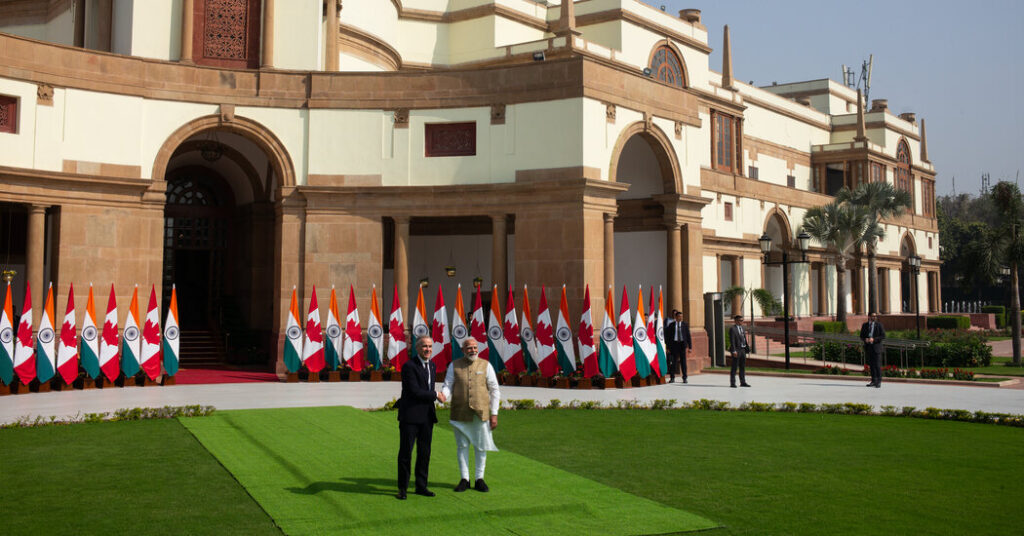
Mr. Carney has held long and cordial meetings with Xi Jinping, China’s top leader, Prime Minister Narendra Modi of India and Sheikh Tamim bin Hamad al-Thani, the emir of Qatar.
In exchange for Canada allowing a small number of Chinese electric cars into its market, Mr. Xi drastically reduced tariffs on Canadian canola, an oilseed that is a major export for Canadian farmers. Mr. Carney and Mr. Modi overcame a deep freeze in relations between their countries to strike a deal to sell billions of dollars in Canadian uranium to India. And Qatar agreed to invest in Canadian infrastructure and Artificial Intelligence.
All three countries have dismal human rights records. China is a one-party state that allows no dissent; India’s staunchly Hindu nationalist government has been accused of discriminating against minorities, and Qatar is a theocracy that squelches freedom of expression and severely limits women’s rights. Both India and China have been accused of violating the rights of Canadians.
China detained two Canadians to secure the release of a Chinese telecommunications executive Canada had arrested at the request of the United States. A Canadian inquiry concluded that China had also interfered in Canadian elections. And Mr. Carney’s predecessor as prime minister, Justin Trudeau, said Mr. Modi’s government had orchestrated the assassination in British Columbia of a Sikh nationalist who was also a Canadian citizen.
While Mr. Carney has not dismissed those acts, he has been reticent to discuss them in any detail, if at all, and in Davos he talked about having a cleareyed view of the world.
“We actively take on the world as it is, not wait for a world we wish to be,” he said.
“There is a strong tendency for countries to go along to get along,” he added. “To accommodate. To avoid trouble. To hope that compliance will buy safety. Well, it won’t.”
And in the case of Canada, Mr. Carney faces an American president threatening Canada’s sovereignty and warning that he could inflict economic ruin.
Still, while there is broad agreement on Canada’s need to reduce its economic and security dependence on the United States, some people are questioning Mr. Carney’s approach.
“That kind of pragmatism is essentially kind of code for adapting to the world rather than ambitiously trying to use the opportunity to shape the world to your advantage,” said Maya Wang, deputy Asia director at Human Rights Watch. “Carney’s approach is somewhat coming from a defeatist point of view, where Canada really doesn’t have much power, and we might as well get on with it and be pragmatic.”
Lloyd Axworthy, a former Canadian foreign minister and, like Mr. Carney, a member of the Liberal Party, said he was dismayed by the prime minister’s decision not to raise human rights questions on his trips.
“Carney is trying to portray himself as a new realist,” he said. “Well, I disagree. We were always realists, except we always didn’t like what the reality was, and we thought maybe Canada could do something to help change it. And it was in our interest to do it.”
Mr. Axworthy added that he has had discussions with ministers in Mr. Carney’s government “and they’re basically saying: our foreign policy is now an economic trade policy.”
Canada’s small population makes its economy heavily dependent on trade and the United States has been its dominant trading partner. Mr. Carney has embarked on far-flung road trips to try to recalibrate his country’s relationship with the United States and forge a new economic blueprint.
A review by The New York Times shows that he has traveled more miles than most Western leaders, landing in places as geographically disparate as Australia and Norway. Mr. Carney, who turned 61 on Monday, has drawn on his past as the central banker of both Canada and England, his experience in investment banking and his post-Davos celebrity to arrange meetings with political and corporate leaders.
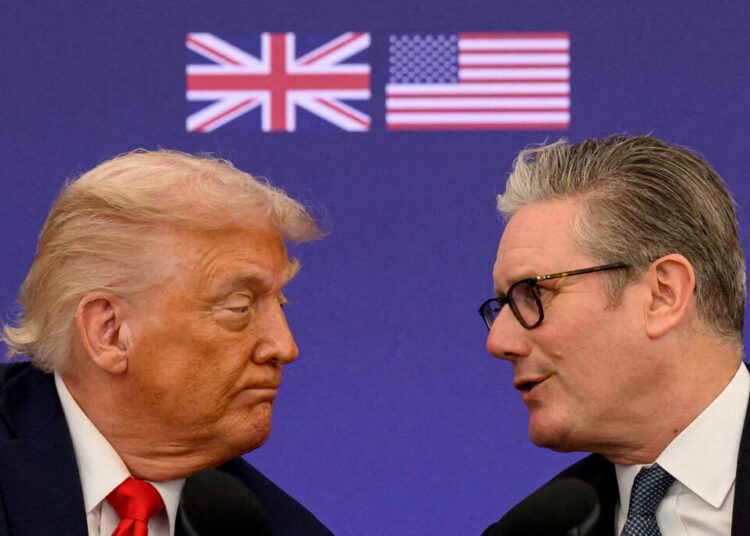
His latest excursion, a relatively short five-day trip, took him to Norway, where he met the prime ministers of the five Nordic nations and visited a NATO Arctic training exercise. He ended the trip by meeting British Prime Minister Keir Starmer and King Charles, who is Canada’s official head of state.
Mr. Carney’s meetings abroad have generally started early in the morning and often continued well into the night and have been dominated by talk of investment deals, trade, military procurement and security alliances.
Despite Canada’s democratic foundation, it has done business in the past with countries that do not share its democratic principles.
As Canada’s prime minister, Pierre Elliott Trudeau established relations with Mao’s China before Nixon made his historic visit to Beijing. Throughout the 1970s, Canadian shoppers had their choice of goods from the Soviet Union and its satellite states. Cuba was a top destination for Canadians escaping endless winter until the current oil shortage, set off by Mr. Trump’s blockade of foreign fuel essentially shut down its tourism industry.
But Canada also has a history of trade activism. Another prime minister, Brian Mulroney, led a worldwide economic boycott of South Africa that significantly contributed to the end of its racist apartheid system. Justin Trudeau insisted that the Comprehensive and Progressive Agreement for Trans-Pacific Partnership, a free-trade agreement, include clauses on women’s right and other rights issues, though it was unclear how effective or enforceable those deals were.
While Mr. Carney is calling on the world’s middle powers to form coalitions to offset the dominance of the United States, China and Russia, Ms. Wang said she believes he is underestimating Canada’s power on its own.
The drop in domestic consumer demand in China has put pressure on Mr. Xi to keep his economy afloat with exports, she said, giving Canada leverage in negotiations.
“The genius of the Chinese government in the last many years is its ability to change the perception of other people toward it, to be able to make Canada’s leaders think they are in a position of weakness when they actually hold a lot of the cards,” she said.
Mr. Axworthy, the former foreign minister, said that when the government put on a major trade push during the 1990s, he was charged with running a separate global push for human rights.
“We kind of balanced the two and it seemed to work,” he said, adding that the government won concessions from China, Indonesia and Cuba on various human rights issues.
Ms. Wang said there could be dire consequences if, in the interest of trade diversity, Canada increasingly ignores the human rights records of other countries.
“It’s curious to me that on the one hand, Carney would be quite critical of the Trump administration, but at the same time also is quite defeatist when it comes to China,” she said. “Can one survive as a democracy, which I assume is something Canadians really cherish, in an international global system where increasingly you have Trump, Putin, and Xi Jinping pulling toward the same direction, if differently: essentially toward a villains’ world where these values don’t count.”
Ian Austen reports on Canada for The Times. A Windsor, Ontario, native now based in Ottawa, he has reported on the country for two decades. He can be reached at [email protected].
The post As Carney Travels the Globe for New Alliances, He Looks Away on Human Rights appeared first on New York Times.