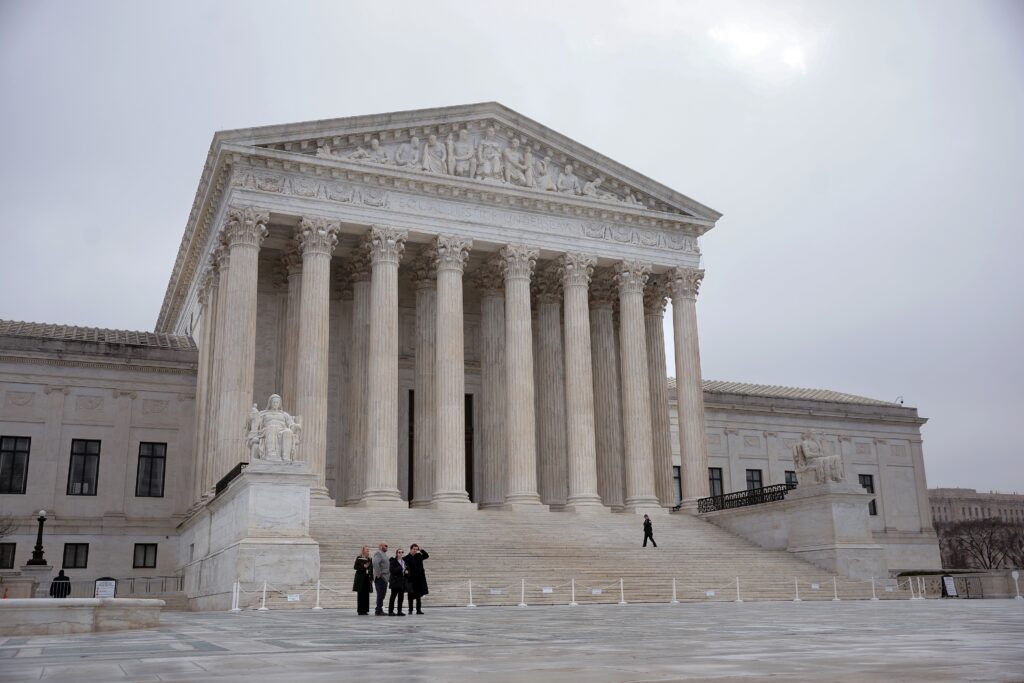
The Supreme Court on Monday took up two cases filed by migrants from Haiti and Syria who say the Trump administration’s sudden cancellation of their temporary humanitarian protections is unlawful and would send them back to dangerous conditions in their home countries.
Consideration by the Supreme Court could affect a host of cases challenging the government’s efforts to end temporary protected status for hundreds of thousands of migrants. The designation allows people from countries that have experienced crises such as armed conflicts or natural disasters to live and work in the United States.
Since last year, the administration, which has launched a broad crackdown on immigration, has sought to withdraw the protected status of migrants from at least a half-dozen nations. The government argues that conditions have improved enough in those countries for the migrants to return.
One case taken by the high court centers on 353,000 migrants from Haiti who received the protections in 2010 following a devastating earthquake. The protections were extended due to poor conditions such as gang violence and government instability.
In June, Homeland Security Secretary Kristi L. Noem moved to terminate those migrants’ protected status, saying the “environmental situation in Haiti has improved enough that it is safe for Haitian citizens to return home.”
The U.S. also has extended temporary protections to more than 6,000 Syrians since 2012, after a crackdown by then-President Bashar al-Assad led to a civil war that killed hundreds of thousands of people and displaced millions more. In 2024, rebels toppled Assad’s regime, though some fighting has continued between local factions.
In September, Noem moved to terminate protected status of Syrian migrants, saying that the country’s living conditions are safe now that Assad is out of power.
Both groups filed lawsuits challenging the termination of their protected status, arguing the moves were unlawful. The migrants from Haiti say their home country remains in a state of crisis and is beset by gang violence, disease and unstable governance. Syrian migrants argue that their country “continues to suffer from armed conflict and humanitarian crisis marked by over a decade of civil war.”
In both cases, lower courts have ruled in the migrants’ favor, issuing orders to postpone the termination of their protected status while their cases play out. And in both cases, the government has asked the Supreme Court to reverse those decisions.
On Monday, the court said it would take up the issue and hear arguments during the second week of April.
Since May 2025, the Supreme Court has twice allowed the Trump administration to cancel the protected status of hundreds of thousands of Venezuelan migrants. But the cases concerning the Syrian and Haitian migrants would mark the first time in President Donald Trump’s second term that the high court considers the merits of the administration’s revocations of TPS for certain groups.
“Depending on how broadly the Court rules, it could affect a lot of the other cases,” Ahilan Arulanantham, co-director of the Center for Immigration Law and Policy at the UCLA School of Law, said in an email.
But Arulanantham, one of the lawyers challenging the cancellation of TPS for Venezuelans, said that the TPS cases “are not all identical” and that the Supreme Court’s eventual ruling could affect each case differently.
The cases taken up Monday had been filed on the court’s emergency docket, in which the justices would decide whether to stay lower court rulings while those cases continued. But the order Monday means the high court will more conclusively decide the cases on their merits before a full record from both sides is developed in the lower courts.
Some attorneys for the migrants balked at the move.
“The Supreme Court’s decision to take this case at such an early juncture is unusual: The factual record has not been fully developed, and the lower courts have not reached the legal issues on their merits,” said Nargis Aslami, a legal fellow at Muslim Advocates, which is representing the Syrian migrants.
Nevertheless, she said, her group is relieved that, for now, “thousands of Syrian TPS holders continue to be protected against forced removal to dangerous and devolving circumstances in Syria.”
The post Supreme Court to consider whether Trump can end protected status for Syrians, Haitians appeared first on Washington Post.